
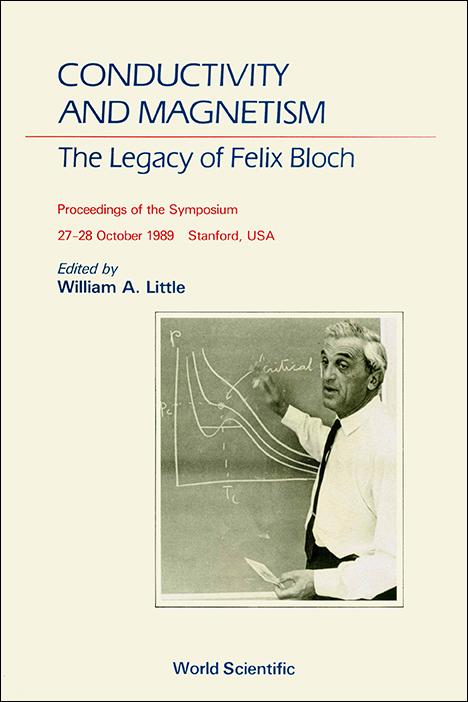
Felix Bloch was one of the foremost scientists of the 20th century. His work on the theory of metals in 1929 laid the cornerstone for the development of semiconductors and his work on magnetism was crucial for the development of a basic understanding of ferromagnetism. Nuclear Magnetic Resonance, which he discovered in 1946, and for which he shared the Nobel Prize with Edward Purcell in 1952, has become the most important spectroscopic tool in Chemistry. The year 1989 marks the sixtieth year since Bloch's paper on the Theory of Metals. This Symposium celebrated the occasion by gathering a group of distinguished scientists who presented overviews of the past, present and future of several major areas of Physics, Chemistry, Engineering, Computer Science, Biology and Medicine, many of which trace their origins to Bloch's influence.
Płać wygodnie kartą, Klarną, Apple Pay lub Google Pay. Nie jesteś zadowolony? Zawsze masz 14-dniową gwarancję zwrotu pieniędzy. Więcej przeczytasz w naszych warunkach. Masz pytania? Napisz do nas na hello@memmo.org.
Memmo ułatwia naukę – gdziekolwiek jesteś na świecie. U nas znajdziesz podręczniki i sprytne narzędzia do nauki w jednym miejscu: streszczenia, quizy, podcasty i fiszki. A do tego Ted, Twój kumpel do nauki, który odpowie na wszystko, co Cię nurtuje. Ponad 50 000 studentów już tu się uczy – stworzone, byś uczył się szybciej i mniej stresował.
Może Ci się spodobać
Kup książkę0