
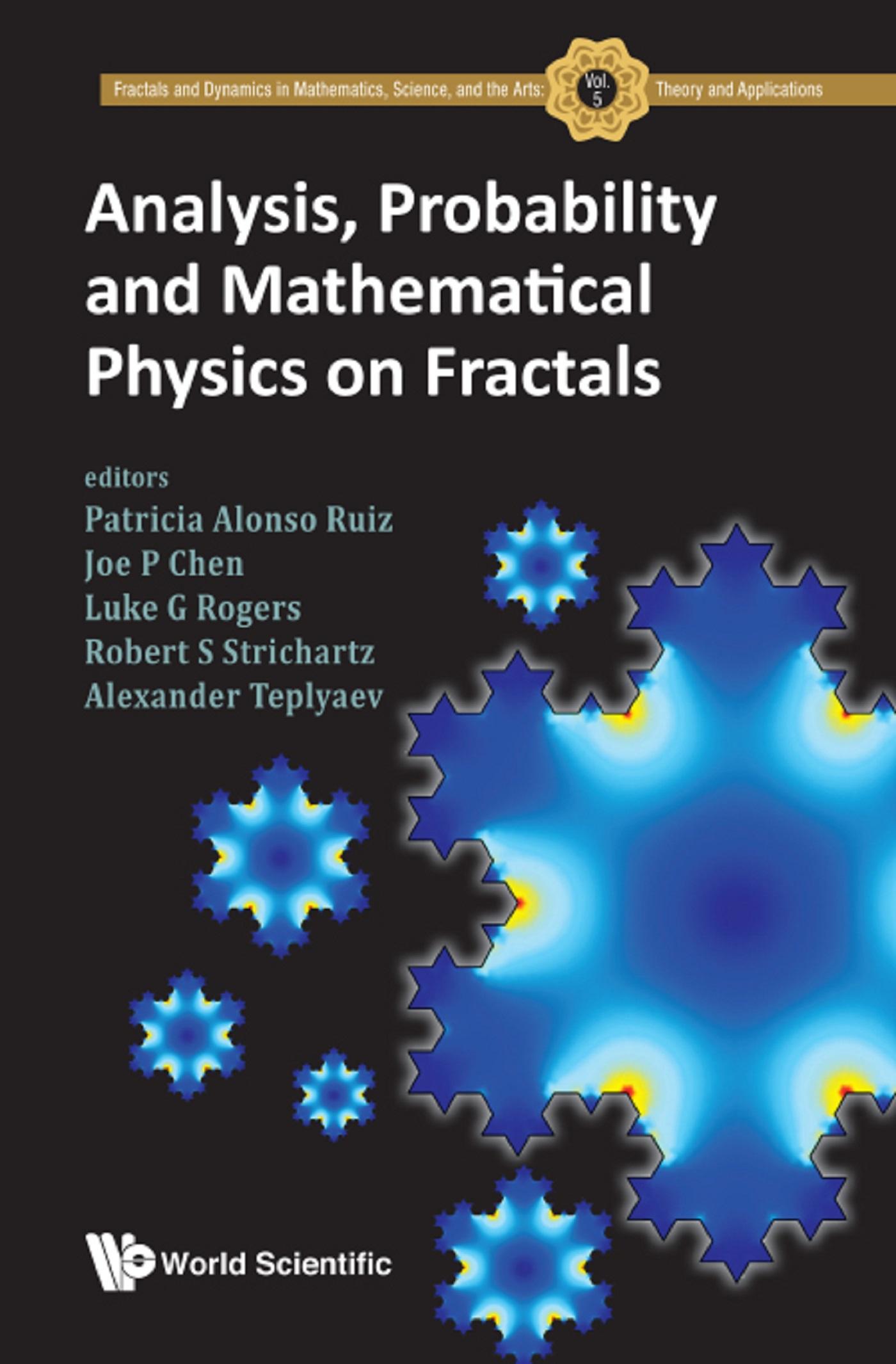
In the 50 years since Mandelbrot identified the fractality of coastlines, mathematicians and physicists have developed a rich and beautiful theory describing the interplay between analytic, geometric and probabilistic aspects of the mathematics of fractals. Using classical and abstract analytic tools developed by Cantor, Hausdorff, and Sierpinski, they have sought to address fundamental questions: How can we measure the size of a fractal set? How do waves and heat travel on irregular structures? How are analysis, geometry and stochastic processes related in the absence of Euclidean smooth structure? What new physical phenomena arise in the fractal-like settings that are ubiquitous in nature?This book introduces background and recent progress on these problems, from both established leaders in the field and early career researchers. The book gives a broad introduction to several foundational techniques in fractal mathematics, while also introducing some specific new and significant results of interest to experts, such as that waves have infinite propagation speed on fractals. It contains sufficient introductory material that it can be read by new researchers or researchers from other areas who want to learn about fractal methods and results.
Płać wygodnie kartą, Klarną, Apple Pay lub Google Pay. Nie jesteś zadowolony? Zawsze masz 14-dniową gwarancję zwrotu pieniędzy. Więcej przeczytasz w naszych warunkach. Masz pytania? Napisz do nas na hello@memmo.org.
Memmo ułatwia naukę – gdziekolwiek jesteś na świecie. U nas znajdziesz podręczniki i sprytne narzędzia do nauki w jednym miejscu: streszczenia, quizy, podcasty i fiszki. A do tego Ted, Twój kumpel do nauki, który odpowie na wszystko, co Cię nurtuje. Ponad 50 000 studentów już tu się uczy – stworzone, byś uczył się szybciej i mniej stresował.
Może Ci się spodobać
Kup książkę0