
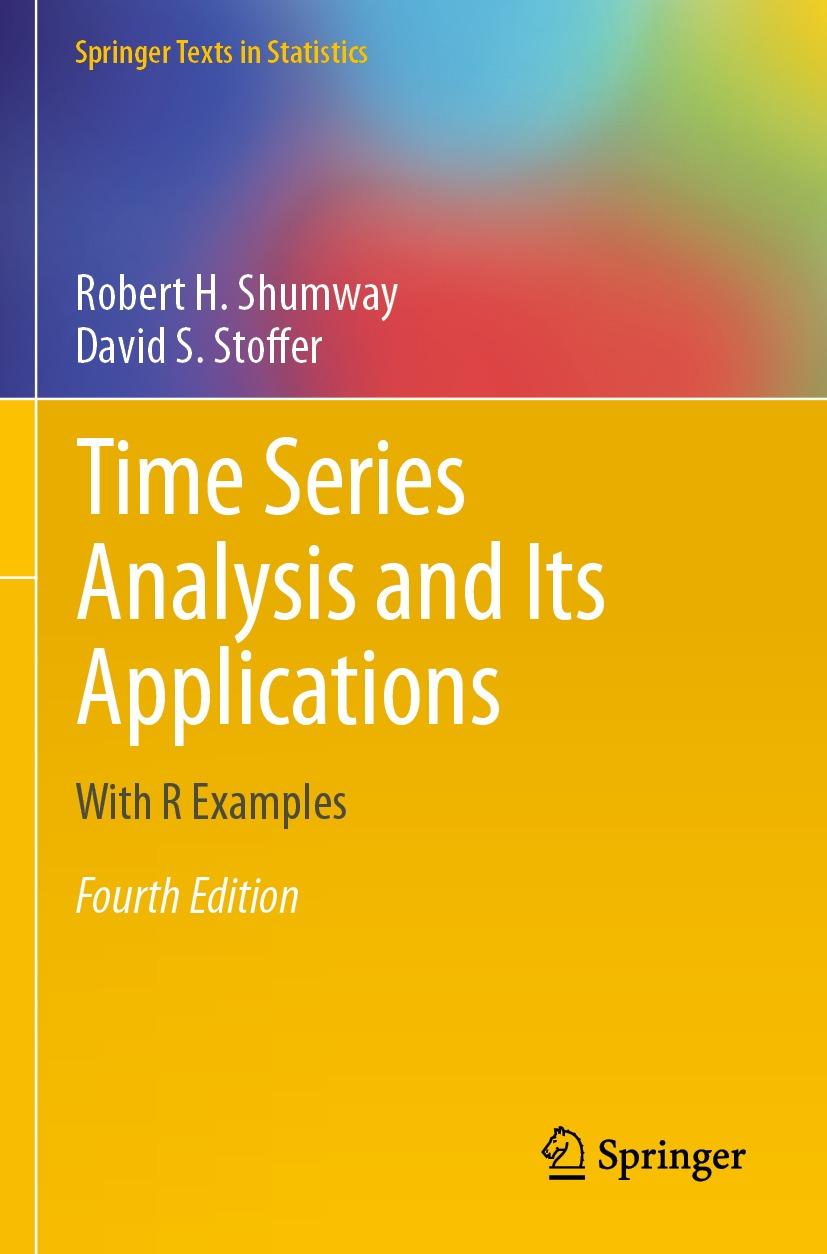
The fourth edition of this popular graduate textbook, like its predecessors, presents a balanced and comprehensive treatment of both time and frequency domain methods with accompanying theory. Numerous examples using nontrivial data illustrate solutions to problems such as discovering natural and anthropogenic climate change, evaluating pain perception experiments using functional magnetic resonance imaging, and monitoring a nuclear test ban treaty.
The book is designed as a textbook for graduate level students in the physical, biological, and social sciences and as a graduate level text in statistics. Some parts may also serve as an undergraduate introductory course. Theory and methodology are separated to allow presentations on different levels. In addition to coverage of classical methods of time series regression, ARIMA models, spectral analysis and state-space models, the text includes modern developments including categorical time series analysis, multivariate spectral methods, long memory series, nonlinear models, resampling techniques, GARCH models, ARMAX models, stochastic volatility, wavelets, and Markov chain Monte Carlo integration methods.
This edition includes R code for each numerical example in addition to Appendix R, which provides a reference for the data sets and R scripts used in the text in addition to a tutorial on basic R commands and R time series. An additional file is available on the book’s website for download, making all the data sets and scripts easy to load into R.
Płać wygodnie kartą, Klarną, Apple Pay lub Google Pay. Nie jesteś zadowolony? Zawsze masz 14-dniową gwarancję zwrotu pieniędzy. Więcej przeczytasz w naszych warunkach. Masz pytania? Napisz do nas na hello@memmo.org.
Memmo ułatwia naukę – gdziekolwiek jesteś na świecie. U nas znajdziesz podręczniki i sprytne narzędzia do nauki w jednym miejscu: streszczenia, quizy, podcasty i fiszki. A do tego Ted, Twój kumpel do nauki, który odpowie na wszystko, co Cię nurtuje. Ponad 50 000 studentów już tu się uczy – stworzone, byś uczył się szybciej i mniej stresował.