
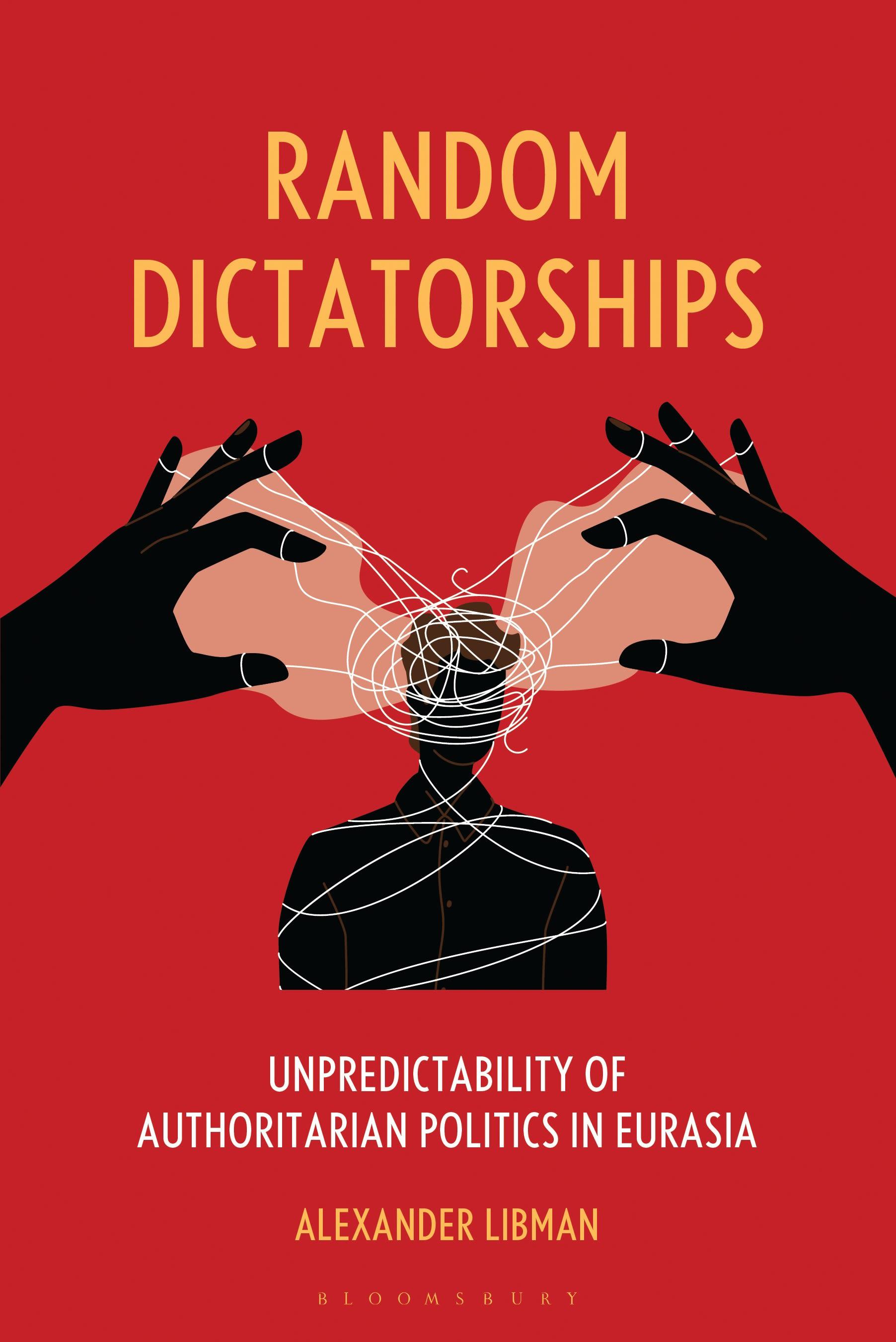
Post-Soviet Eurasia continues to puzzle observers, defying expectations of experts. Most Russia watchers failed to predict the full-scale invasion against Ukraine in 2022, and this failure triggered intensive debates and multiple rounds of self-reflection. Random Dictatorships: Unpredictability of Authoritarian Politics in Eurasia argues that the supposedly unexpected turns of Eurasian politics are a manifestation of a deeper phenomenon – researchers' limited ability to predict the policymaking in authoritarian regimes in general. Alexander Libman identifies three main factors making authoritarian politics difficult to predict: mistakes of authoritarian leaders, untransparent competition of elite factions, and omnipresent secrecy cultivated by autocrats. While scholars oscillate between two visions of authoritarian regimes – their presentation as highly rational and capable to adapt and as highly inefficient and doomed to poor performance – Libman suggests that many autocracies alternate between these two extremes in a difficult-to-predict fashion. The book explores three important cases from the post-Soviet Eurasia, when autocracies of this region defied expectations of external observers – Russia's annexation of Crimea in 2014, the Bloody January in Kazakhstan in 2022 and Russia's invasion of Ukraine in 2022. It discusses the reasons for the apparent unpredictability of autocracies in each of these cases, and identifies implications for how authoritarian regimes should be studied.
Płać wygodnie kartą, Klarną, Apple Pay lub Google Pay. Nie jesteś zadowolony? Zawsze masz 14-dniową gwarancję zwrotu pieniędzy. Więcej przeczytasz w naszych warunkach. Masz pytania? Napisz do nas na hello@memmo.org.
Memmo ułatwia naukę – gdziekolwiek jesteś na świecie. U nas znajdziesz podręczniki i sprytne narzędzia do nauki w jednym miejscu: streszczenia, quizy, podcasty i fiszki. A do tego Ted, Twój kumpel do nauki, który odpowie na wszystko, co Cię nurtuje. Ponad 50 000 studentów już tu się uczy – stworzone, byś uczył się szybciej i mniej stresował.