
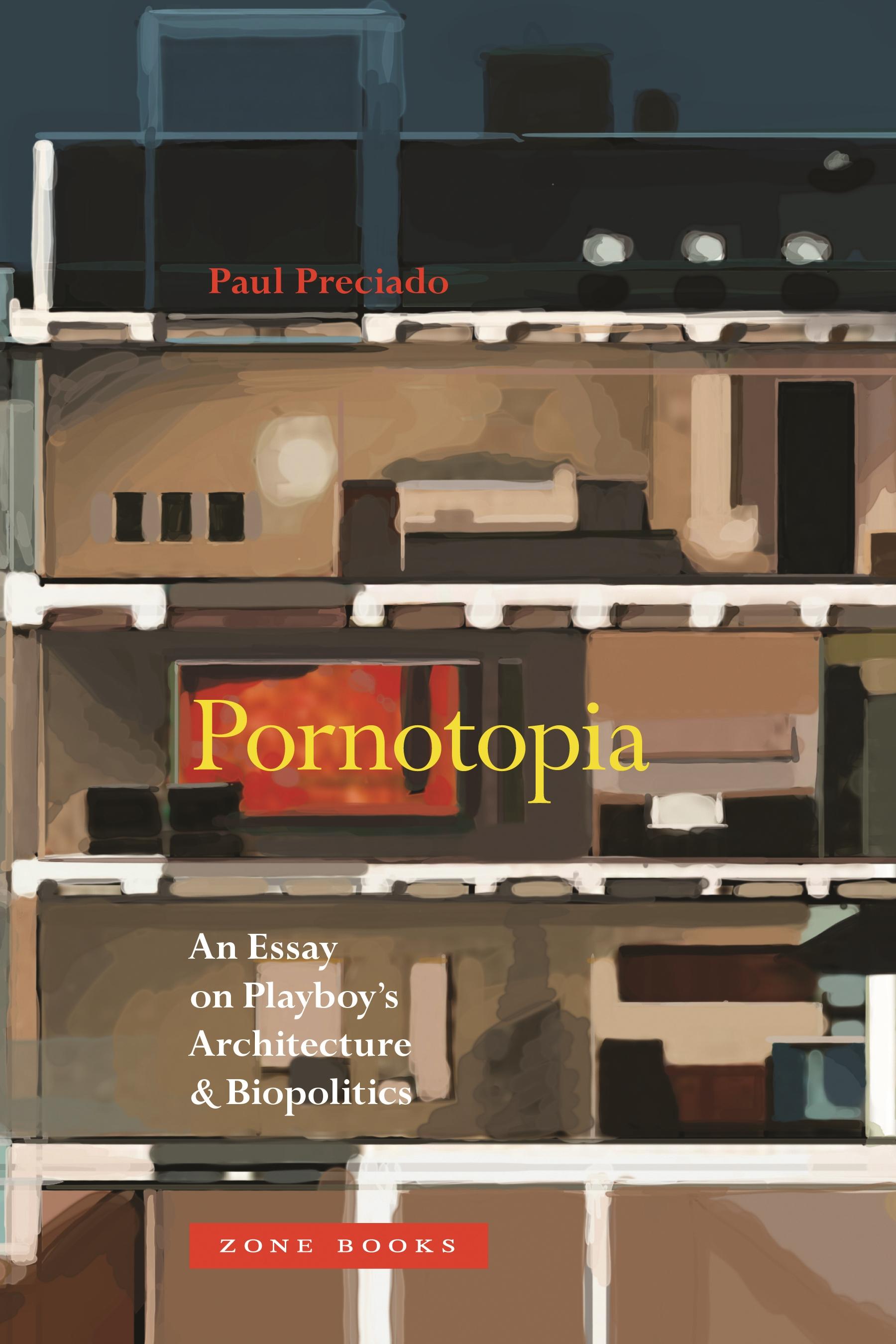
Published for the first time in 1953, Playboy was not only the first pornographic popular magazine in America; it also came to embody an entirely new lifestyle through the construction of a series of utopian multimedia spaces — from the Playboy Mansion and fictional Playboy’s Penthouse of 1959 to the Playboy Clubs and hotels appearing around the world in the 1960s. Simultaneously, the invention of the contraceptive pill provided access to a biochemical technique that separated (hetero) sexuality and reproduction.
Addressing these concurrent cultural shifts, Paul Preciado investigates the strategic relationships between space, gender, and sexuality in popular sites related to the production and consumption of pornography that have tended to reside at the margins of traditional histories of architecture: bachelor pads, multimedia rotating beds, and design objects, among others.
Combining historical perspectives with contemporary critical theory, gender and queer theory, porn studies, the history of technology, and a range of primary transdisciplinary sources — treatises on sexuality, medical and pharmaceutical handbooks, architecture journals, erotic magazines, building manuals, and novels — Pornotopia explores the use of architecture as a biopolitical technique for governing sexual relations and the production of gender in the postwar United States.
Płać wygodnie kartą, Klarną, Apple Pay lub Google Pay. Nie jesteś zadowolony? Zawsze masz 14-dniową gwarancję zwrotu pieniędzy. Więcej przeczytasz w naszych warunkach. Masz pytania? Napisz do nas na hello@memmo.org.
Memmo ułatwia naukę – gdziekolwiek jesteś na świecie. U nas znajdziesz podręczniki i sprytne narzędzia do nauki w jednym miejscu: streszczenia, quizy, podcasty i fiszki. A do tego Ted, Twój kumpel do nauki, który odpowie na wszystko, co Cię nurtuje. Ponad 50 000 studentów już tu się uczy – stworzone, byś uczył się szybciej i mniej stresował.