
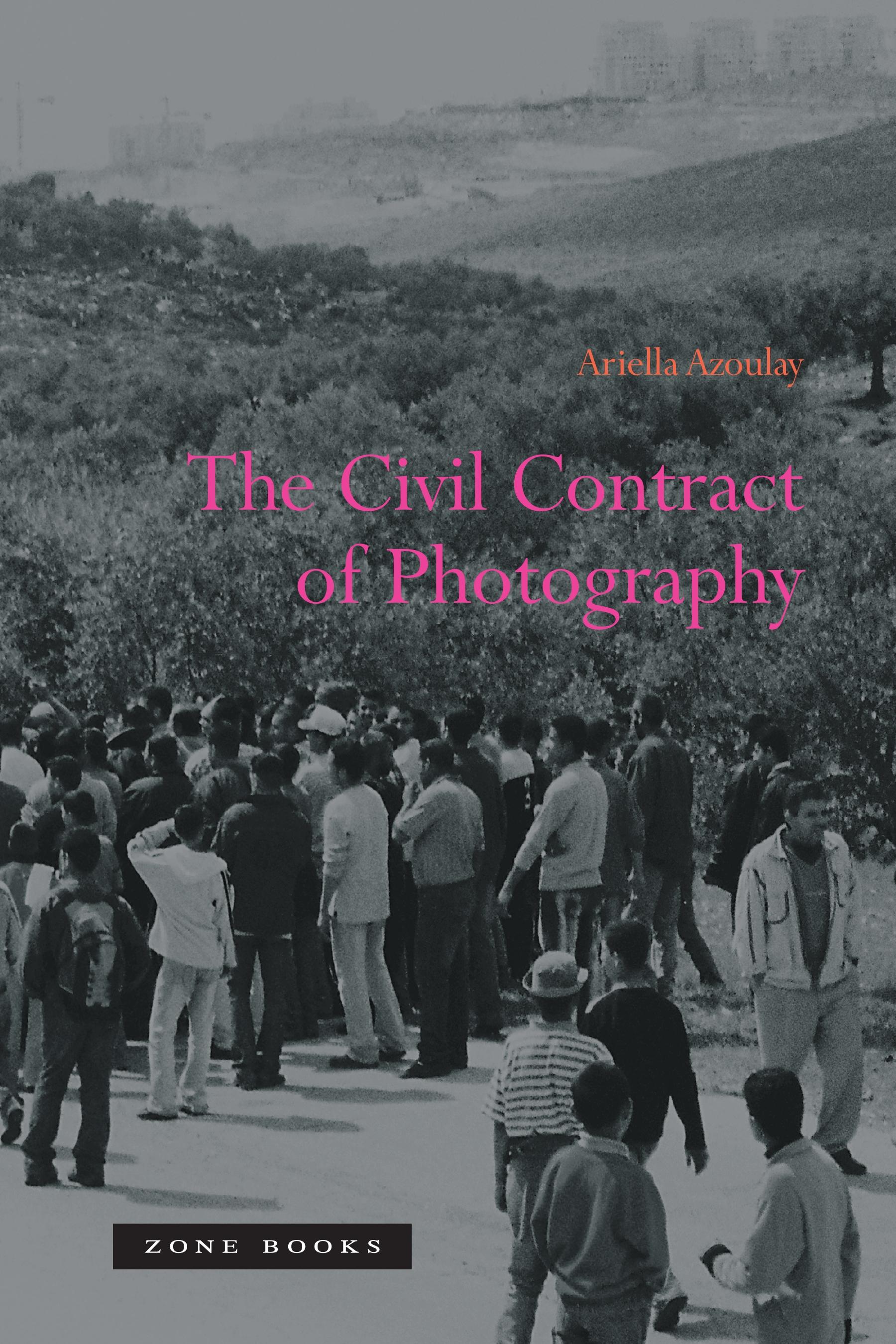
In this groundbreaking work, Ariella Azoulay thoroughly revises our understanding of the ethical status of photography. It must, she insists, be understood in its inseparability from the many catastrophes of recent history. She argues that photography is a particular set of relations between individuals and the powers that govern them and, at the same time, a form of relations among equals that constrains that power. Anyone, even a stateless person, who addresses others through photographs or occupies the position of a photograph’s addressee, is or can become a member of the citizenry of photography.
The crucial arguments of the book concern two groups that have been rendered invisible by their state of exception: the Palestinian noncitizens of Israel and women in Western societies. Azoulay’s leading question is: Under what legal, political, or cultural conditions does it become possible to see and show disaster that befalls those with flawed citizenship in a state of exception? The Civil Contract of Photography is an essential work for anyone seeking to understand the disasters of recent history and the consequences of how they and their victims are represented.
Płać wygodnie kartą, Klarną, Apple Pay lub Google Pay. Nie jesteś zadowolony? Zawsze masz 14-dniową gwarancję zwrotu pieniędzy. Więcej przeczytasz w naszych warunkach. Masz pytania? Napisz do nas na hello@memmo.org.
Memmo ułatwia naukę – gdziekolwiek jesteś na świecie. U nas znajdziesz podręczniki i sprytne narzędzia do nauki w jednym miejscu: streszczenia, quizy, podcasty i fiszki. A do tego Ted, Twój kumpel do nauki, który odpowie na wszystko, co Cię nurtuje. Ponad 50 000 studentów już tu się uczy – stworzone, byś uczył się szybciej i mniej stresował.