
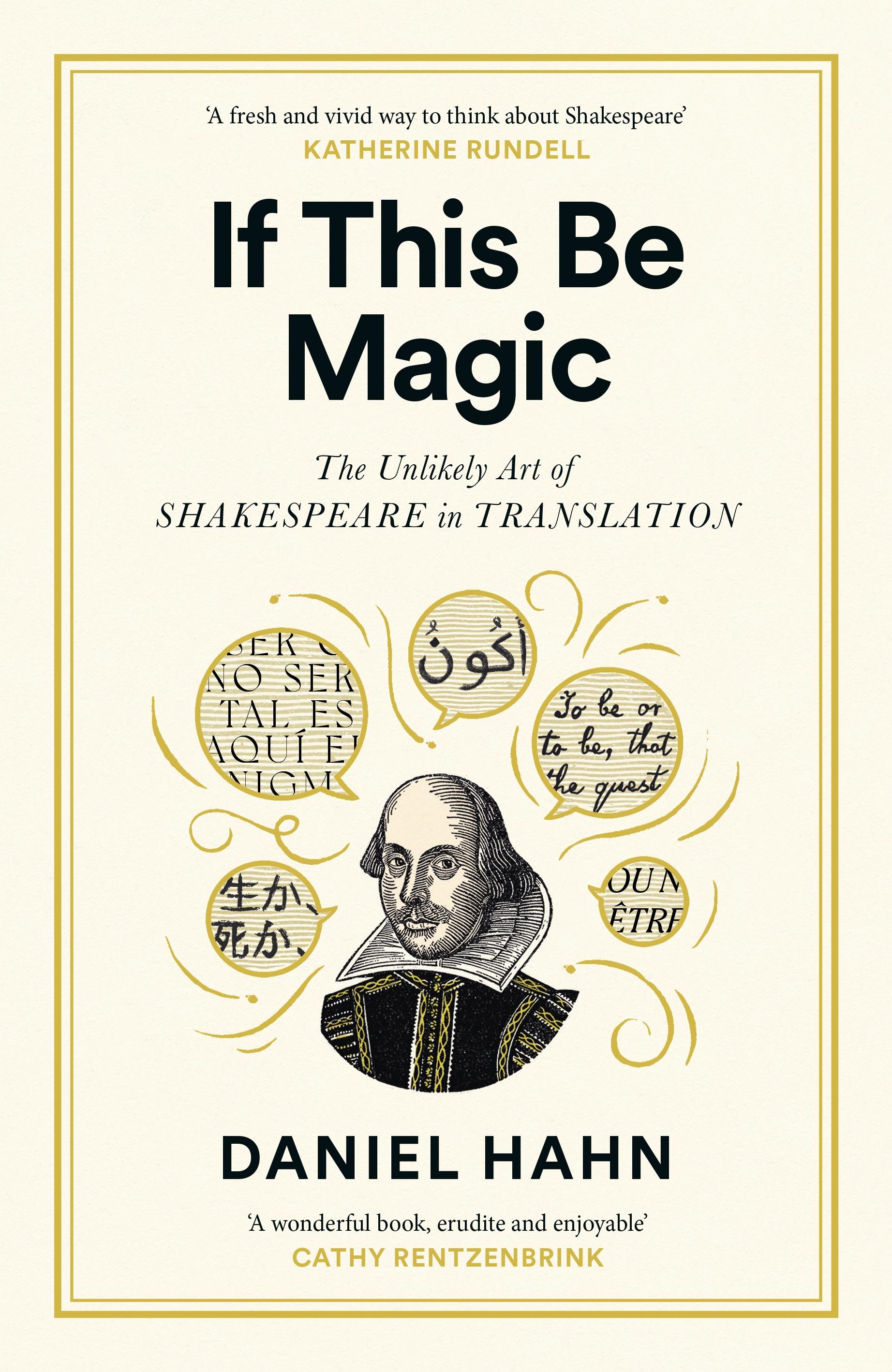
How do you rebuild a 400-year-old topical joke in a new culture and with none of the same words?
How does Romeo and Juliet’s first meeting unfold if they can’t mention pilgrims?
What does Taming of the Shrew sound like in a language where every noun has a gender?
Why might Hamlet be even longer in Japanese?
And why are Lady Macbeth’s pronouns such a problem?
What does it mean to translate Shakespeare? When we change all the poetry, all the wordplay, all the syntax – all the words! – is it still Shakespeare? And is it still any good?
Daniel Hahn, seasoned translator and Shakespeare fanatic, will change the way you think about language itself. Ranging widely across Shakespeare’s works, and across the world’s languages, this book explores what translators have done and what is possible.
No knowledge of any particular language is required, though a bit of patience for the nerdiest of close reading is desirable. This micro-attention to language will reveal some of the complexities of Shakespeare; and by using his work as its subject, with the extraordinary pressures that he puts on language, it will reveal even more about the craft of translation, and the power of words themselves.
Płać wygodnie kartą, Klarną, Apple Pay lub Google Pay. Nie jesteś zadowolony? Zawsze masz 14-dniową gwarancję zwrotu pieniędzy. Więcej przeczytasz w naszych warunkach. Masz pytania? Napisz do nas na hello@memmo.org.
Memmo ułatwia naukę – gdziekolwiek jesteś na świecie. U nas znajdziesz podręczniki i sprytne narzędzia do nauki w jednym miejscu: streszczenia, quizy, podcasty i fiszki. A do tego Ted, Twój kumpel do nauki, który odpowie na wszystko, co Cię nurtuje. Ponad 50 000 studentów już tu się uczy – stworzone, byś uczył się szybciej i mniej stresował.