
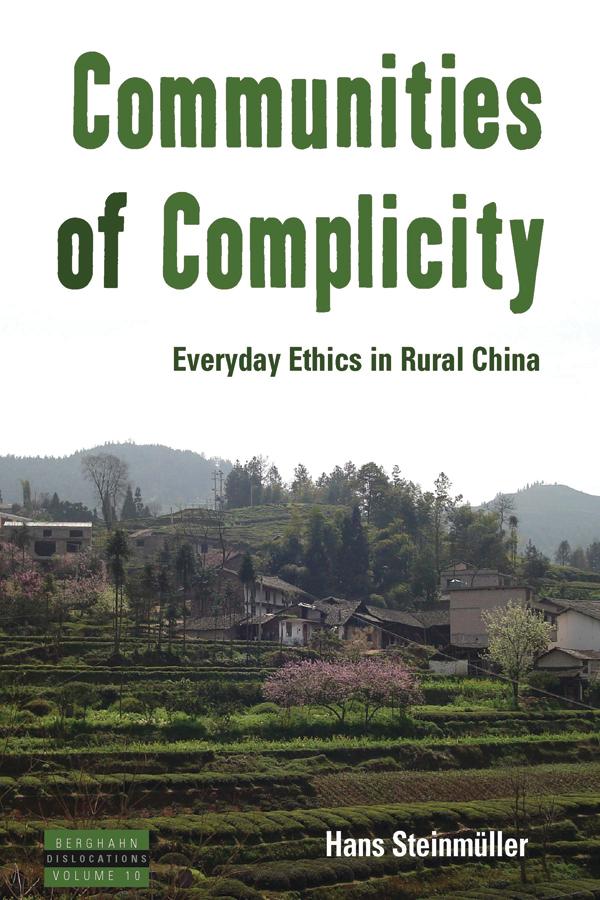
Everyday life in contemporary rural China is characterized by an increased sense of moral challenge and uncertainty. Ordinary people often find themselves caught between the moral frameworks of capitalism, Maoism and the Chinese tradition. This ethnographic study of the village of Zhongba (in Hubei Province, central China) is an attempt to grasp the ethical reflexivity of everyday life in rural China. Drawing on descriptions of village life, interspersed with targeted theoretical analyses, the author examines how ordinary people construct their own senses of their lives and their futures in everyday activities: building houses, working, celebrating marriages and funerals, gambling and dealing with local government. The villagers confront moral uncertainty; they creatively harmonize public discourse and local practice; and sometimes they resolve incoherence and unease through the use of irony. In so doing, they perform everyday ethics and re-create transient moral communities at a time of massive social dislocation.
Płać wygodnie kartą, Klarną, Apple Pay lub Google Pay. Nie jesteś zadowolony? Zawsze masz 14-dniową gwarancję zwrotu pieniędzy. Więcej przeczytasz w naszych warunkach. Masz pytania? Napisz do nas na hello@memmo.org.
Memmo ułatwia naukę – gdziekolwiek jesteś na świecie. U nas znajdziesz podręczniki i sprytne narzędzia do nauki w jednym miejscu: streszczenia, quizy, podcasty i fiszki. A do tego Ted, Twój kumpel do nauki, który odpowie na wszystko, co Cię nurtuje. Ponad 50 000 studentów już tu się uczy – stworzone, byś uczył się szybciej i mniej stresował.