
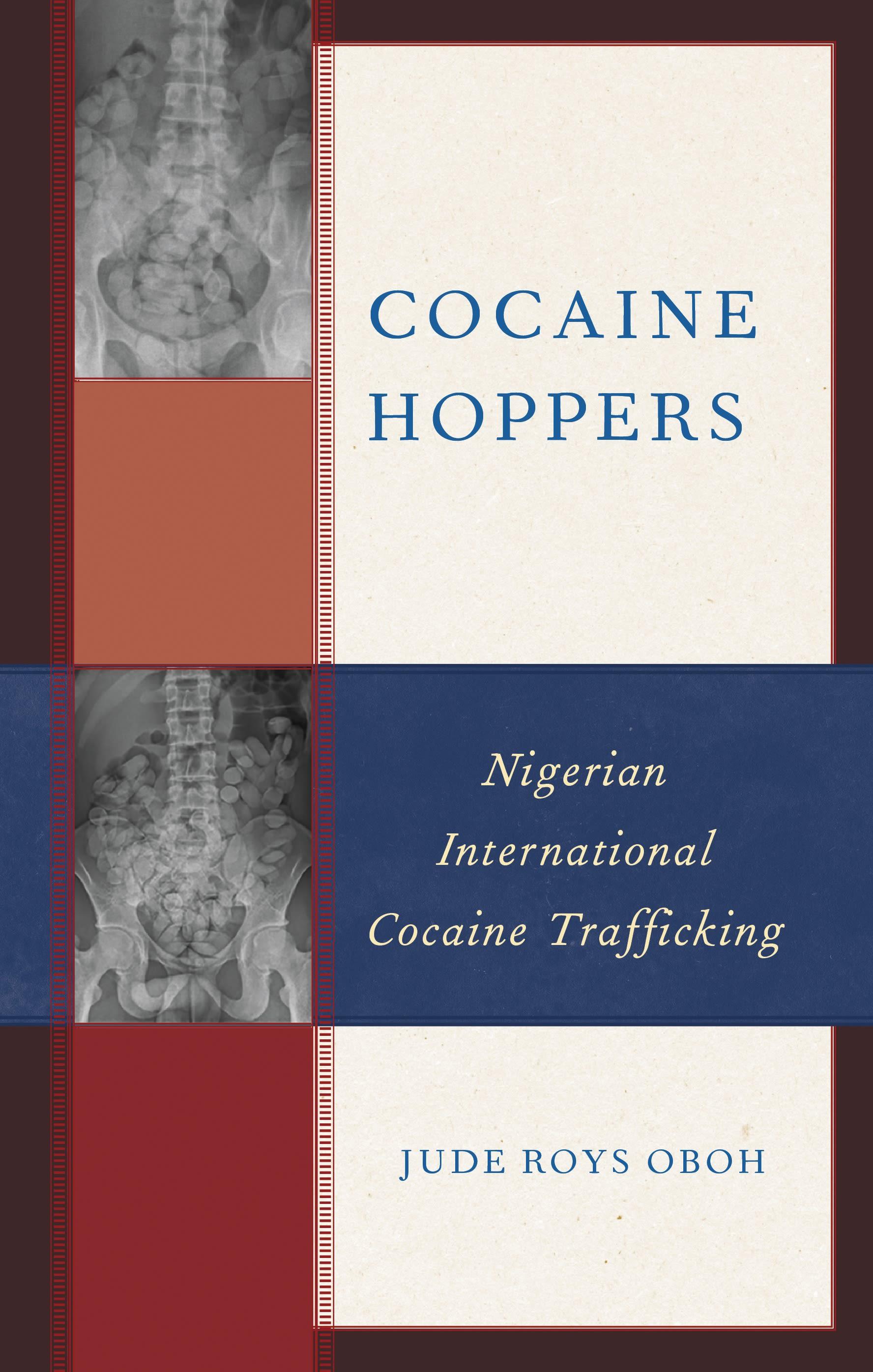
Cocaine Hoppers provides empirical evidence to explain the involvement of Nigerians in the global cocaine trade. Investigating the criminogenic environment created by the Nigerian ‘state crisis,’ Oboh traces the geographic, demographic, economic, historical, political, and cultural factors enhancing cocaine culture in Nigeria. Based on years of research, Oboh reveals this social network that relies on “reverse social capital” wherein wealth and power are achieved through illegal means solely to benefit the individual. This lively, theoretically grounded study examines the new trend of traffickers dominating the illicit cocaine trade through West Africa to destinations across the globe to provide an account of Nigerian involvement in international drug trafficking as it has never been divulged before. This book will be appreciated by criminologists, social scientists, policymakers, drug researchers and organized crime scholars. And eagerly be read by those interested in Nigeria, and problems of African immigrants, and in the international drug trafficking.
Płać wygodnie kartą, Klarną, Apple Pay lub Google Pay. Nie jesteś zadowolony? Zawsze masz 14-dniową gwarancję zwrotu pieniędzy. Więcej przeczytasz w naszych warunkach. Masz pytania? Napisz do nas na hello@memmo.org.
Memmo ułatwia naukę – gdziekolwiek jesteś na świecie. U nas znajdziesz podręczniki i sprytne narzędzia do nauki w jednym miejscu: streszczenia, quizy, podcasty i fiszki. A do tego Ted, Twój kumpel do nauki, który odpowie na wszystko, co Cię nurtuje. Ponad 50 000 studentów już tu się uczy – stworzone, byś uczył się szybciej i mniej stresował.