
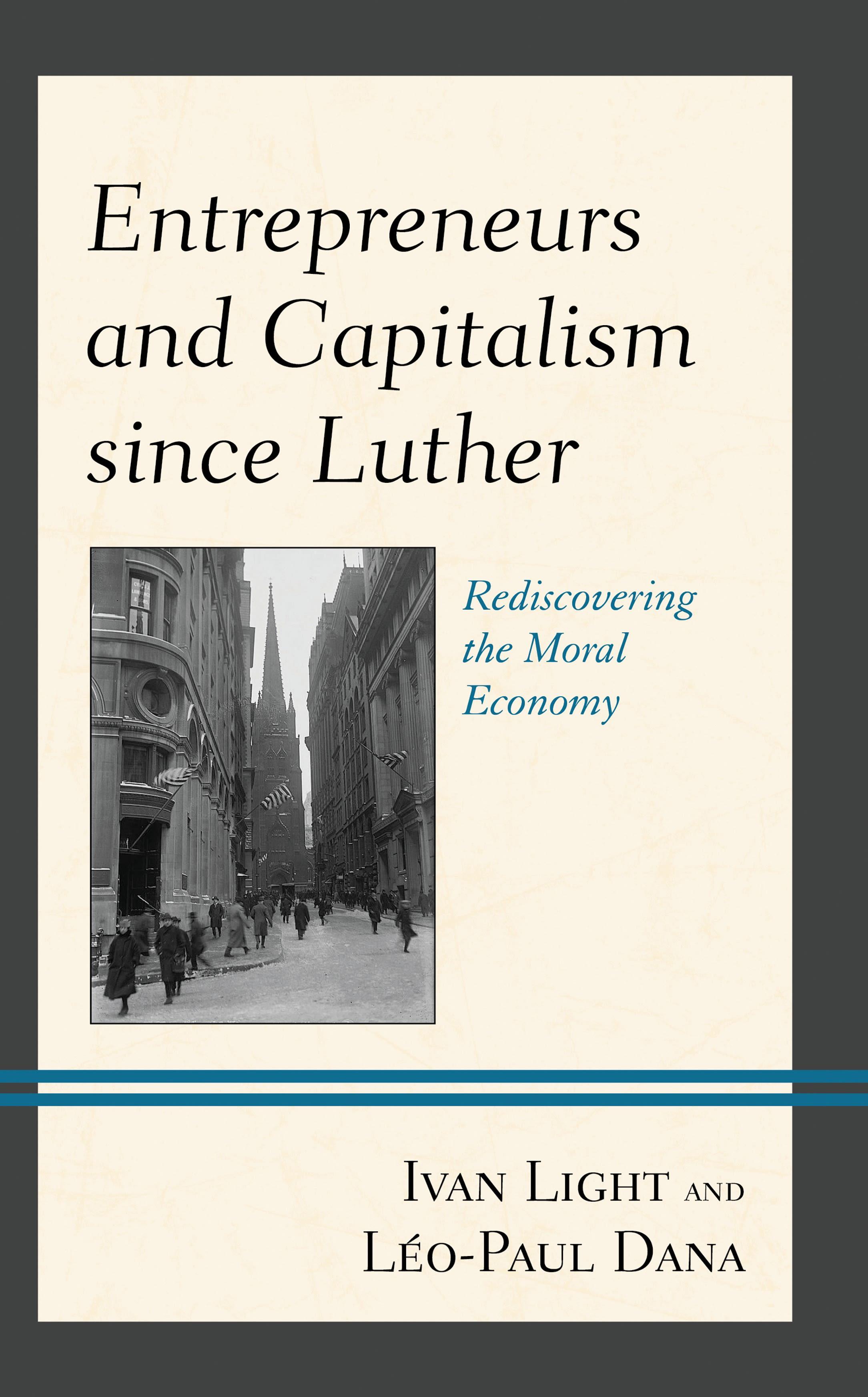
In Entrepreneurs and Capitalism since Luther: Rediscovering the Moral Economy, Ivan Light and Léo-Paul Dana study the history of business, capitalism, and entrepreneurship to examine the values of social and cultural capital. Six chapters evaluate case studies that illustrate contrasting relationships between social networks, vocational culture, and entrepreneurship. Light and Dana argue that, in capitalism’s early stages, cultural capital is scarcer than social capital and therefore more crucial for business owners. Conversely, when capitalism is well established, social capital is scarcer than cultural capital and becomes more crucial. Light and Dana then trace moral legitimations of capitalism from the Reformation to the Enlightenment, the Gilded Age, and finally to Joseph Schumpeter whose concept of “creative destruction” freed elite entrepreneurs from moral restraints that encumber small business owners. After examining the availability of social and cultural capital in the contemporary United States, Light and Dana show that business owners’ social capital enforces conventional morality in markets, facilitating commerce and legitimating small businesses the old-fashioned way. As their networks become more isolated, elite entrepreneurs must claim and ultimately deliver successful results to earn public toleration of immoral or predatory conduct.
Płać wygodnie kartą, Klarną, Apple Pay lub Google Pay. Nie jesteś zadowolony? Zawsze masz 14-dniową gwarancję zwrotu pieniędzy. Więcej przeczytasz w naszych warunkach. Masz pytania? Napisz do nas na hello@memmo.org.
Memmo ułatwia naukę – gdziekolwiek jesteś na świecie. U nas znajdziesz podręczniki i sprytne narzędzia do nauki w jednym miejscu: streszczenia, quizy, podcasty i fiszki. A do tego Ted, Twój kumpel do nauki, który odpowie na wszystko, co Cię nurtuje. Ponad 50 000 studentów już tu się uczy – stworzone, byś uczył się szybciej i mniej stresował.