
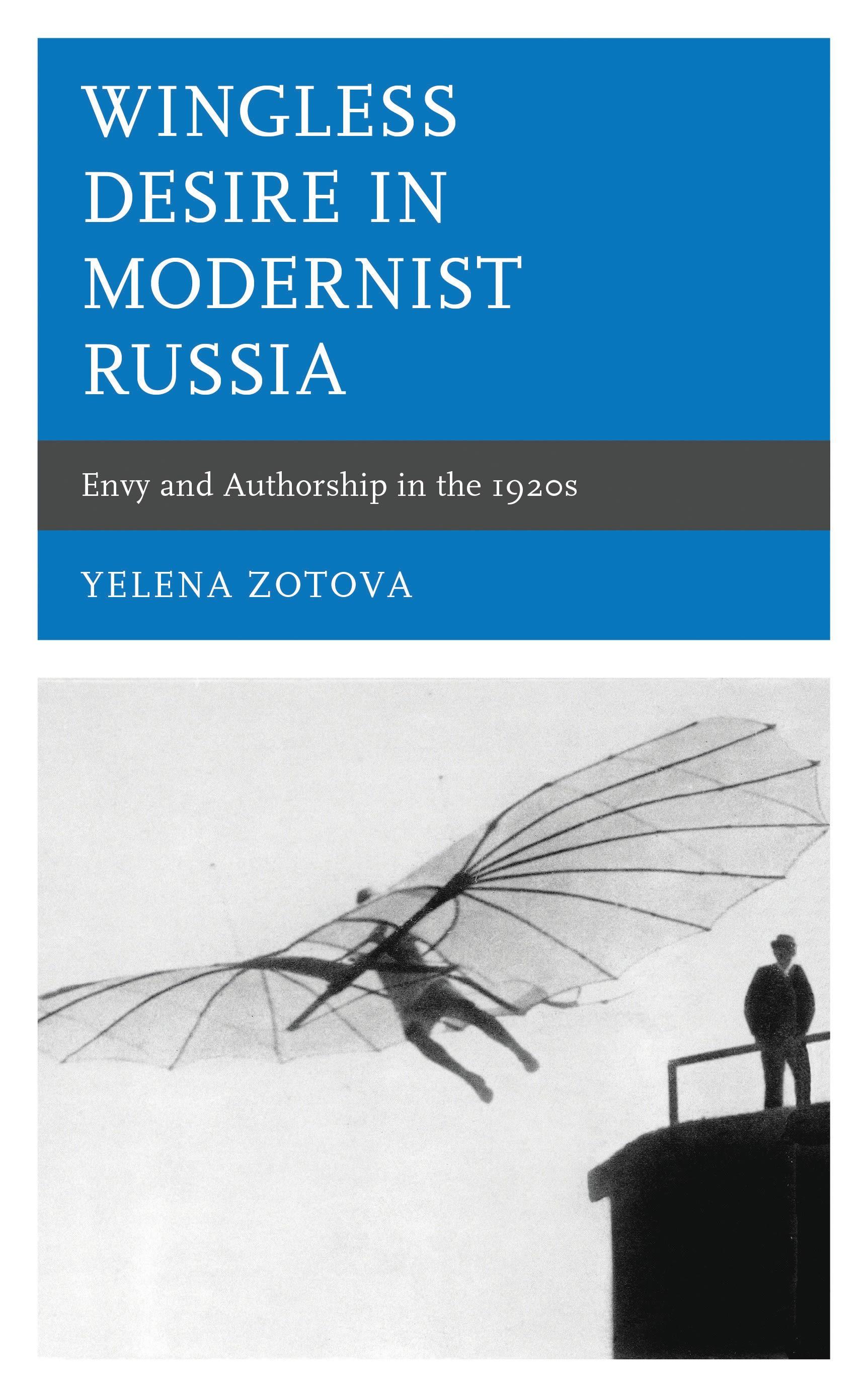
In Wingless Desire in Modernist Russia, Yelena Zotova argues that the concept of envy underwent a peculiar transformation in the Russian Modernist prose of the 1920s due to a series of radical shifts in societal values, with each subsequent change thwarting Russia’s volatile axiological hierarchy. Industriousness and austerity, inferior to playful genius in Pushkin’s “Mozart and Salieri,” became virtues, while the intrinsic value of nonutilitarian art was officially nullified by the Bolshevik state.Consequently, a new literary type emerged, and envy, described as “wingless desire” by Russia’s chief poet Alexander Pushkin, obtained new ownership as the envied became the envier. Superimposing twentieth-century theories of envy onto Mikhail Bakhtin’s “Author and Hero in the Aesthetic Activity” (1923), Zotova proposes that Salieri’s envy could be the wingless embryo of the Bakhtinian authorship.
Płać wygodnie kartą, Klarną, Apple Pay lub Google Pay. Nie jesteś zadowolony? Zawsze masz 14-dniową gwarancję zwrotu pieniędzy. Więcej przeczytasz w naszych warunkach. Masz pytania? Napisz do nas na hello@memmo.org.
Memmo ułatwia naukę – gdziekolwiek jesteś na świecie. U nas znajdziesz podręczniki i sprytne narzędzia do nauki w jednym miejscu: streszczenia, quizy, podcasty i fiszki. A do tego Ted, Twój kumpel do nauki, który odpowie na wszystko, co Cię nurtuje. Ponad 50 000 studentów już tu się uczy – stworzone, byś uczył się szybciej i mniej stresował.