
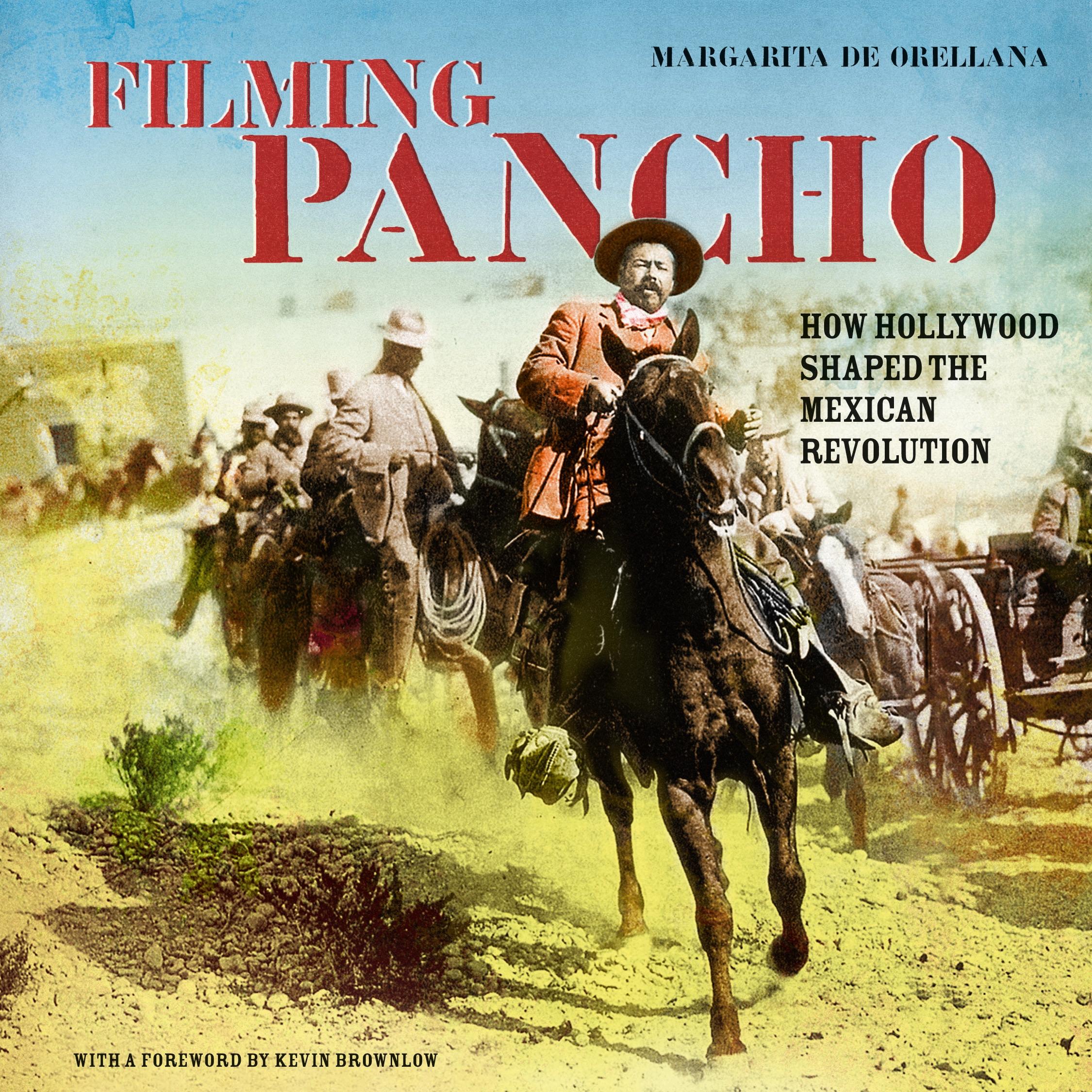
On January 3, 1914 Pancho Villa became Hollywood's first Mexican superstar. In signing an exclusive movie contract, Villa agreed to keep other film companies from his battlefield, to fight in daylight wherever possible, and to reconstruct battles if the footage needed reshooting.
Through memoir and newspaper reports, Margarita De Orellana looks at the documentary film-makers who went down to cover events in Mexico. Feature film-makers in Hollywood portrayed the border as the dividing line between order and chaos, in the process developing a series of lasting Mexican stereotypes-the greaser, the bandit, the beautiful se�orita, the exotic Aztec. Filming Pancho reveals how Mexico was constructed in the American imagination and how movies reinforced and justified both American expansionism and racial and social prejudice.
Through memoir and newspaper reports, Margarita De Orellana looks at the documentary film-makers who went down to cover events in Mexico. Feature film-makers in Hollywood portrayed the border as the dividing line between order and chaos, in the process developing a series of lasting Mexican stereotypes-the greaser, the bandit, the beautiful se�orita, the exotic Aztec. Filming Pancho reveals how Mexico was constructed in the American imagination and how movies reinforced and justified both American expansionism and racial and social prejudice.
Płać wygodnie kartą, Klarną, Apple Pay lub Google Pay. Nie jesteś zadowolony? Zawsze masz 14-dniową gwarancję zwrotu pieniędzy. Więcej przeczytasz w naszych warunkach. Masz pytania? Napisz do nas na hello@memmo.org.
Memmo ułatwia naukę – gdziekolwiek jesteś na świecie. U nas znajdziesz podręczniki i sprytne narzędzia do nauki w jednym miejscu: streszczenia, quizy, podcasty i fiszki. A do tego Ted, Twój kumpel do nauki, który odpowie na wszystko, co Cię nurtuje. Ponad 50 000 studentów już tu się uczy – stworzone, byś uczył się szybciej i mniej stresował.
Może Ci się spodobać
Kup książkę0