
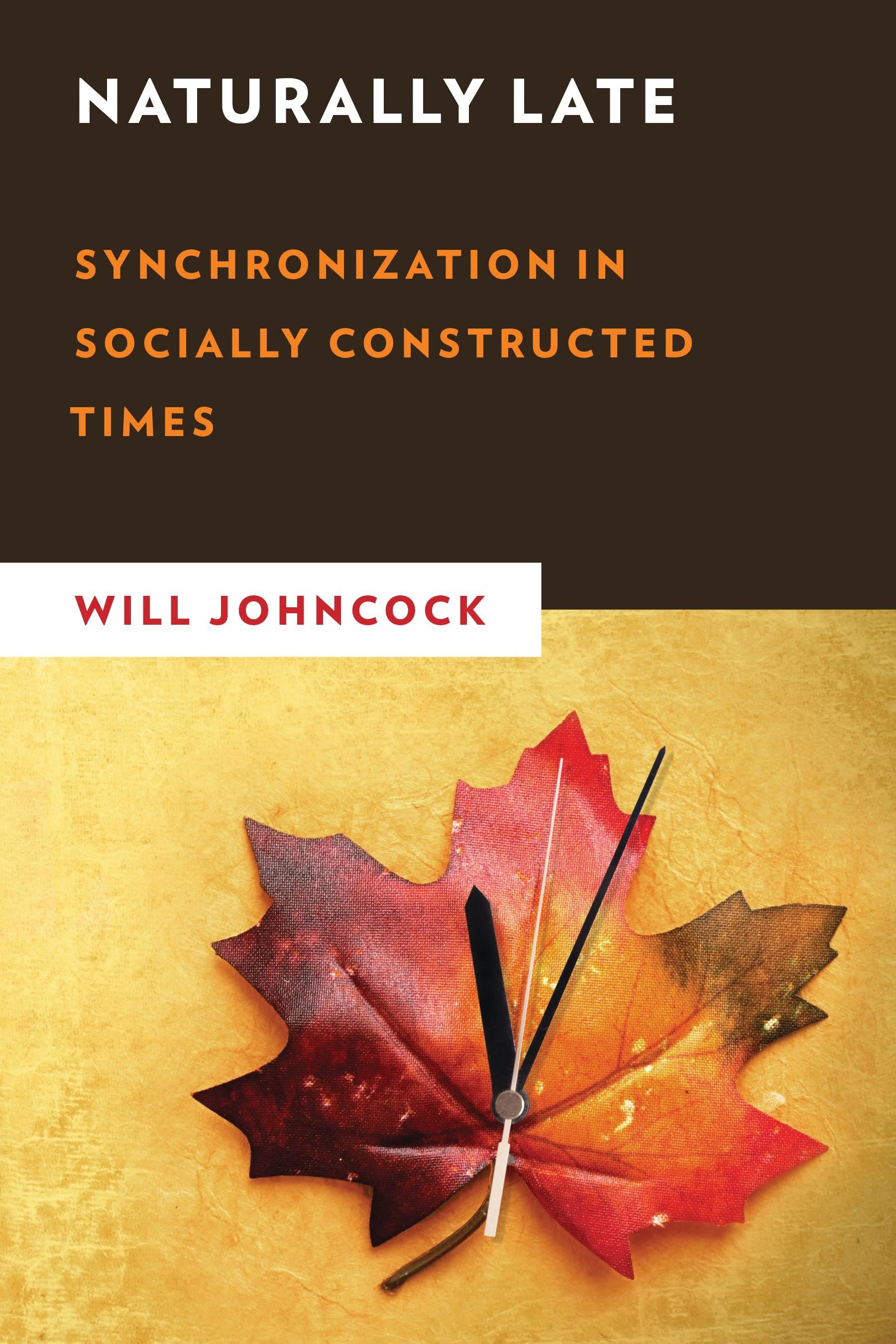
Is time a natural reality that social symbols such as clocks and calendars merely contingently represent? Lateness protocols seemingly exhibit such contingency, for not all cultures regulate synchronization identically. Just as social/cultural time structures are interpreted to diverge from time’s natural rhythm, body modifications are often presented as social productions that divert human bodies from their naturally originated, corporeal temporality. A similar separation informs climate change discourses, supposing a natural rhythm that industrialized culture has invaded, the effects of which humans might be too late to arrest.
Interrogating this conceptual separation matters, given that if certain times are considered to be more natural than others, a situated politics emerges regarding the associated cultural structures. Furthermore, our personal investments in experiences of lateness, which are embedded within social time, seemingly contradict the constructionist impression that social time is merely a contingent misrepresentation of what time actually is. Through Derridian deconstruction, Merleau-Pontian phenomenology, and Bergsonian time-philosophy, complemented with voices from fields including object oriented ontology, new materialism, and new criticism, this book re-evaluates the timing of times from a philosophical perspective.
Interrogating this conceptual separation matters, given that if certain times are considered to be more natural than others, a situated politics emerges regarding the associated cultural structures. Furthermore, our personal investments in experiences of lateness, which are embedded within social time, seemingly contradict the constructionist impression that social time is merely a contingent misrepresentation of what time actually is. Through Derridian deconstruction, Merleau-Pontian phenomenology, and Bergsonian time-philosophy, complemented with voices from fields including object oriented ontology, new materialism, and new criticism, this book re-evaluates the timing of times from a philosophical perspective.
Płać wygodnie kartą, Klarną, Apple Pay lub Google Pay. Nie jesteś zadowolony? Zawsze masz 14-dniową gwarancję zwrotu pieniędzy. Więcej przeczytasz w naszych warunkach. Masz pytania? Napisz do nas na hello@memmo.org.
Memmo ułatwia naukę – gdziekolwiek jesteś na świecie. U nas znajdziesz podręczniki i sprytne narzędzia do nauki w jednym miejscu: streszczenia, quizy, podcasty i fiszki. A do tego Ted, Twój kumpel do nauki, który odpowie na wszystko, co Cię nurtuje. Ponad 50 000 studentów już tu się uczy – stworzone, byś uczył się szybciej i mniej stresował.