
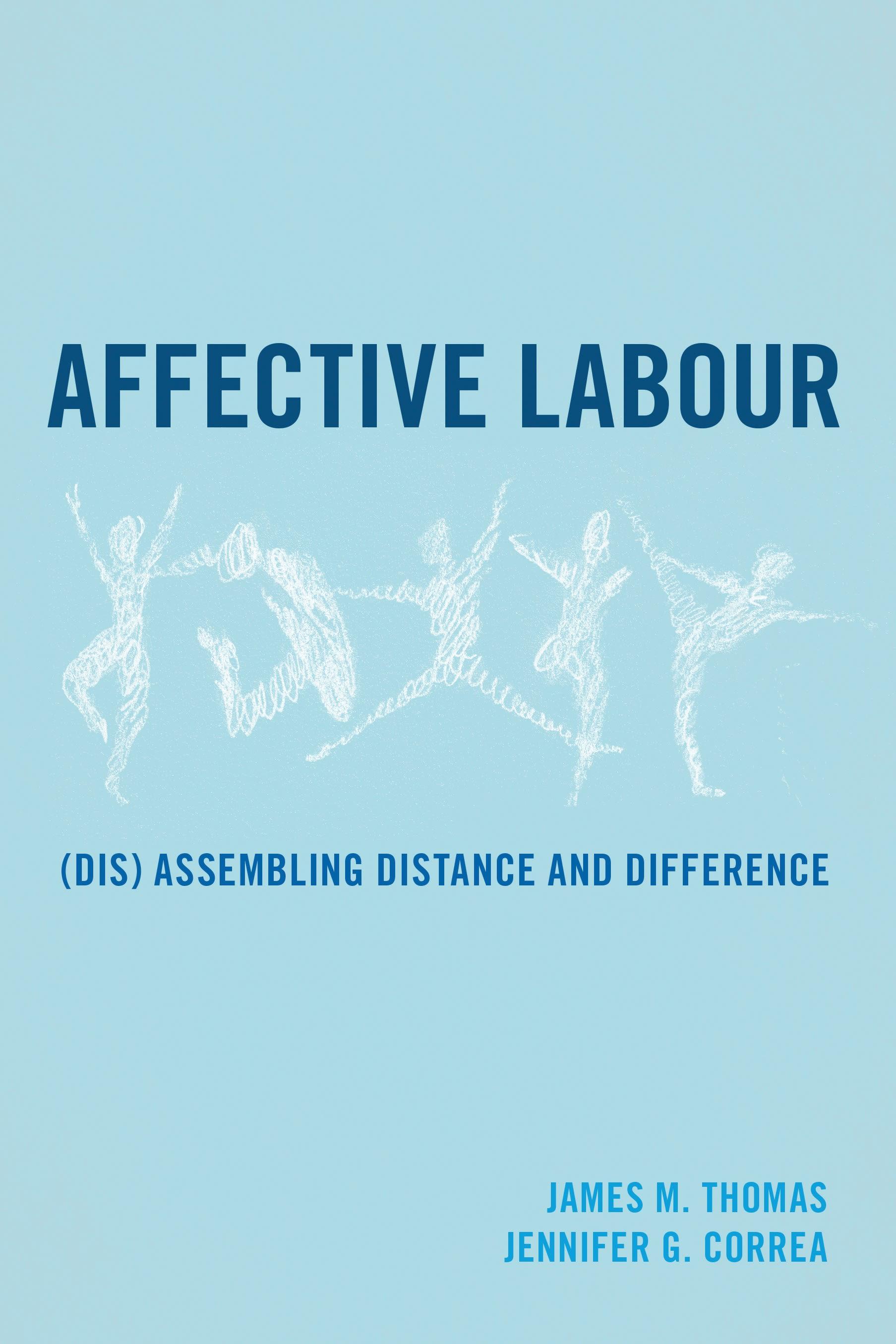
Affective Labour explores four distinct landscapes in order to demonstrate how collective feelings are organized by social actors in order to both reproduce and contest hegemony. Utilizing a variety of methods, including participant observation, in-depth interviews across field sites, and content analysis of mass media, Correa and Thomas demonstrate the centrality of affective labor in enabling and constraining prevailing norms and practices of race, citizenship, class, gender, and sexuality across multiple spatial contexts: the U.S.- Mexico border, urban nightlife districts, American college campuses, and emergent social movements against the police state.
The book demonstrates how the power of affective labour might be harnessed for progressively oriented world-building projects, including what the authors term an ‘affective labour from below.’ By tying an analysis of affective labour into movements for social justice, the authors aim to produce a critical theory of the world that can be practically applied.
The book demonstrates how the power of affective labour might be harnessed for progressively oriented world-building projects, including what the authors term an ‘affective labour from below.’ By tying an analysis of affective labour into movements for social justice, the authors aim to produce a critical theory of the world that can be practically applied.
Płać wygodnie kartą, Klarną, Apple Pay lub Google Pay. Nie jesteś zadowolony? Zawsze masz 14-dniową gwarancję zwrotu pieniędzy. Więcej przeczytasz w naszych warunkach. Masz pytania? Napisz do nas na hello@memmo.org.
Memmo ułatwia naukę – gdziekolwiek jesteś na świecie. U nas znajdziesz podręczniki i sprytne narzędzia do nauki w jednym miejscu: streszczenia, quizy, podcasty i fiszki. A do tego Ted, Twój kumpel do nauki, który odpowie na wszystko, co Cię nurtuje. Ponad 50 000 studentów już tu się uczy – stworzone, byś uczył się szybciej i mniej stresował.