
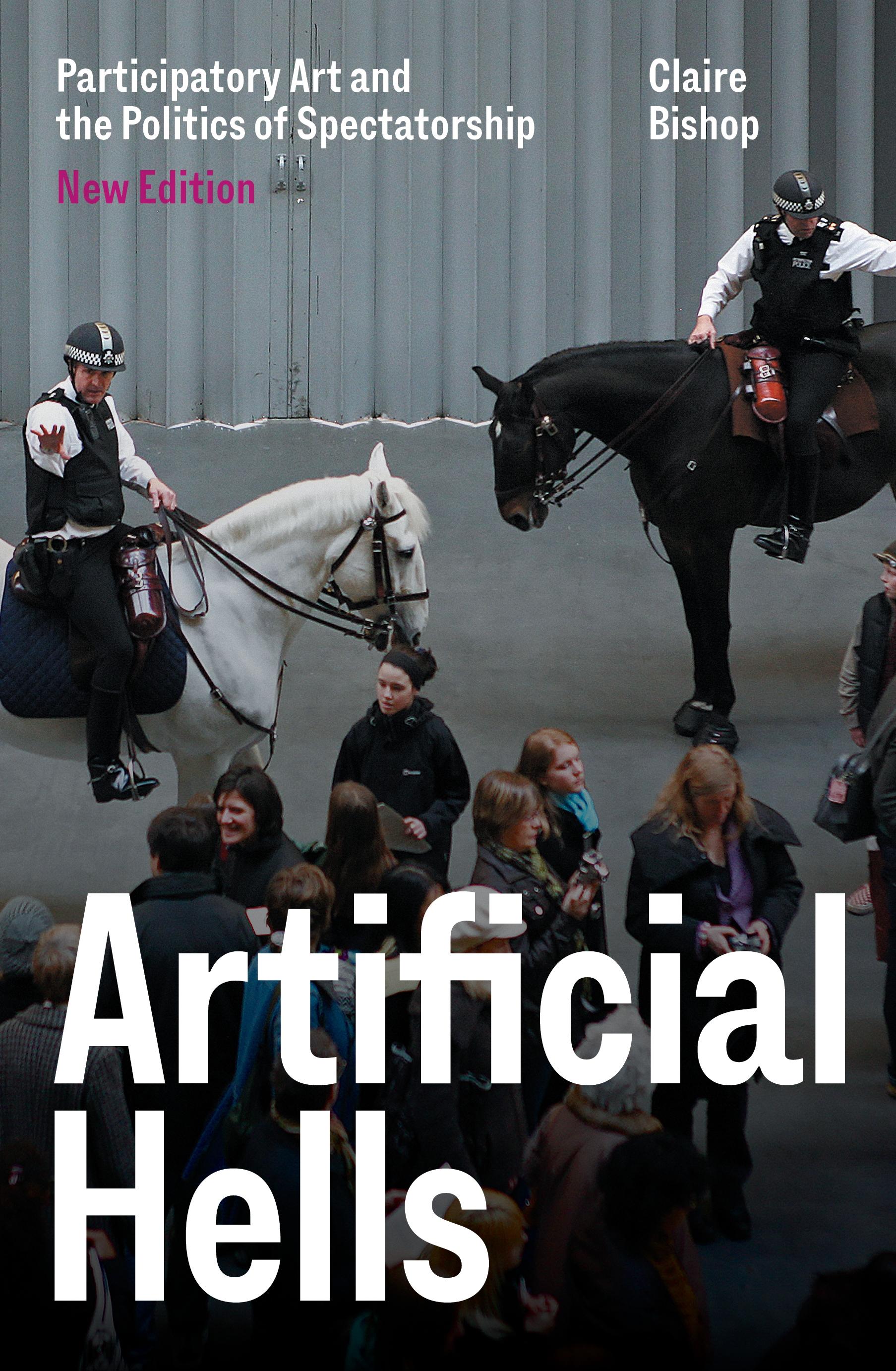
The award-winning, highly acclaimed Artificial Hells is the first historical and theoretical overview of socially engaged participatory art, known in the US as "social practice." In recent decades, the art gallery and the museum have become a place for participatory art, where an audience is encouraged to take part in the artwork. This has been heralded as a revolutionary practise that can promote new emancipatory social relations. What was it is really?
In this fully updated edition, Claire Bishop follows the trajectory of twentieth-century art and examines key moments in the development of a participatory aesthetic. This itinerary takes in Futurism and Dada; the Situationist International; Happenings in Eastern Europe, Argentina and Paris; the 1970s Community Arts Movement; and the Artists Placement Group. It concludes with a discussion of long-term educational projects by contemporary artists such as Thomas Hirschhorn, Tania Bruguera, Pawel Althamer and Paul Chan.
Bishop challenges the political and aesthetic ambitions of participatory art this practise. She not only scrutinizes the emancipatory claims, but also provides an alternative to the ethical (rather than artistic) criteria invited by such artworks. In response Artificial Hells calls for a less prescriptive approach to art and politics, and for more compelling, troubling and bolder forms of participatory art and criticism.
In this fully updated edition, Claire Bishop follows the trajectory of twentieth-century art and examines key moments in the development of a participatory aesthetic. This itinerary takes in Futurism and Dada; the Situationist International; Happenings in Eastern Europe, Argentina and Paris; the 1970s Community Arts Movement; and the Artists Placement Group. It concludes with a discussion of long-term educational projects by contemporary artists such as Thomas Hirschhorn, Tania Bruguera, Pawel Althamer and Paul Chan.
Bishop challenges the political and aesthetic ambitions of participatory art this practise. She not only scrutinizes the emancipatory claims, but also provides an alternative to the ethical (rather than artistic) criteria invited by such artworks. In response Artificial Hells calls for a less prescriptive approach to art and politics, and for more compelling, troubling and bolder forms of participatory art and criticism.
Płać wygodnie kartą, Klarną, Apple Pay lub Google Pay. Nie jesteś zadowolony? Zawsze masz 14-dniową gwarancję zwrotu pieniędzy. Więcej przeczytasz w naszych warunkach. Masz pytania? Napisz do nas na hello@memmo.org.
Memmo ułatwia naukę – gdziekolwiek jesteś na świecie. U nas znajdziesz podręczniki i sprytne narzędzia do nauki w jednym miejscu: streszczenia, quizy, podcasty i fiszki. A do tego Ted, Twój kumpel do nauki, który odpowie na wszystko, co Cię nurtuje. Ponad 50 000 studentów już tu się uczy – stworzone, byś uczył się szybciej i mniej stresował.
Może Ci się spodobać
Kup książkę0