
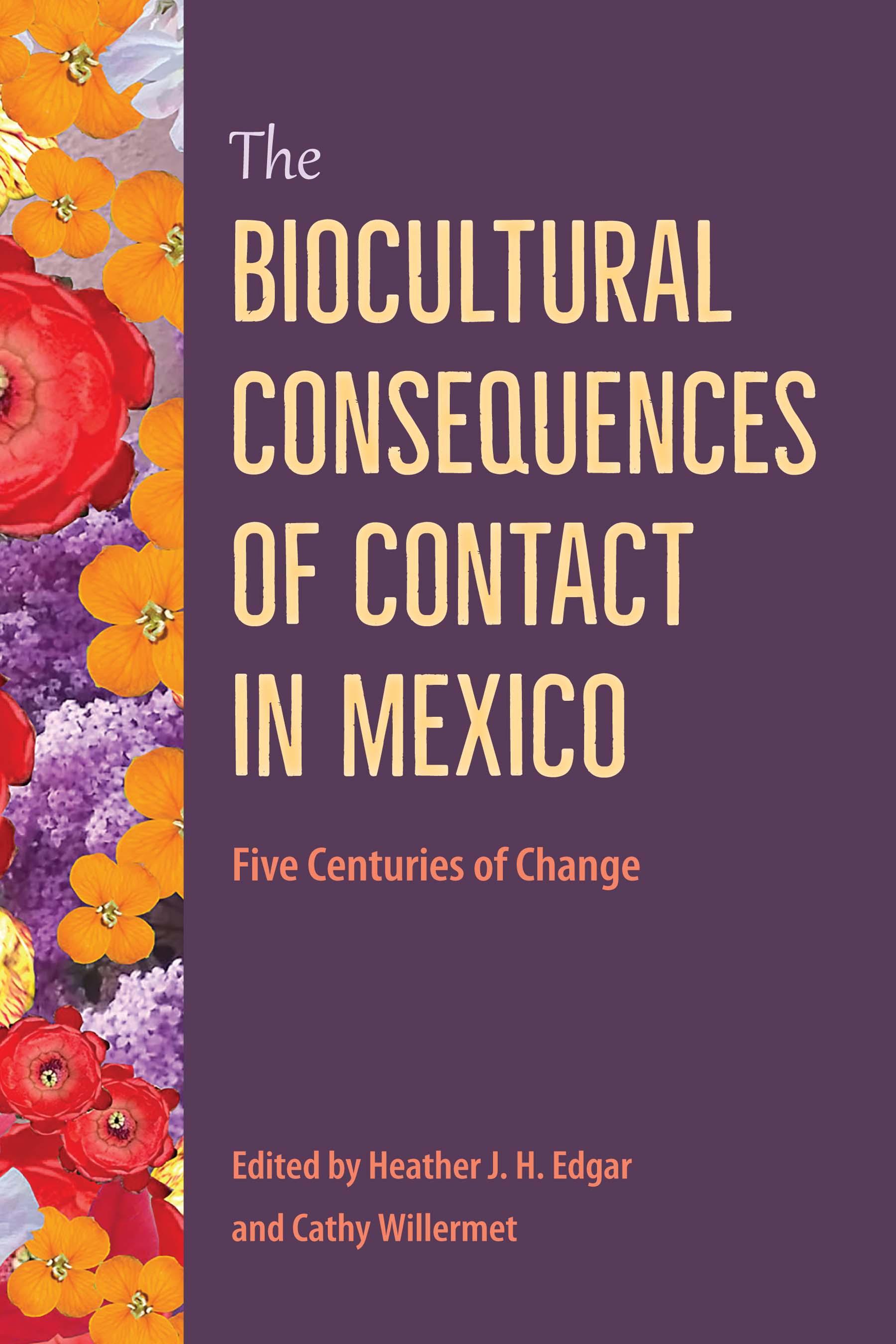
Examining the long-lasting effects of European colonization on Mexican populations
The Biocultural Consequences of Contact in Mexico explores how Mexican populations have been shaped both culturally and biologically by the arrival of Spanish conquistadors and the years following the defeat of the Aztec empire in 1521. Contributors to this volume draw on a diverse set of methods from archaeology, bioarchaeology, genetics, and history to examine the response to European colonization, providing evidence for the resilience of the Mexican people in the face of tumultuous change.
Essays focus on Central Mexico, Yucatan, and Oaxaca, providing a cross-regional perspective, and they highlight Mexican scholars’ work and viewpoints. They examine the effects of the castas system—which the colonizers used to organize society according to parentage and the social construction of race—on individuals’ and groups’ access to power, social mobility, health, and mate choice. Contributors illuminate the poorly understood extent that this system—and the national identity of mestizaje that replaced it—caused inequality and the structural violence of stress and health disparities, as well as genetic admixture.
Five hundred years after the Spanish first clashed with Aztec forces and began to influence modern Mexico, this volume adds to discussions of colonialism, the reconstruction of biosocial relationships, and the work of decolonization. Students and scholars in anthropology and history will gain insights into how human populations transform and adapt in the wake of major historical events that result in migration, demographic change, and social upheaval.
Płać wygodnie kartą, Klarną, Apple Pay lub Google Pay. Nie jesteś zadowolony? Zawsze masz 14-dniową gwarancję zwrotu pieniędzy. Więcej przeczytasz w naszych warunkach. Masz pytania? Napisz do nas na hello@memmo.org.
Memmo ułatwia naukę – gdziekolwiek jesteś na świecie. U nas znajdziesz podręczniki i sprytne narzędzia do nauki w jednym miejscu: streszczenia, quizy, podcasty i fiszki. A do tego Ted, Twój kumpel do nauki, który odpowie na wszystko, co Cię nurtuje. Ponad 50 000 studentów już tu się uczy – stworzone, byś uczył się szybciej i mniej stresował.