
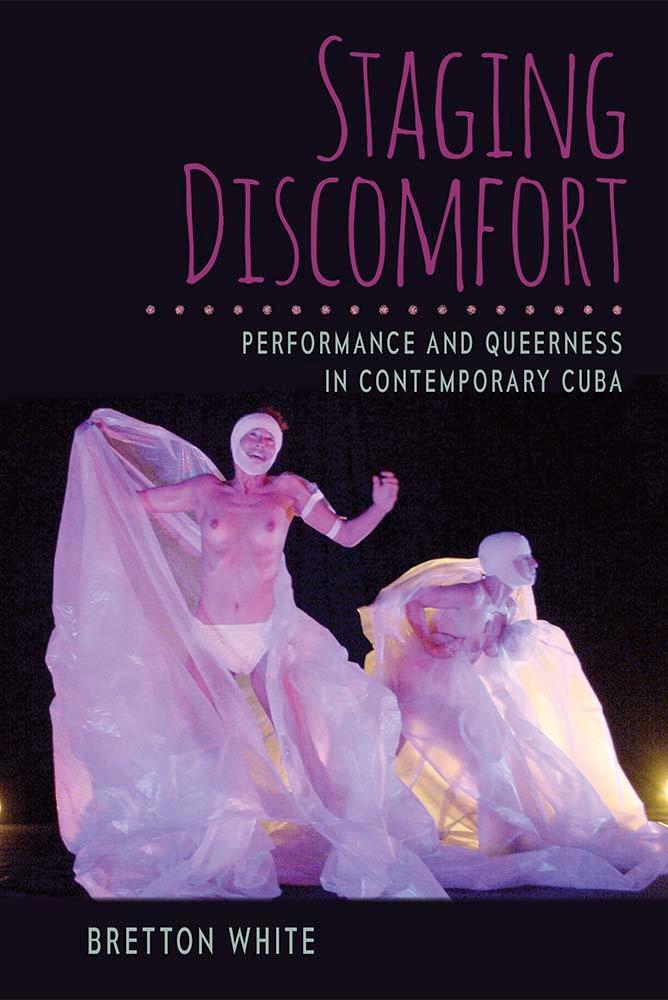
This visionary volume examines how queer bodies are theatrically represented on the Cuban stage in ways that challenge one of the state’s primary revolutionary tools, the categorization and homogenization of individuals. Bretton White critically analyzes contemporary performances that upset traditional understandings of performer and spectator, as well as what constitutes the ideal Cuban citizenry.
Following the 1959 revolution, nonconformists were monitored and reported by local committees and punished or reformed by the government. Censorship was rampant, and Cuban art suffered as the state tried to control the national message. Through the lens of queer theory, White explores how the body has been central to the state’s fear-based marginalization of gay life and looks at the ways these theatrical performances defuse that fear. She highlights the revolutionary model of masculinity and the role it plays in excluding people based upon visible queer difference. White finds that, through experimental performances of sexuality, actors create connections with audiences to evoke shared feelings of discomfort, intimacy, shame, longing, frustration, and failure, which echo the prevalence of these feelings in other Cuban spaces. By performing queerness, these plays question the state’s narrative of heteronormativity and empower citizens to negotiate alternative understandings of Cuban identity.
Płać wygodnie kartą, Klarną, Apple Pay lub Google Pay. Nie jesteś zadowolony? Zawsze masz 14-dniową gwarancję zwrotu pieniędzy. Więcej przeczytasz w naszych warunkach. Masz pytania? Napisz do nas na hello@memmo.org.
Memmo ułatwia naukę – gdziekolwiek jesteś na świecie. U nas znajdziesz podręczniki i sprytne narzędzia do nauki w jednym miejscu: streszczenia, quizy, podcasty i fiszki. A do tego Ted, Twój kumpel do nauki, który odpowie na wszystko, co Cię nurtuje. Ponad 50 000 studentów już tu się uczy – stworzone, byś uczył się szybciej i mniej stresował.
Może Ci się spodobać
Kup książkę0