
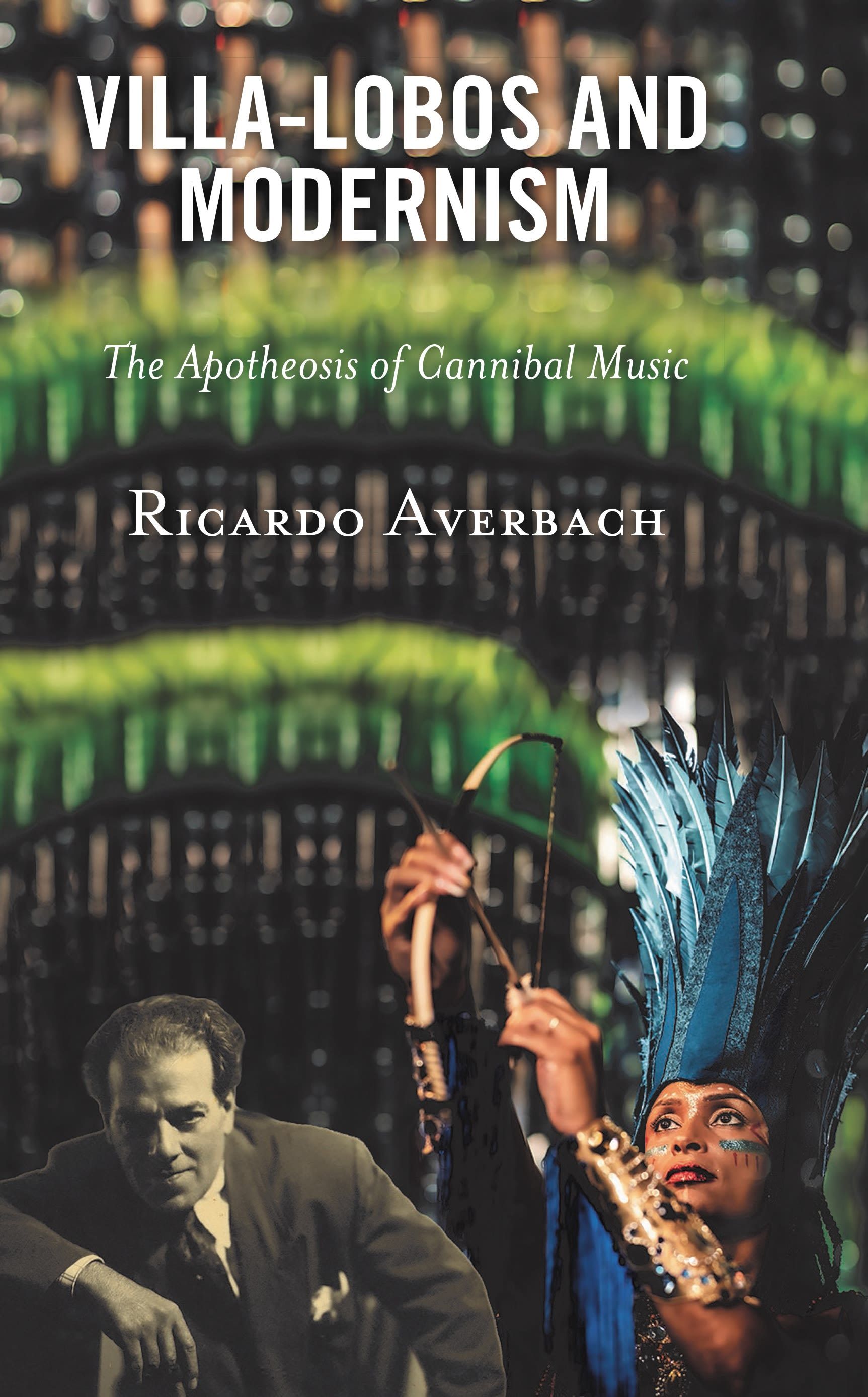
Villa-Lobos and Modernism: The Apotheosis of Cannibal Music provides a new assessment of the Brazilian composer Heitor Villa-Lobos in terms of his contributions to the Modernist Movement of the twentieth century. In this profound study, Ricardo Averbach elevates Cultural Cannibalism as a major manifestation of the Modernist aesthetics and Villa-Lobos as its top exponent in the music field. Villa-Lobos’s anthropophagic appetite for multiple opposing aesthetics enlightens through the juxtaposition of contradictory elements, leaving a legacy of unmatched originality, a glittering kaleidoscope of sounds that draw from the radical power of Josephine Baker to the outrageous extravagance of Carmen Miranda, from Dada to Einstein’s counterintuitive scientific findings, from folklorism to atonality. The constructed analyses use the works of Stravinsky as a familiar and popular touchstone for accessing Villa-Lobos as the leading exponent of an aesthetic movement that has been neglected due to a traditional Eurocentric view of Modernism. Averbach opens up new possibilities for the study of twentieth-century music, in general, while unveiling how much our present aesthetics owes to the Modernist ideas introduced by the Brazilian composer.
Płać wygodnie kartą, Klarną, Apple Pay lub Google Pay. Nie jesteś zadowolony? Zawsze masz 14-dniową gwarancję zwrotu pieniędzy. Więcej przeczytasz w naszych warunkach. Masz pytania? Napisz do nas na hello@memmo.org.
Memmo ułatwia naukę – gdziekolwiek jesteś na świecie. U nas znajdziesz podręczniki i sprytne narzędzia do nauki w jednym miejscu: streszczenia, quizy, podcasty i fiszki. A do tego Ted, Twój kumpel do nauki, który odpowie na wszystko, co Cię nurtuje. Ponad 50 000 studentów już tu się uczy – stworzone, byś uczył się szybciej i mniej stresował.