
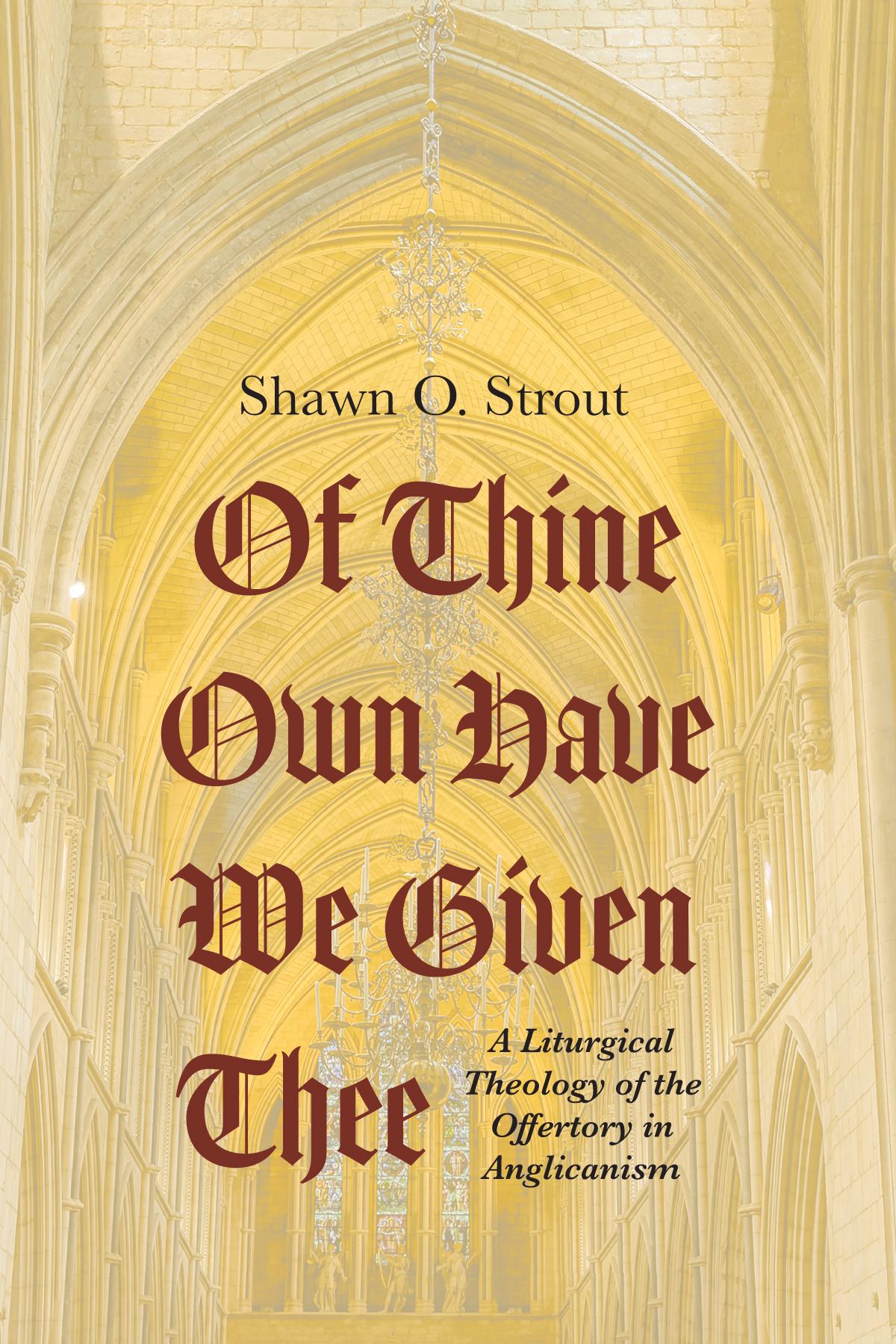
Every Sunday around the world, Christians offer money and in-kind gifts to the church, traditionally known as alms. For communities that celebrate the Eucharist regularly, bread and wine, traditionally known as oblations, often accompany these gifts. What does it mean theologically for Christians to offer gifts to God, who first offered the greatest gift of Jesus Christ? This question regarding the role of alms and oblations in the liturgy was among the most controversial questions of the English Reformations in the sixteenth century. While the eucharistic prayer proper has often been the site of this theological controversy, the offertory rite has also received great attention. The 1552 English Book of Common Prayer excised all references to oblation in the offertory rite, but oblationary language and actions, such as the offertory procession, returned in full force by the twentieth century. The movement from the near elimination of oblation in the offertory rite to its widespread usage in the churches of the Anglican Communion is a remarkable liturgical and theological development. Using liturgical theology's tools of historical, textual, and contextual analyses, this book explores how this development occurred and why it is important for the church today.
Płać wygodnie kartą, Klarną, Apple Pay lub Google Pay. Nie jesteś zadowolony? Zawsze masz 14-dniową gwarancję zwrotu pieniędzy. Więcej przeczytasz w naszych warunkach. Masz pytania? Napisz do nas na hello@memmo.org.
Memmo ułatwia naukę – gdziekolwiek jesteś na świecie. U nas znajdziesz podręczniki i sprytne narzędzia do nauki w jednym miejscu: streszczenia, quizy, podcasty i fiszki. A do tego Ted, Twój kumpel do nauki, który odpowie na wszystko, co Cię nurtuje. Ponad 50 000 studentów już tu się uczy – stworzone, byś uczył się szybciej i mniej stresował.
Może Ci się spodobać
Kup książkę0