
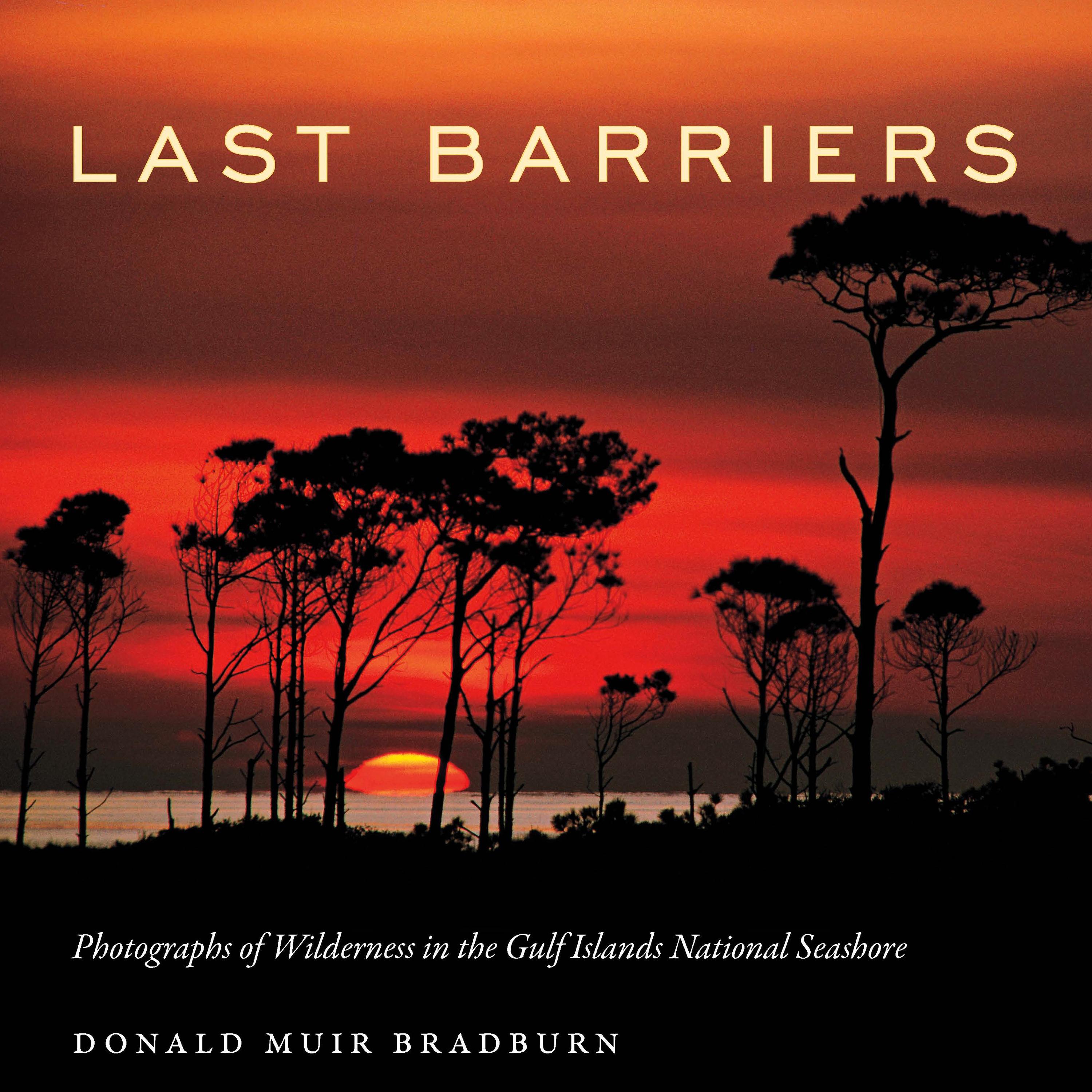
Rarely has a book of photography performed a more poignant and immediate service in preserving a natural Mississippi wonder. The Mississippi Gulf Coast barrier islands captured the heart and mind of Donald Muir Bradburn (1924–2012) in childhood. He became fascinated with the natural history and ornithology he witnessed. To him, the islands, especially Horn Island with its dark forests, high dunes, and deserted beaches, represented unbounded freedom and the ideal of a timeless world.
Years later, when the National Park Service threatened to open the islands to “almost unlimited opportunities for camping, picnicking, water skiing, boating, bicycling, hiking, and bird watching,” Bradburn became an activist for preservation, focusing on saving Horn Island and Petit Bois Island as unchanged wilderness. In addition to supporting legislation that would keep both islands part of the National Wilderness System, Bradburn photographed the islands and their plants to show conservationist groups and individuals what was at stake and motivate them to join the fight. Eventually, through his efforts and those of others, Congress passed the National Parks and Recreation Act of 1978, which designated Horn and Petit Bois Islands as wilderness. For a time, the legislation saved a place shimmering with natural grace. After the fright and insult of the BP Deepwater Horizon oil spill in the Gulf of Mexico, Bradburn’s photographs are an even more deeply felt act of preservation.
Last Barriers: Photographs from the Gulf Islands National Seashore is a collection of 120 images taken of the Gulf Coast islands that preoccupied his life and photography. The large majority of these are of Horn Island long before Hurricane Katrina and include landscapes in various weather conditions and during different times of the day, flora and fauna, and various habitats, seen either close-up or from afar. Each is accompanied by a detailed caption stating the date taken, the biological information of the species and plants depicted, and landscape descriptions. In a personal essay, Bradburn movingly reflects on his attachment to these island wonders and records the history of the efforts to save them.
Years later, when the National Park Service threatened to open the islands to “almost unlimited opportunities for camping, picnicking, water skiing, boating, bicycling, hiking, and bird watching,” Bradburn became an activist for preservation, focusing on saving Horn Island and Petit Bois Island as unchanged wilderness. In addition to supporting legislation that would keep both islands part of the National Wilderness System, Bradburn photographed the islands and their plants to show conservationist groups and individuals what was at stake and motivate them to join the fight. Eventually, through his efforts and those of others, Congress passed the National Parks and Recreation Act of 1978, which designated Horn and Petit Bois Islands as wilderness. For a time, the legislation saved a place shimmering with natural grace. After the fright and insult of the BP Deepwater Horizon oil spill in the Gulf of Mexico, Bradburn’s photographs are an even more deeply felt act of preservation.
Last Barriers: Photographs from the Gulf Islands National Seashore is a collection of 120 images taken of the Gulf Coast islands that preoccupied his life and photography. The large majority of these are of Horn Island long before Hurricane Katrina and include landscapes in various weather conditions and during different times of the day, flora and fauna, and various habitats, seen either close-up or from afar. Each is accompanied by a detailed caption stating the date taken, the biological information of the species and plants depicted, and landscape descriptions. In a personal essay, Bradburn movingly reflects on his attachment to these island wonders and records the history of the efforts to save them.
Płać wygodnie kartą, Klarną, Apple Pay lub Google Pay. Nie jesteś zadowolony? Zawsze masz 14-dniową gwarancję zwrotu pieniędzy. Więcej przeczytasz w naszych warunkach. Masz pytania? Napisz do nas na hello@memmo.org.
Memmo ułatwia naukę – gdziekolwiek jesteś na świecie. U nas znajdziesz podręczniki i sprytne narzędzia do nauki w jednym miejscu: streszczenia, quizy, podcasty i fiszki. A do tego Ted, Twój kumpel do nauki, który odpowie na wszystko, co Cię nurtuje. Ponad 50 000 studentów już tu się uczy – stworzone, byś uczył się szybciej i mniej stresował.
Może Ci się spodobać
Kup książkę0