
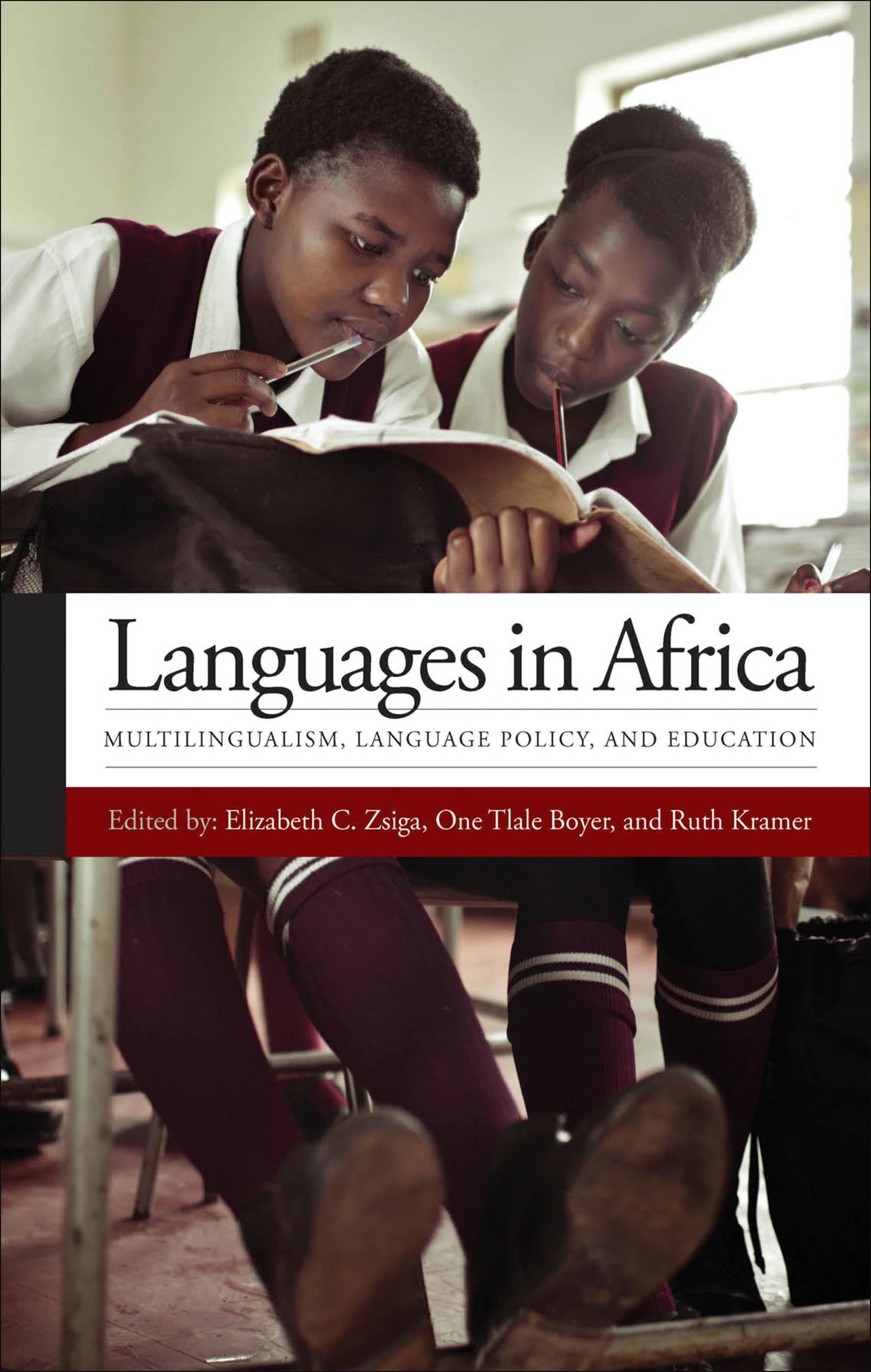
Languages in Africa
People in many African communities live within a series of concentric circles when it comes to language. In a small group, a speaker uses an often unwritten and endangered mother tongue that is rarely used in school. A national indigenous language—written, widespread, sometimes used in school—surrounds it. An international language like French or English, a vestige of colonialism, carries prestige, is used in higher education, and promises mobility—and yet it will not be well known by its users.
The essays in Languages in Africa explore the layers of African multilingualism as they affect language policy and education. Through case studies ranging across the continent, the contributors consider multilingualism in the classroom as well as in domains ranging from music and film to politics and figurative language. The contributors report on the widespread devaluing and even death of indigenous languages. They also investigate how poor teacher training leads to language-related failures in education. At the same time, they demonstrate that education in a mother tongue can work, linguists can use their expertise to provoke changes in language policies, and linguistic creativity thrives in these multilingual communities.
Płać wygodnie kartą, Klarną, Apple Pay lub Google Pay. Nie jesteś zadowolony? Zawsze masz 14-dniową gwarancję zwrotu pieniędzy. Więcej przeczytasz w naszych warunkach. Masz pytania? Napisz do nas na hello@memmo.org.
Memmo ułatwia naukę – gdziekolwiek jesteś na świecie. U nas znajdziesz podręczniki i sprytne narzędzia do nauki w jednym miejscu: streszczenia, quizy, podcasty i fiszki. A do tego Ted, Twój kumpel do nauki, który odpowie na wszystko, co Cię nurtuje. Ponad 50 000 studentów już tu się uczy – stworzone, byś uczył się szybciej i mniej stresował.