
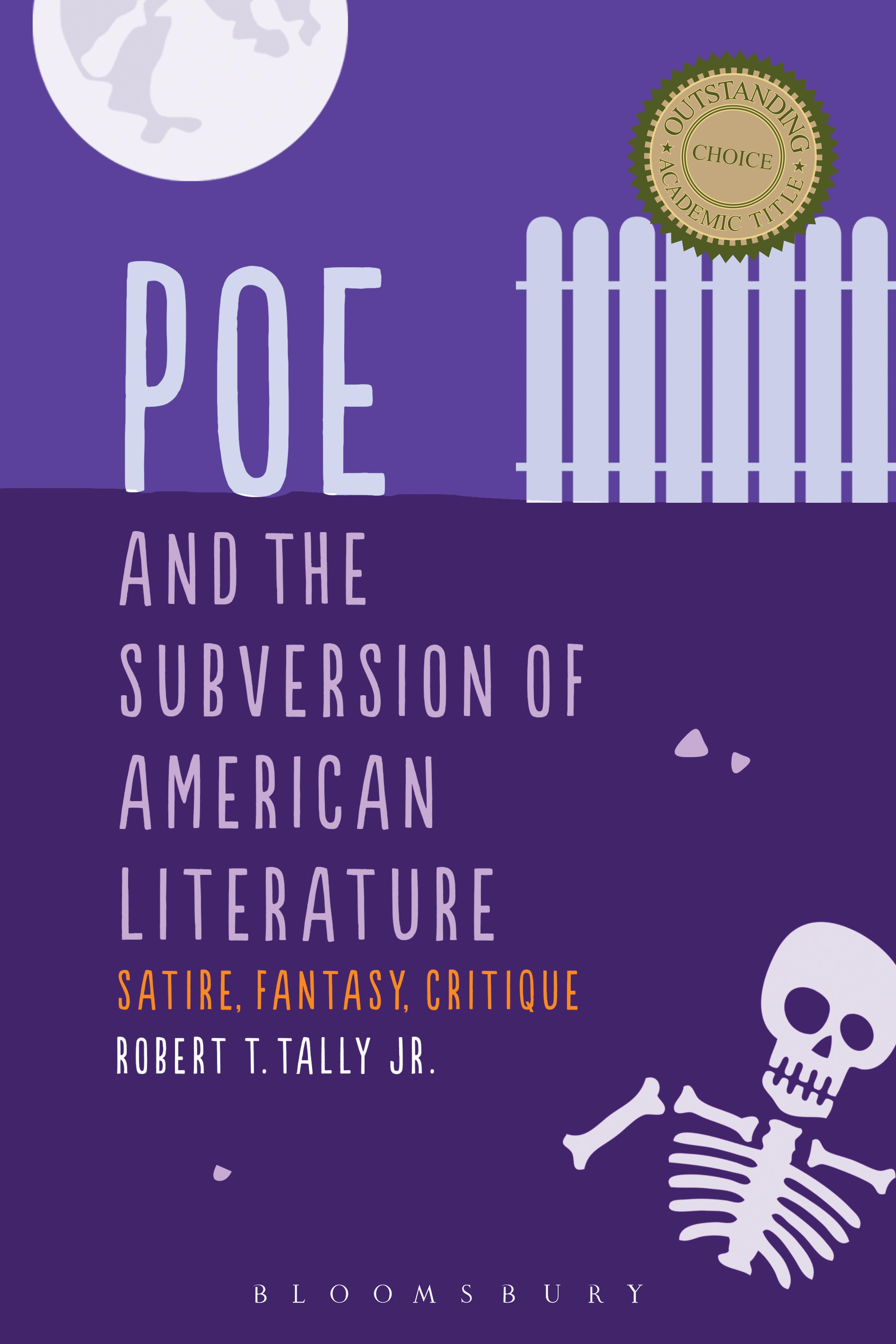
Choice Outstanding Academic Title 2014
In Poe and the Subversion of American Literature, Robert T. Tally Jr. argues that Edgar Allan Poe is best understood, not merely as a talented artist or canny magazinist, but primarily as a practical joker who employs satire and fantasy to poke fun at an emergent nationalist discourse circulating in the United States. Poe's satirical and fantastic mode, on display even in his apparently serious short stories and literary criticism, undermines the earnest attempts to establish a distinctively national literature in the nineteenth century. In retrospect, Poe's work also subtly subverts the tenets of an institutionalized American Studies in the twentieth century. Tally interprets Poe's life and works in light of his own social milieu and in relation to the disciplinary field of American literary studies, finding Poe to be neither the poète maudit of popular mythology nor the representative American writer revealed by recent scholarship. Rather, Poe is an untimely figure whose work ultimately makes a mockery of those who would seek to contain it. Drawing upon Gilles Deleuze's distinction between nomad thought and state philosophy, Tally argues that Poe's varied literary and critical writings represent an alternative to American literature. Through his satirical critique of U.S. national culture and his otherworldly projection of a postnational space of the imagination, Poe establishes a subterranean, nomadic, and altogether worldly literary practice.
In Poe and the Subversion of American Literature, Robert T. Tally Jr. argues that Edgar Allan Poe is best understood, not merely as a talented artist or canny magazinist, but primarily as a practical joker who employs satire and fantasy to poke fun at an emergent nationalist discourse circulating in the United States. Poe's satirical and fantastic mode, on display even in his apparently serious short stories and literary criticism, undermines the earnest attempts to establish a distinctively national literature in the nineteenth century. In retrospect, Poe's work also subtly subverts the tenets of an institutionalized American Studies in the twentieth century. Tally interprets Poe's life and works in light of his own social milieu and in relation to the disciplinary field of American literary studies, finding Poe to be neither the poète maudit of popular mythology nor the representative American writer revealed by recent scholarship. Rather, Poe is an untimely figure whose work ultimately makes a mockery of those who would seek to contain it. Drawing upon Gilles Deleuze's distinction between nomad thought and state philosophy, Tally argues that Poe's varied literary and critical writings represent an alternative to American literature. Through his satirical critique of U.S. national culture and his otherworldly projection of a postnational space of the imagination, Poe establishes a subterranean, nomadic, and altogether worldly literary practice.
Płać wygodnie kartą, Klarną, Apple Pay lub Google Pay. Nie jesteś zadowolony? Zawsze masz 14-dniową gwarancję zwrotu pieniędzy. Więcej przeczytasz w naszych warunkach. Masz pytania? Napisz do nas na hello@memmo.org.
Memmo ułatwia naukę – gdziekolwiek jesteś na świecie. U nas znajdziesz podręczniki i sprytne narzędzia do nauki w jednym miejscu: streszczenia, quizy, podcasty i fiszki. A do tego Ted, Twój kumpel do nauki, który odpowie na wszystko, co Cię nurtuje. Ponad 50 000 studentów już tu się uczy – stworzone, byś uczył się szybciej i mniej stresował.