
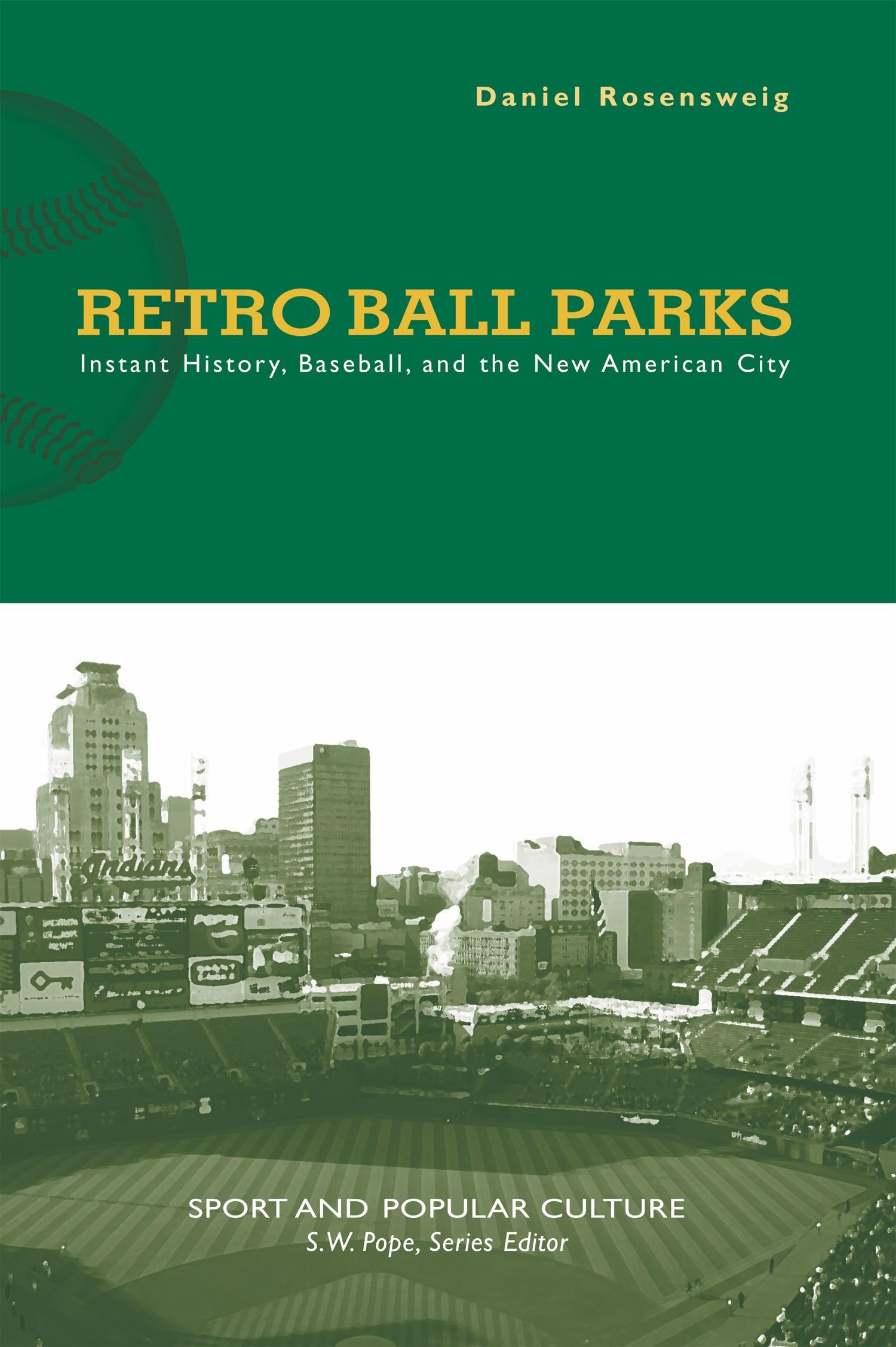
Oriole Park at Camden Yards in Baltimore opened in 1992 as an intentional antidote to the modern multiuse athletic stadium. Home to only one sport and featuring accents of classic parks of previous generations. Oriole Park attempted to reconstitute Baltimore’s past while serving as a cornerstone of downtown redevelopment. Since the gates opened at Camden yards, more than a dozen other American cities have constructed “new old” major league parks—Cleveland, Detroit, Seattle, Pittsburgh, Milwaukee, Atlanta, Denver, Phoenix, San Francisco, Cincinnati, Houston, Arlington, Texas, and San Diego. In Retro Ball Parks, Daniel Rosenweig explores the cultural and economic role of retro baseball parks and traces the cultural implications of re-creating the old in new urban spaces.
According to Rosenweig, the new urban landscape around these retro stadiums often presents a more homogenous culture than the one the new park replaced. Indeed, whole sections of cities have razed in order to build stadiums that cater to clientele eager to enjoy a nostalgic urban experience. This mandate to draw suburban residents and tourists to the heart of downtown, combined with the accompanying gentrification of these newly redeveloped areas, has fundamentally altered historic urban centers.
Focusing on Cleveland’s Jacobs Field as a case study, Rosenweig explores the political economy surrounding the construction of downtown ball parks, which have emerged as key components of urban entertainment-based development. Blending economic and cultural analysis, he considers the intersection of race and class in these new venues. For example, he shows that African American consumers in the commercial district around Jacobs Field have largely been replaced by symbolic representations of African American culture, such as piped-in rap music and Jackie Robinson replica jerseys. He concludes that the question of authenticity, the question of what it means to simultaneously commemorate and commodify the past in retro ball parks, mirrors larger cultural issues regarding the nature and implications of urban redevelopment and gentrification.
Płać wygodnie kartą, Klarną, Apple Pay lub Google Pay. Nie jesteś zadowolony? Zawsze masz 14-dniową gwarancję zwrotu pieniędzy. Więcej przeczytasz w naszych warunkach. Masz pytania? Napisz do nas na hello@memmo.org.
Memmo ułatwia naukę – gdziekolwiek jesteś na świecie. U nas znajdziesz podręczniki i sprytne narzędzia do nauki w jednym miejscu: streszczenia, quizy, podcasty i fiszki. A do tego Ted, Twój kumpel do nauki, który odpowie na wszystko, co Cię nurtuje. Ponad 50 000 studentów już tu się uczy – stworzone, byś uczył się szybciej i mniej stresował.