
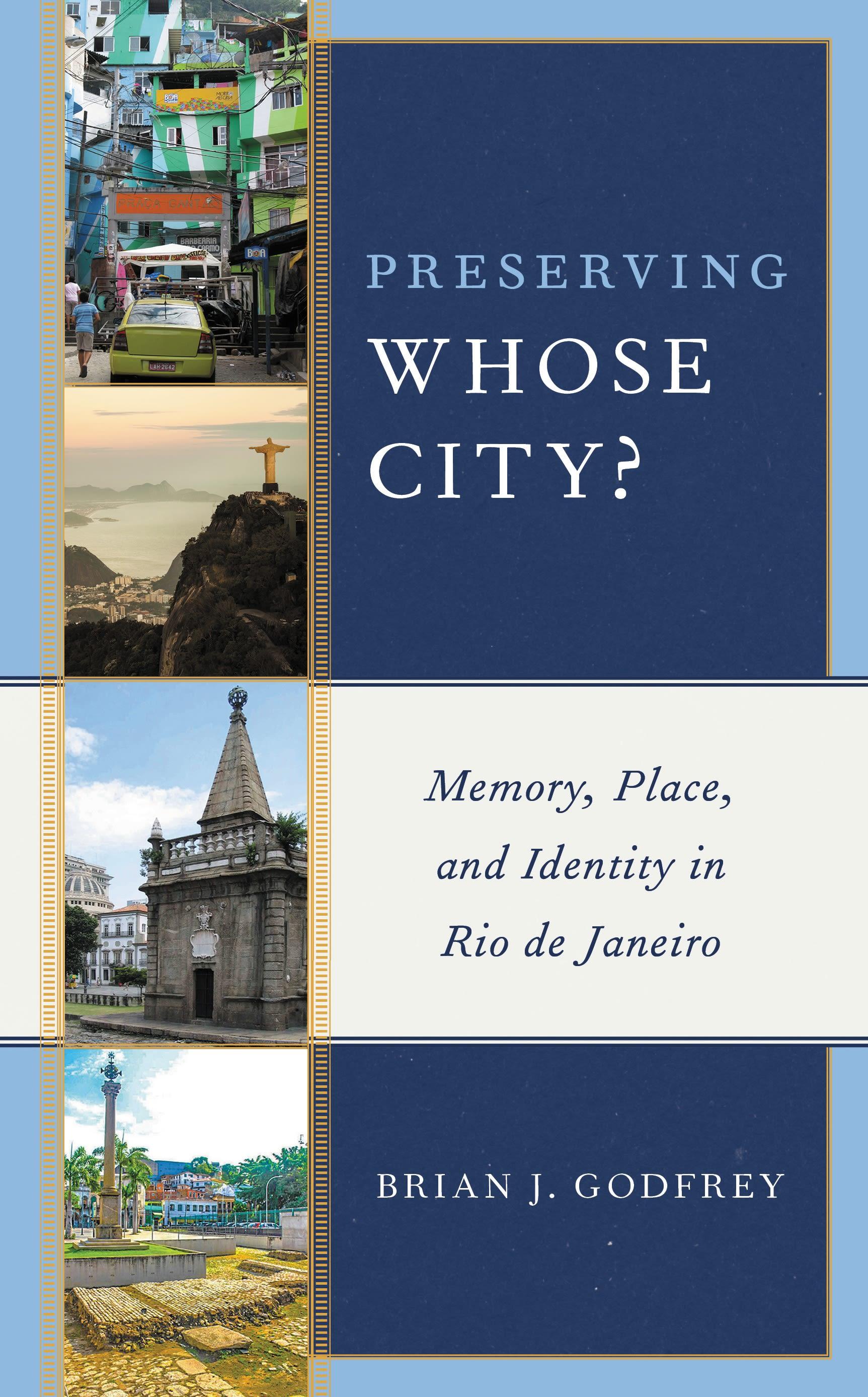
With Brazil’s largest concentration of historic landmarks and famous landscapes, Rio de Janeiro’s passionate heritage debates have helped to define both the city and the country. Taking a critical preservationist stance, Brian Godfrey explores how historic designation and urban rebranding have shaped Rio’s distinctive sense of place.
Official heritage programs date from the 1930s, when federal authorities centralized power and promoted nationalism. The city began a heritage-based strategy of urban revitalization and rebranding in the 1980s––the “Cultural Corridor” of historic places downtown. Subsequent rediscovery of the old “Little Africa” district and continuing struggles of favela communities have emphasized narratives of “counter-memory” against racism, social injustice, and governmental neglect. Meanwhile environmental activism has encouraged programs to conserve the historic landscapes of Rio’s famous mountains, forests, beaches, and bays.
While historic preservation often presumes to conserve or restore heritage sites according to a preexisting authenticity, Godfrey shows how the past actually becomes a resource for present-day interests. Memory brokers have guided the reinvention of historic places, determining whose past has been preserved. Debates over the “right of remembrance,” he argues, shape place memories and identities in this spectacular if highly unequal megacity, which has much to teach the world about conserving cultural diversity and urban environments.
Official heritage programs date from the 1930s, when federal authorities centralized power and promoted nationalism. The city began a heritage-based strategy of urban revitalization and rebranding in the 1980s––the “Cultural Corridor” of historic places downtown. Subsequent rediscovery of the old “Little Africa” district and continuing struggles of favela communities have emphasized narratives of “counter-memory” against racism, social injustice, and governmental neglect. Meanwhile environmental activism has encouraged programs to conserve the historic landscapes of Rio’s famous mountains, forests, beaches, and bays.
While historic preservation often presumes to conserve or restore heritage sites according to a preexisting authenticity, Godfrey shows how the past actually becomes a resource for present-day interests. Memory brokers have guided the reinvention of historic places, determining whose past has been preserved. Debates over the “right of remembrance,” he argues, shape place memories and identities in this spectacular if highly unequal megacity, which has much to teach the world about conserving cultural diversity and urban environments.
Płać wygodnie kartą, Klarną, Apple Pay lub Google Pay. Nie jesteś zadowolony? Zawsze masz 14-dniową gwarancję zwrotu pieniędzy. Więcej przeczytasz w naszych warunkach. Masz pytania? Napisz do nas na hello@memmo.org.
Memmo ułatwia naukę – gdziekolwiek jesteś na świecie. U nas znajdziesz podręczniki i sprytne narzędzia do nauki w jednym miejscu: streszczenia, quizy, podcasty i fiszki. A do tego Ted, Twój kumpel do nauki, który odpowie na wszystko, co Cię nurtuje. Ponad 50 000 studentów już tu się uczy – stworzone, byś uczył się szybciej i mniej stresował.