
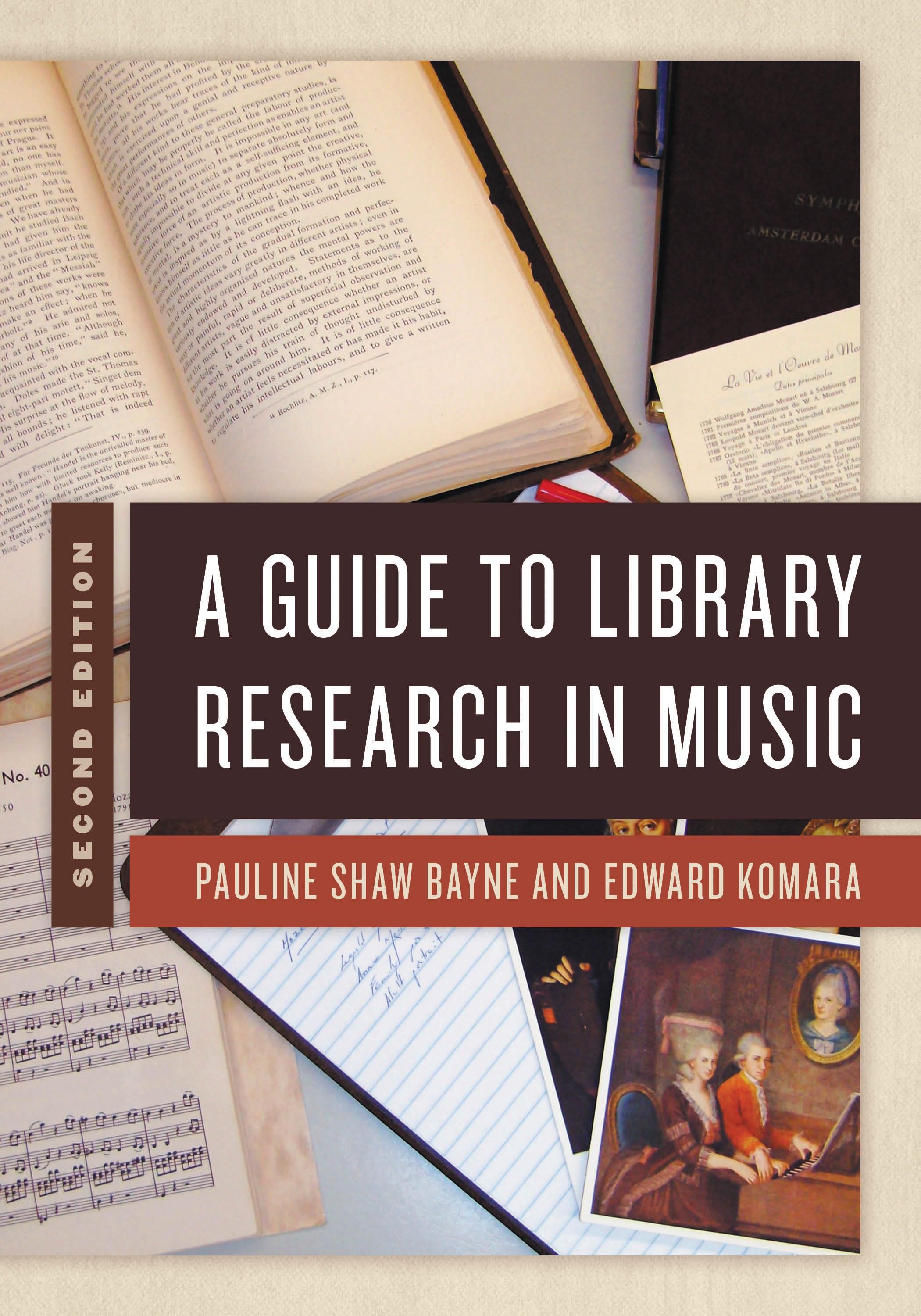
A Guide to Library Research in Music introduces students to the process and techniques for researching and writing about music. It provides examples of different types of writing, offers a thorough introduction to music literature, describes various information-searching methods and library-based organizational systems, and explores the wide array of music resources.
This second edition discusses the latest innovations in library catalog searching, new matters in digital technology, and the expansion in musical genres for library research. The book’s organization allows for three independent tracks of study.
Part 1 treats essentials of the research process, explaining starting-point resources such as library catalogs, dictionaries, and bibliographies. It addresses scholarly documentation, the use of style manuals, and basics of copyright.
Part 2 develops skills and strategies for library- and Internet-based research, describing database structures and library catalogs, subject searching in catalogs and journal indexes, keyword searching techniques, related-record searching and citation databases, and the use of experts and thematic catalogs.
Part 3 discusses the organization of a music library, emphasizing score collections, books and journals in music literature, and music teaching publications.
This second edition discusses the latest innovations in library catalog searching, new matters in digital technology, and the expansion in musical genres for library research. The book’s organization allows for three independent tracks of study.
Part 1 treats essentials of the research process, explaining starting-point resources such as library catalogs, dictionaries, and bibliographies. It addresses scholarly documentation, the use of style manuals, and basics of copyright.
Part 2 develops skills and strategies for library- and Internet-based research, describing database structures and library catalogs, subject searching in catalogs and journal indexes, keyword searching techniques, related-record searching and citation databases, and the use of experts and thematic catalogs.
Part 3 discusses the organization of a music library, emphasizing score collections, books and journals in music literature, and music teaching publications.
Płać wygodnie kartą, Klarną, Apple Pay lub Google Pay. Nie jesteś zadowolony? Zawsze masz 14-dniową gwarancję zwrotu pieniędzy. Więcej przeczytasz w naszych warunkach. Masz pytania? Napisz do nas na hello@memmo.org.
Memmo ułatwia naukę – gdziekolwiek jesteś na świecie. U nas znajdziesz podręczniki i sprytne narzędzia do nauki w jednym miejscu: streszczenia, quizy, podcasty i fiszki. A do tego Ted, Twój kumpel do nauki, który odpowie na wszystko, co Cię nurtuje. Ponad 50 000 studentów już tu się uczy – stworzone, byś uczył się szybciej i mniej stresował.