
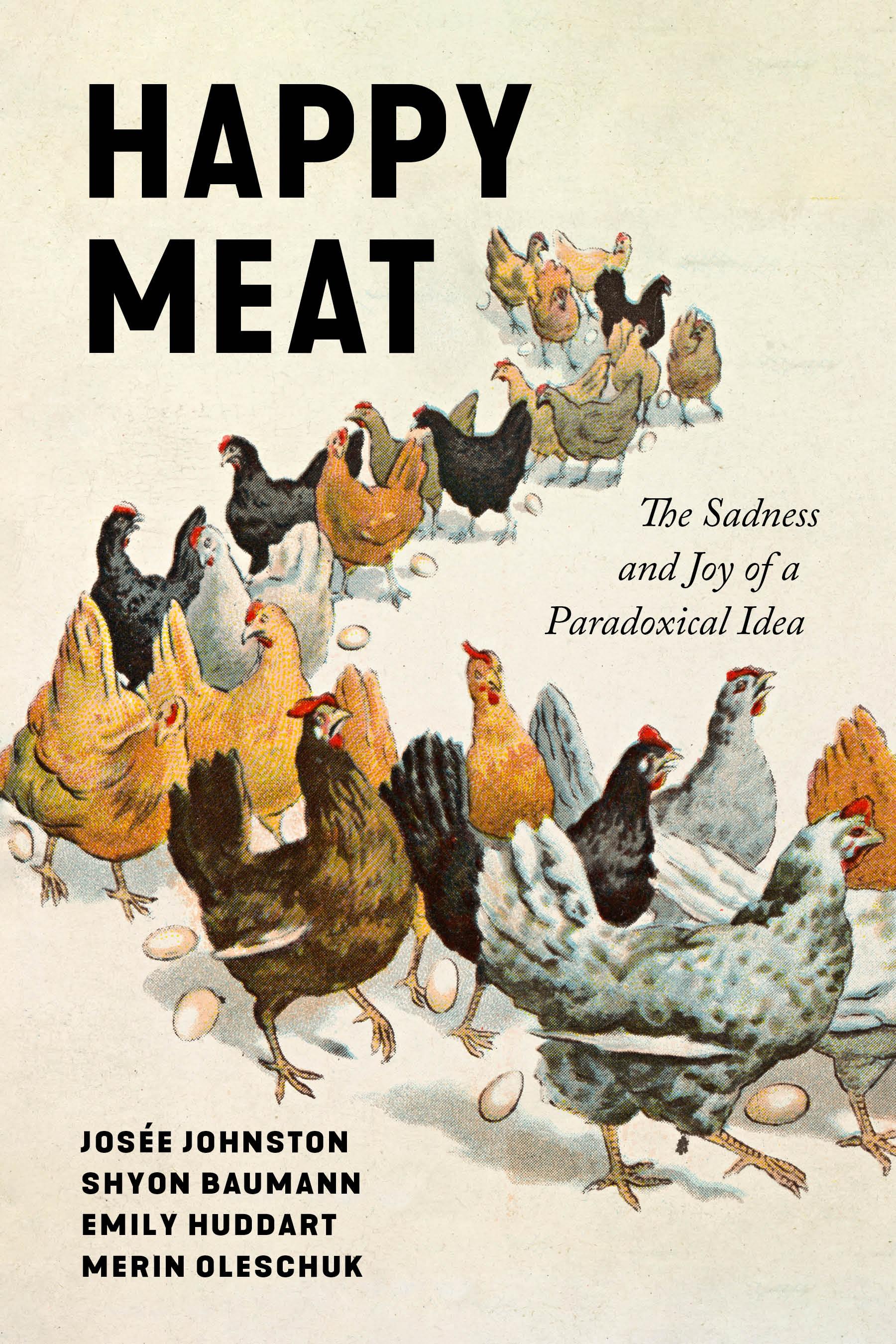
North Americans love eating meat. Despite the increased awareness of the meat industry's harms–violence against animals, health problems, and associations with environmental degradation–the rate of meat eating hasn't changed significantly in recent years. Instead, what has emerged is an uncomfortable paradox: a need to square one's values with the behaviors that contradict those values.
Using a large-scale, multidimensional, and original dataset, Happy Meat explores the thoughts and emotions that underpin our moral decision-making in this meat paradox. Conscientious meat-eaters turn to the notion of "happy meat" to make sense of their behaviors by consuming meat they see as more healthy, ethical, and sustainable. Happy meat might be labeled grass fed, free-range, antibiotic free, naturally raised, or humane. The people who produce and consume it, together, make up the complex landscape of conscientious meat-eating in modern Western societies.
The discourse of happy meat ultimately may not be a sufficient response to all the critiques of meat eating, rife as it is with contradictions. However, it offers a powerful case for understanding how moral boundaries and notions of the 'good eater' are constructed through negotiations of values, identity, and status.
Płać wygodnie kartą, Klarną, Apple Pay lub Google Pay. Nie jesteś zadowolony? Zawsze masz 14-dniową gwarancję zwrotu pieniędzy. Więcej przeczytasz w naszych warunkach. Masz pytania? Napisz do nas na hello@memmo.org.
Memmo ułatwia naukę – gdziekolwiek jesteś na świecie. U nas znajdziesz podręczniki i sprytne narzędzia do nauki w jednym miejscu: streszczenia, quizy, podcasty i fiszki. A do tego Ted, Twój kumpel do nauki, który odpowie na wszystko, co Cię nurtuje. Ponad 50 000 studentów już tu się uczy – stworzone, byś uczył się szybciej i mniej stresował.