
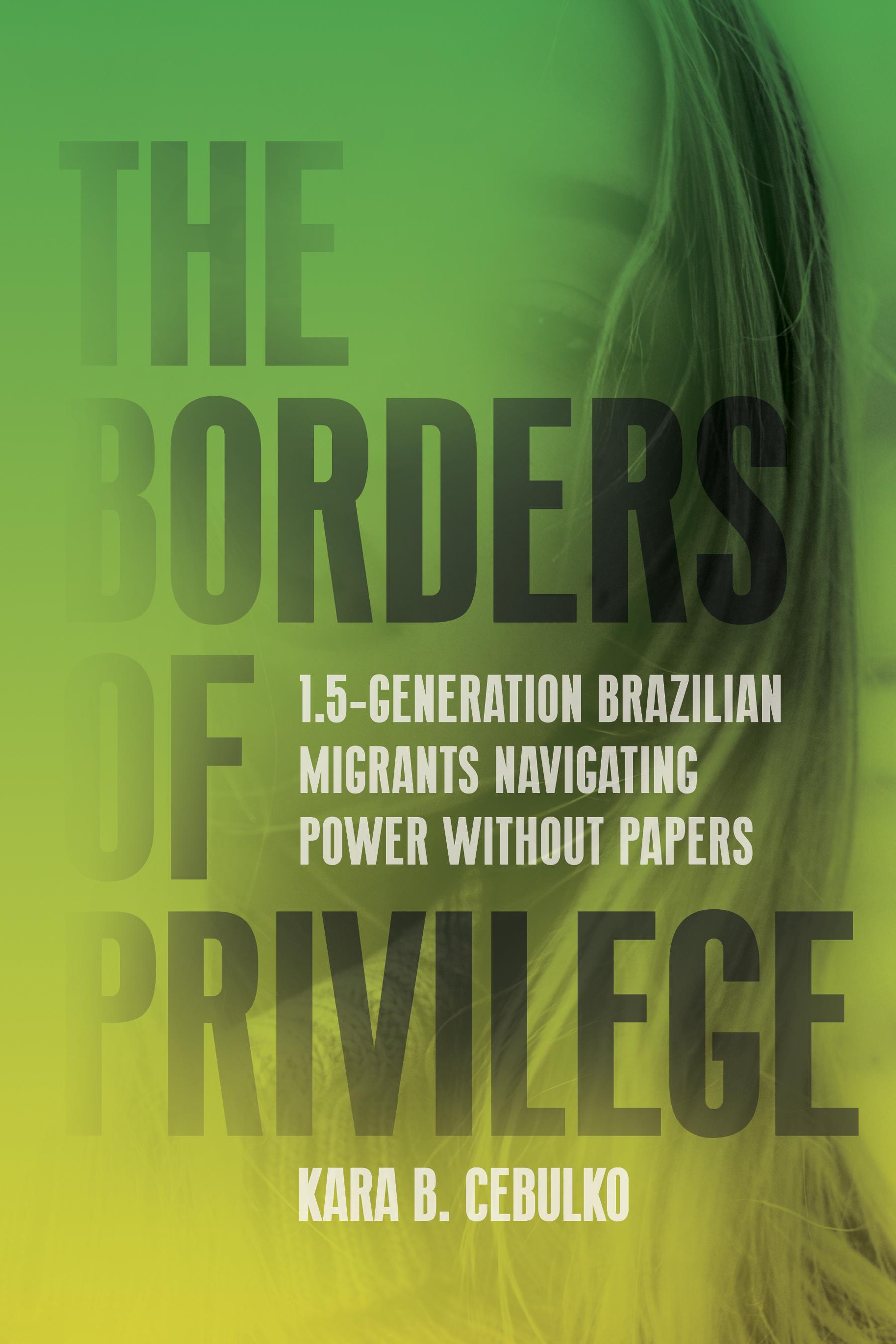
Because whiteness is not a given for Brazilians in the U.S., some immigrants actively construct it as a protective mechanism against the stigma normally associated with illegality. In The Borders of Privilege, Kara Cebulko tells the stories of a group of 1.5-generation Brazilians to show how their ability to be perceived as white—their power without papers—shapes their everyday interactions. By strategically creating boundaries with other racialized groups, these immigrants navigate life-course rituals like college, work, and marriage without legal documentation. Few identify as white in the U.S., even as they benefit from the privileges of whiteness. The legal exclusion they feel as undocumented immigrants from Latin America makes them feel a world apart from their white citizen peers. However, their constructed whiteness benefits them when it comes to interactions with law enforcement and professional advancement, challenging narratives that frame legality as a "master-status." Understanding these experiences requires us to explore interlocking systems of power, including white supremacy and capitalism, as well as global histories of domination. Cebulko traces the experiences of her interviewees across various stages of life, applying a "power without paper" lens, and making the case for integrating this perspective into future scholarship, collective broad-based movements for social justice, and public policy.
Płać wygodnie kartą, Klarną, Apple Pay lub Google Pay. Nie jesteś zadowolony? Zawsze masz 14-dniową gwarancję zwrotu pieniędzy. Więcej przeczytasz w naszych warunkach. Masz pytania? Napisz do nas na hello@memmo.org.
Memmo ułatwia naukę – gdziekolwiek jesteś na świecie. U nas znajdziesz podręczniki i sprytne narzędzia do nauki w jednym miejscu: streszczenia, quizy, podcasty i fiszki. A do tego Ted, Twój kumpel do nauki, który odpowie na wszystko, co Cię nurtuje. Ponad 50 000 studentów już tu się uczy – stworzone, byś uczył się szybciej i mniej stresował.