
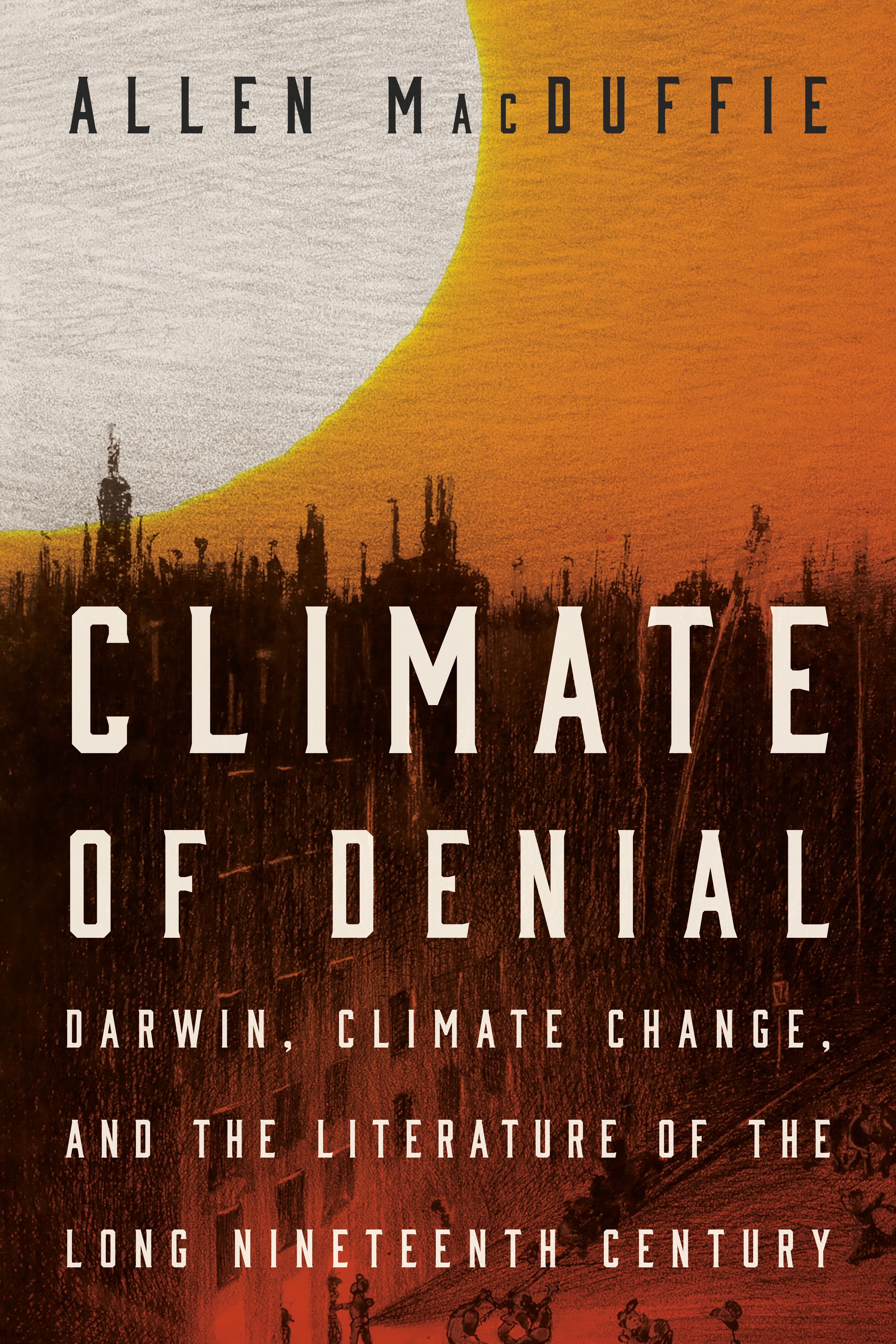
Many people today experience the climate crisis with a divided state of mind: aware of the extreme effects, but living everyday life as if the crisis is not actually happening. This book argues that this structure of feeling has roots that can be traced back to the nineteenth century, when Western culture encountered the profound shock of Charles Darwin's theory of evolution.
Darwin's theory made it increasingly difficult for secular humanists to flatly deny that humans are animals, fully enmeshed in natural systems and processes. But like those of us confronting climate change today, many writers and scientists struggled to integrate its depersonalizing vision into their understanding of the place of humans in the natural order. The result was that the radical environmental implications of The Origin of Species were evaded as soon as they were articulated, abetted by a culture of denial structured by the illusions of capital and empire.
In light of the climate emergency, Climate of Denial recontextualizes nineteenth-century texts to offer rich insight into the defensive strategies used—then and now—to avoid confronting the unsettling realities of our situation on this planet.
Płać wygodnie kartą, Klarną, Apple Pay lub Google Pay. Nie jesteś zadowolony? Zawsze masz 14-dniową gwarancję zwrotu pieniędzy. Więcej przeczytasz w naszych warunkach. Masz pytania? Napisz do nas na hello@memmo.org.
Memmo ułatwia naukę – gdziekolwiek jesteś na świecie. U nas znajdziesz podręczniki i sprytne narzędzia do nauki w jednym miejscu: streszczenia, quizy, podcasty i fiszki. A do tego Ted, Twój kumpel do nauki, który odpowie na wszystko, co Cię nurtuje. Ponad 50 000 studentów już tu się uczy – stworzone, byś uczył się szybciej i mniej stresował.