
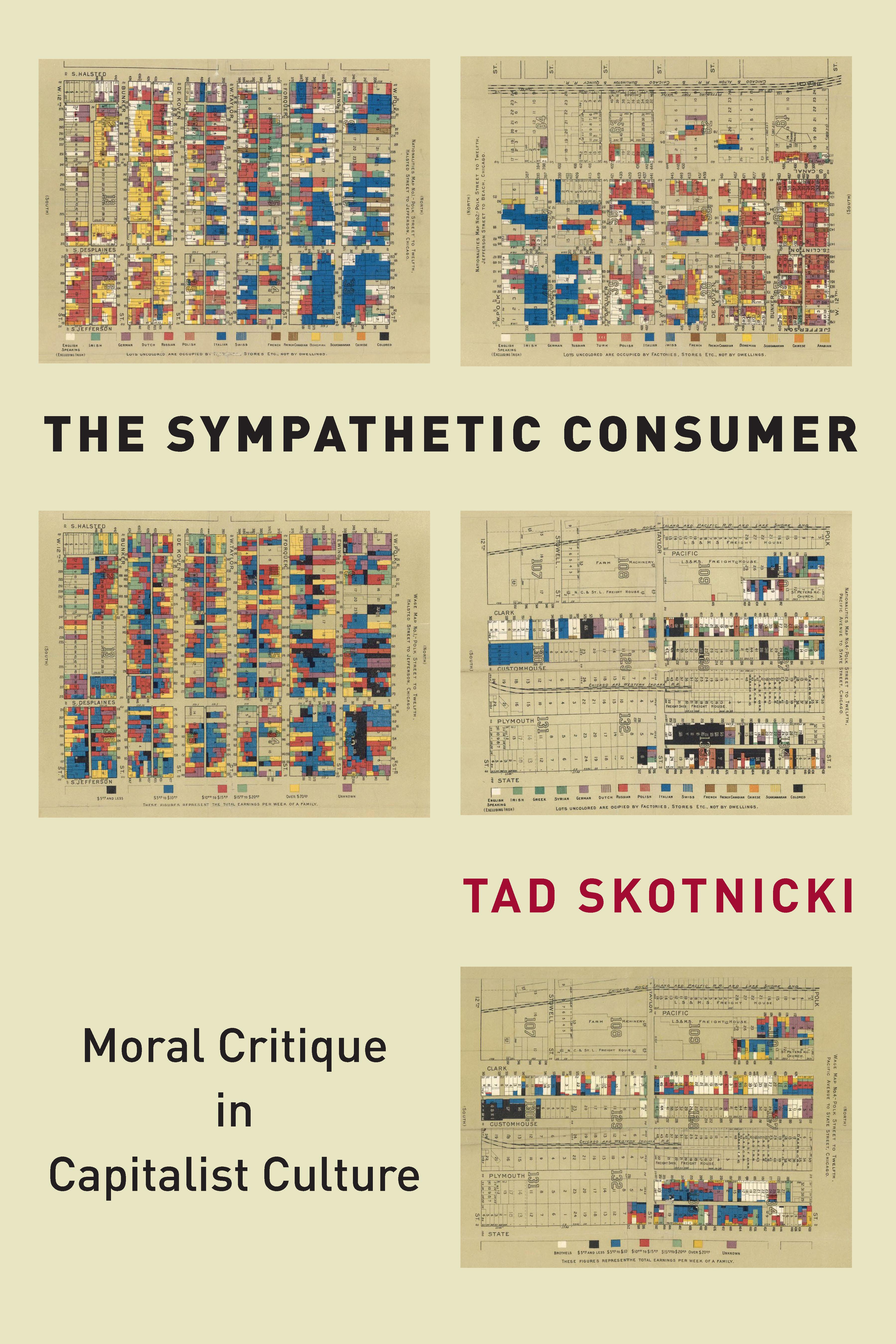
When people encounter consumer goods—sugar, clothes, phones—they find little to no information about their origins. The goods will thus remain anonymous, and the labor that went into making them, the supply chain through which they traveled, will remain obscured. In this book, Tad Skotnicki argues that this encounter is an endemic feature of capitalist societies, and one with which consumers have struggled for centuries in the form of activist movements constructed around what he calls The Sympathetic Consumer.
This book documents the uncanny similarities shared by such movements over the course of three centuries: the transatlantic abolitionist movement, US and English consumer movements around the turn of the twentieth century, and contemporary Fair Trade activism. Offering a comparative historical study of consumer activism the book shows, in vivid detail, how activists wrestled with the broader implications of commodity exchange. These activists arrived at a common understanding of the relationship between consumers, producers, and commodities, and concluded that consumers were responsible for sympathizing with invisible laborers. Ultimately, Skotnicki provides a framework to identify a capitalist culture by examining how people interpret everyday phenomena essential to it.
Płać wygodnie kartą, Klarną, Apple Pay lub Google Pay. Nie jesteś zadowolony? Zawsze masz 14-dniową gwarancję zwrotu pieniędzy. Więcej przeczytasz w naszych warunkach. Masz pytania? Napisz do nas na hello@memmo.org.
Memmo ułatwia naukę – gdziekolwiek jesteś na świecie. U nas znajdziesz podręczniki i sprytne narzędzia do nauki w jednym miejscu: streszczenia, quizy, podcasty i fiszki. A do tego Ted, Twój kumpel do nauki, który odpowie na wszystko, co Cię nurtuje. Ponad 50 000 studentów już tu się uczy – stworzone, byś uczył się szybciej i mniej stresował.