
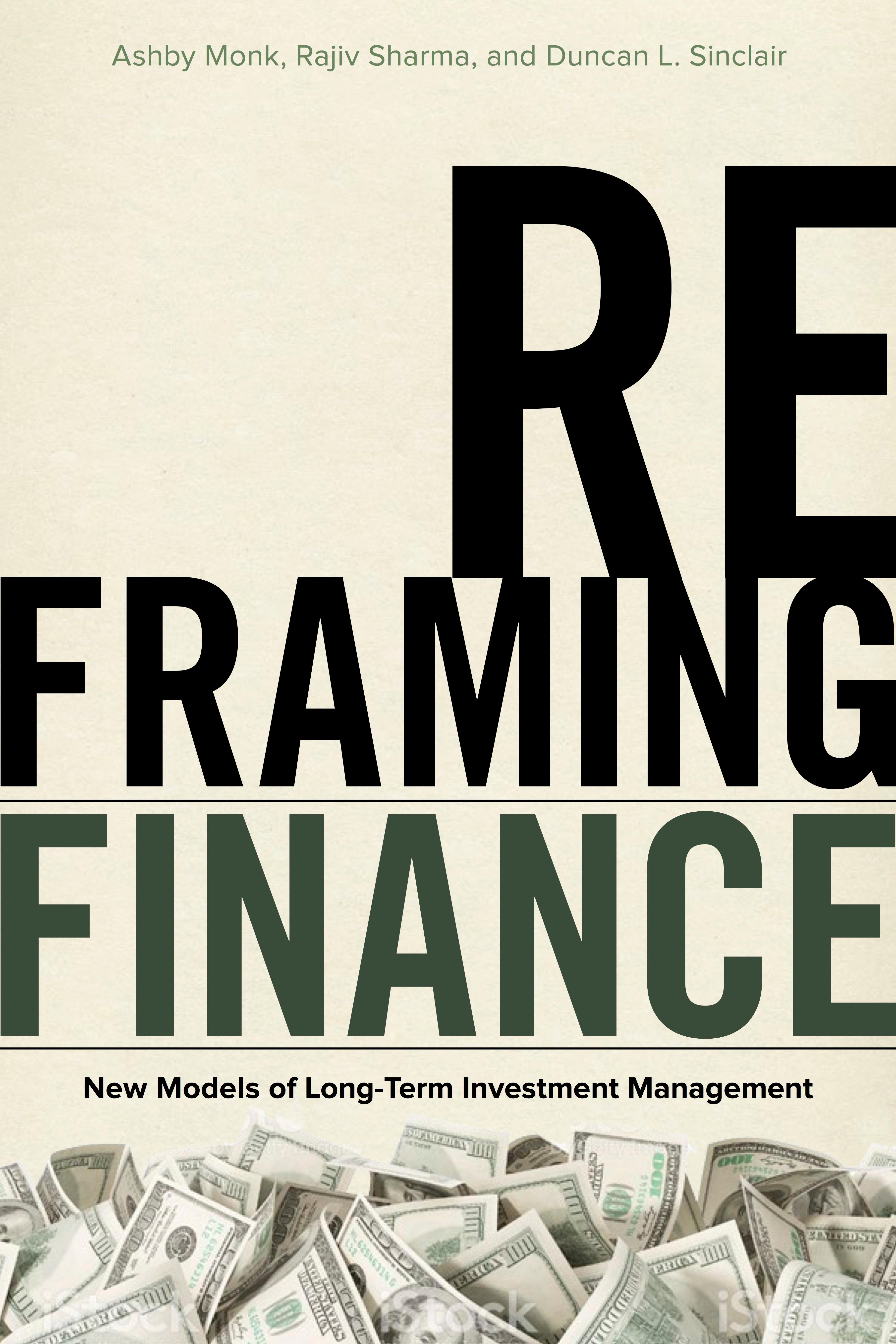
Since the 2008 financial crisis, beneficiary organizations—like pension funds, sovereign wealth funds, endowments, and foundations—have been seeking ways to mitigate the risk of their investments and make better financial decisions. For them, Reframing Finance offers a path forward.
This book argues that institutional investors would better serve their long-term goals by putting money into large-scale, future-facing projects such as infrastructure, green energy, innovation in agriculture, and real estate development. At the same time, redirecting long-term investments would close significant financial gaps that government cannot. Drawing on key contributions in economic sociology, social network theory, and economics, the book conceptualizes a collaborative model of investment that is already becoming increasingly common: Large investors contribute more directly to private market assets, while financial intermediaries seek to foster co-investment partnerships, better aligning incentives for all. A combination of rich case studies and rigorous theory enables asset owners to move toward more efficient, private-market investing, while also laying groundwork for research at the frontier of finance.
Płać wygodnie kartą, Klarną, Apple Pay lub Google Pay. Nie jesteś zadowolony? Zawsze masz 14-dniową gwarancję zwrotu pieniędzy. Więcej przeczytasz w naszych warunkach. Masz pytania? Napisz do nas na hello@memmo.org.
Memmo ułatwia naukę – gdziekolwiek jesteś na świecie. U nas znajdziesz podręczniki i sprytne narzędzia do nauki w jednym miejscu: streszczenia, quizy, podcasty i fiszki. A do tego Ted, Twój kumpel do nauki, który odpowie na wszystko, co Cię nurtuje. Ponad 50 000 studentów już tu się uczy – stworzone, byś uczył się szybciej i mniej stresował.