
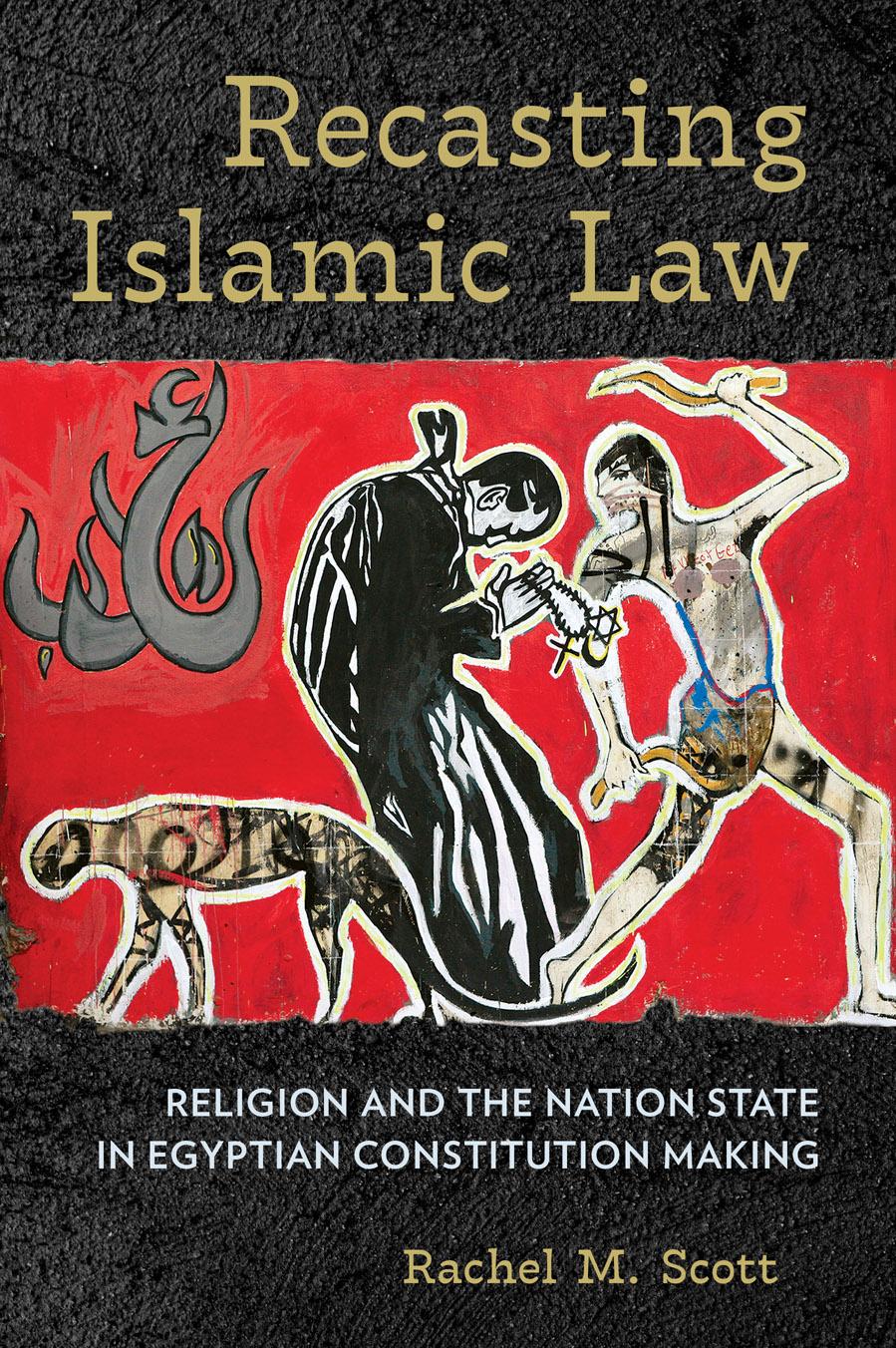
By examining the intersection of Islamic law, state law, religion, and culture in the Egyptian nation-building process, Recasting Islamic Law highlights how the sharia, when attached to constitutional commitments, is reshaped into modern Islamic state law.
Rachel M. Scott analyzes the complex effects of constitutional commitments to the sharia in the wake of the Egyptian Revolution of 2011. She argues that the sharia is not dismantled by the modern state when it is applied as modern Islamic state law, but rather recast in its service. In showing the particular forms that the sharia takes when it is applied as modern Islamic state law, Scott pushes back against assumptions that introductions of the sharia into modern state law result in either the revival of medieval Islam or in its complete transformation. Scott engages with premodern law and with the Ottoman legal legacy on topics concerning Egypt's Coptic community, women's rights, personal status law, and the relationship between religious scholars and the Supreme Constitutional Court. Recasting Islamic Law considers modern Islamic state law's discontinuities and its continuities with premodern sharia.
Thanks to generous funding from Virginia Tech and its participation in TOME (Toward an Open Monograph Ecosystem), the book editions of this book are available as Open Access volumes from Cornell Open (cornellpress.cornell.edu/cornell-open) and other repositories.
Płać wygodnie kartą, Klarną, Apple Pay lub Google Pay. Nie jesteś zadowolony? Zawsze masz 14-dniową gwarancję zwrotu pieniędzy. Więcej przeczytasz w naszych warunkach. Masz pytania? Napisz do nas na hello@memmo.org.
Memmo ułatwia naukę – gdziekolwiek jesteś na świecie. U nas znajdziesz podręczniki i sprytne narzędzia do nauki w jednym miejscu: streszczenia, quizy, podcasty i fiszki. A do tego Ted, Twój kumpel do nauki, który odpowie na wszystko, co Cię nurtuje. Ponad 50 000 studentów już tu się uczy – stworzone, byś uczył się szybciej i mniej stresował.