
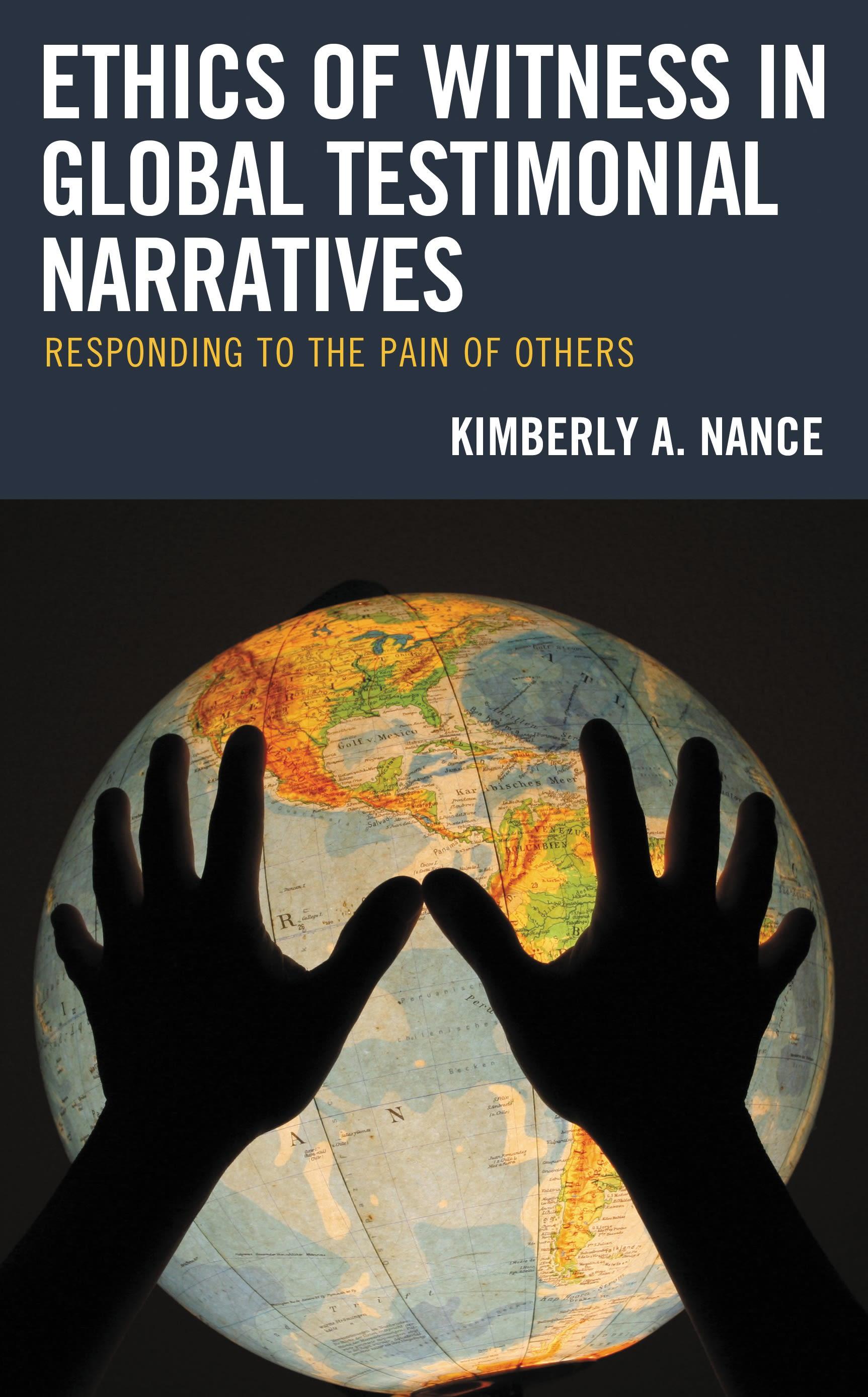
Inspired by Susan Sontag’s examination of the impact of “photography of conscience” in Regarding the Pain of Others, Kimberly A. Nance’s Responding to the Pain of Others: Ethics of Witness in Global Testimonial Narratives takes as its point of departure Sontag’s speculation that in combatting human rights abuse, “a narrative seems likely to be more effective than an image.” Building on her own earlier research on Aristotelian rhetorical theory and testimony, along with other interdisciplinary approaches, Nance analyzes the socio-literary narratives of Elvia Alvarado, Medea Benjamin, Peter Dickinson, Benjamin Alire Sáenz, Clea Koff, Delia Jarrett-Macauley, Valentino Achak Deng, Dave Eggers, Uwem Akpan, and Alicia Partnoy. Each of them, she finds, confronts a human rights discourse in which words—and witnesses—have become disconnected from actions. Recognizing that the genre’s own conventions have become an obstacle to its projects, these testimonialists draw on humor, irony, satire, parody, and innovative literary techniques, alongside strategies rooted in real-life organizing, in an effort to reactivate the discourse of human rights. They seek to persuade readers to exchange a solidarity of sentiment, a state Michael Vander Weele calls “an aesthetics in which the engine revs but the clutch is never engaged,” for actual social action.
Płać wygodnie kartą, Klarną, Apple Pay lub Google Pay. Nie jesteś zadowolony? Zawsze masz 14-dniową gwarancję zwrotu pieniędzy. Więcej przeczytasz w naszych warunkach. Masz pytania? Napisz do nas na hello@memmo.org.
Memmo ułatwia naukę – gdziekolwiek jesteś na świecie. U nas znajdziesz podręczniki i sprytne narzędzia do nauki w jednym miejscu: streszczenia, quizy, podcasty i fiszki. A do tego Ted, Twój kumpel do nauki, który odpowie na wszystko, co Cię nurtuje. Ponad 50 000 studentów już tu się uczy – stworzone, byś uczył się szybciej i mniej stresował.