
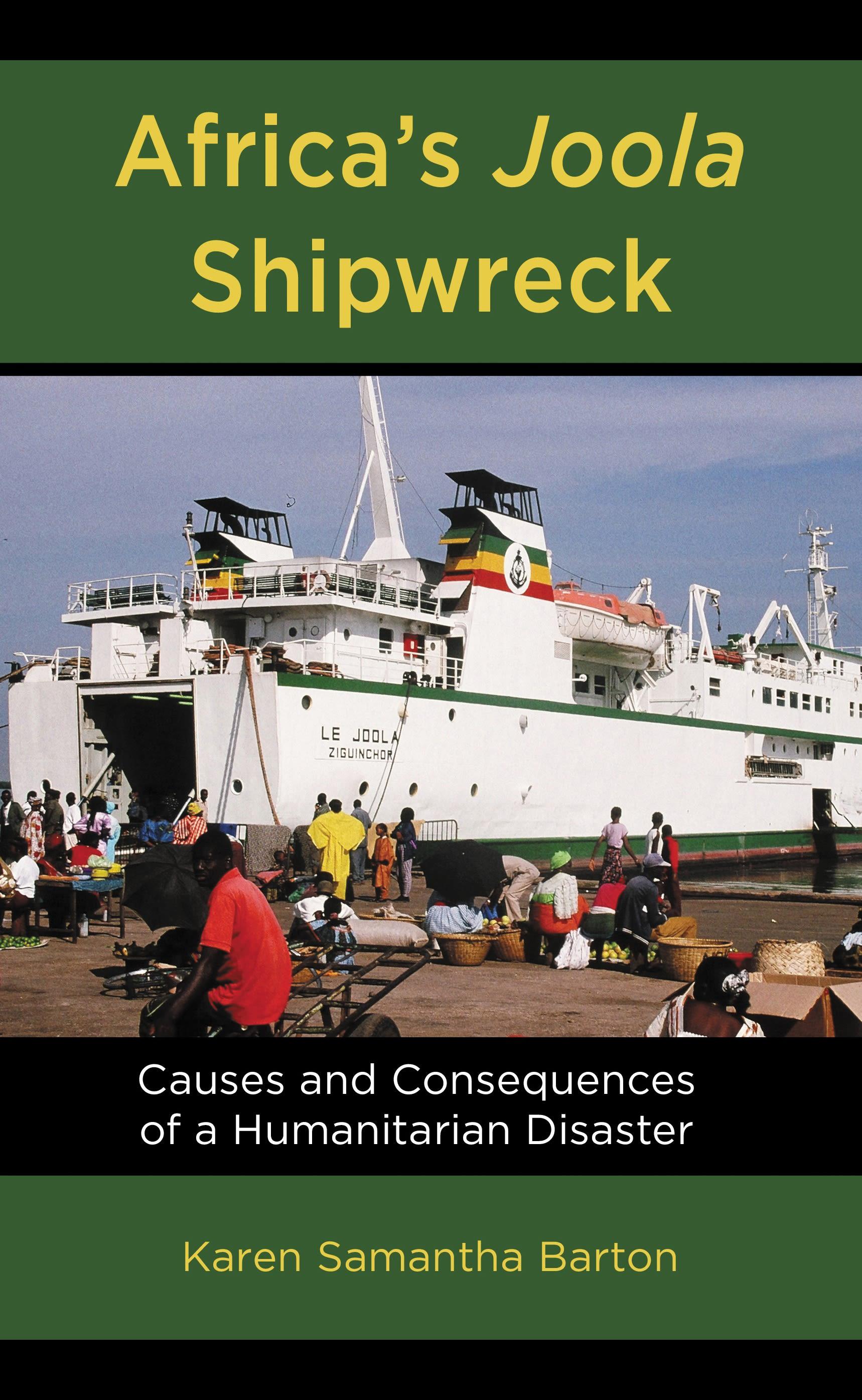
In 2002, a government-owned Senegalese ferry named the Joola capsized in a storm off the coast of The Gambia in a tragedy that killed 1,863 people and left 64 survivors, only one of them female. The Joola caused more human suffering than the Titanic yet no scholarly research to date has explored the political and environmental conditions in which this African crisis occurred. Africa’s Joola Shipwreck: Causes and Consequences of a Humanitarian Disaster investigates the roots of the Joola shipwreck and its consequences for Senegalese people, particularly those living in the rural south. Using three summers of field research in Senegal, Karen Samantha Barton unravels the geographical forces such as migration, colonial cartographies, and geographies of the sea that led to this humanitarian disaster and defined its aftermath. Barton shows how the Sufi tenet of “beautiful optimism” shaped community resilience in the wake of the shipwreck, despite the repercussions the event had on Senegalese society and space.
Płać wygodnie kartą, Klarną, Apple Pay lub Google Pay. Nie jesteś zadowolony? Zawsze masz 14-dniową gwarancję zwrotu pieniędzy. Więcej przeczytasz w naszych warunkach. Masz pytania? Napisz do nas na hello@memmo.org.
Memmo ułatwia naukę – gdziekolwiek jesteś na świecie. U nas znajdziesz podręczniki i sprytne narzędzia do nauki w jednym miejscu: streszczenia, quizy, podcasty i fiszki. A do tego Ted, Twój kumpel do nauki, który odpowie na wszystko, co Cię nurtuje. Ponad 50 000 studentów już tu się uczy – stworzone, byś uczył się szybciej i mniej stresował.