
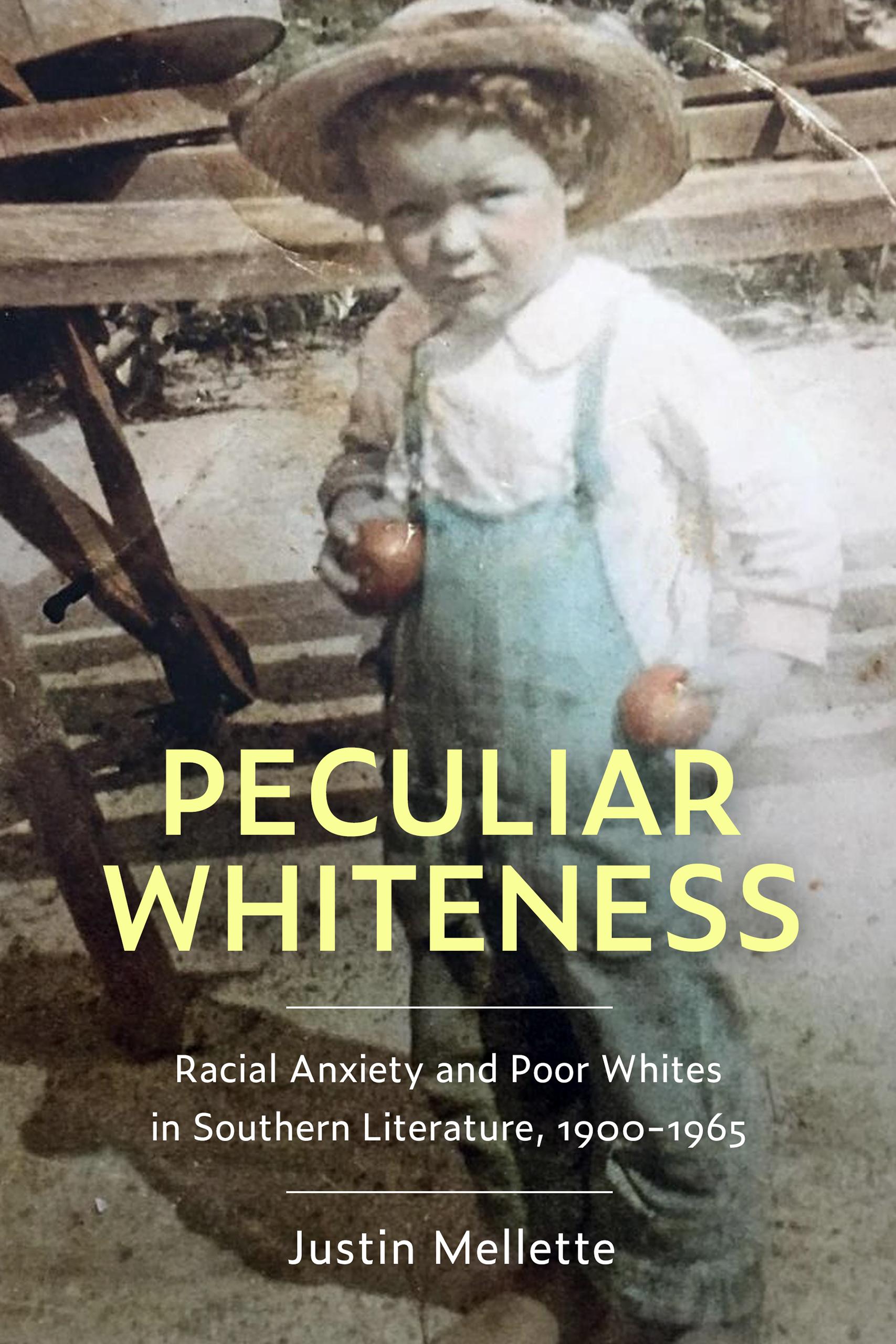
Peculiar Whiteness: Racial Anxiety and Poor Whites in Southern Literature, 1900–1965 argues for deeper consideration of the complexities surrounding the disparate treatment of poor whites throughout southern literature and attests to how broad such experiences have been. While the history of prejudice against this group is not the same as the legacy of violence perpetrated against people of color in America, individuals regarded as “white trash” have suffered a dehumanizing process in the writings of various white authors. Poor white characters are frequently maligned as grotesque and anxiety inducing, especially when they are aligned in close proximity to blacks or to people with disabilities.
Thus, as a symbol, much has been asked of poor whites, and various iterations of the label (e.g., “white trash,” tenant farmers, or even people with a little less money than average) have been subject to a broad spectrum of judgment, pity, compassion, fear, and anxiety. Peculiar Whiteness engages key issues in contemporary critical race studies, whiteness studies, and southern studies, both literary and historical. Through discussions of authors including Charles Chesnutt, Thomas Dixon, Sutton Griggs, Erskine Caldwell, Lillian Smith, William Faulkner, and Flannery O’Connor, we see how whites in a position of power work to maintain their status, often by finding ways to recategorize and marginalize people who might not otherwise have seemed to fall under the auspices or boundaries of “white trash.”
Thus, as a symbol, much has been asked of poor whites, and various iterations of the label (e.g., “white trash,” tenant farmers, or even people with a little less money than average) have been subject to a broad spectrum of judgment, pity, compassion, fear, and anxiety. Peculiar Whiteness engages key issues in contemporary critical race studies, whiteness studies, and southern studies, both literary and historical. Through discussions of authors including Charles Chesnutt, Thomas Dixon, Sutton Griggs, Erskine Caldwell, Lillian Smith, William Faulkner, and Flannery O’Connor, we see how whites in a position of power work to maintain their status, often by finding ways to recategorize and marginalize people who might not otherwise have seemed to fall under the auspices or boundaries of “white trash.”
Płać wygodnie kartą, Klarną, Apple Pay lub Google Pay. Nie jesteś zadowolony? Zawsze masz 14-dniową gwarancję zwrotu pieniędzy. Więcej przeczytasz w naszych warunkach. Masz pytania? Napisz do nas na hello@memmo.org.
Memmo ułatwia naukę – gdziekolwiek jesteś na świecie. U nas znajdziesz podręczniki i sprytne narzędzia do nauki w jednym miejscu: streszczenia, quizy, podcasty i fiszki. A do tego Ted, Twój kumpel do nauki, który odpowie na wszystko, co Cię nurtuje. Ponad 50 000 studentów już tu się uczy – stworzone, byś uczył się szybciej i mniej stresował.
Może Ci się spodobać
Kup książkę0