
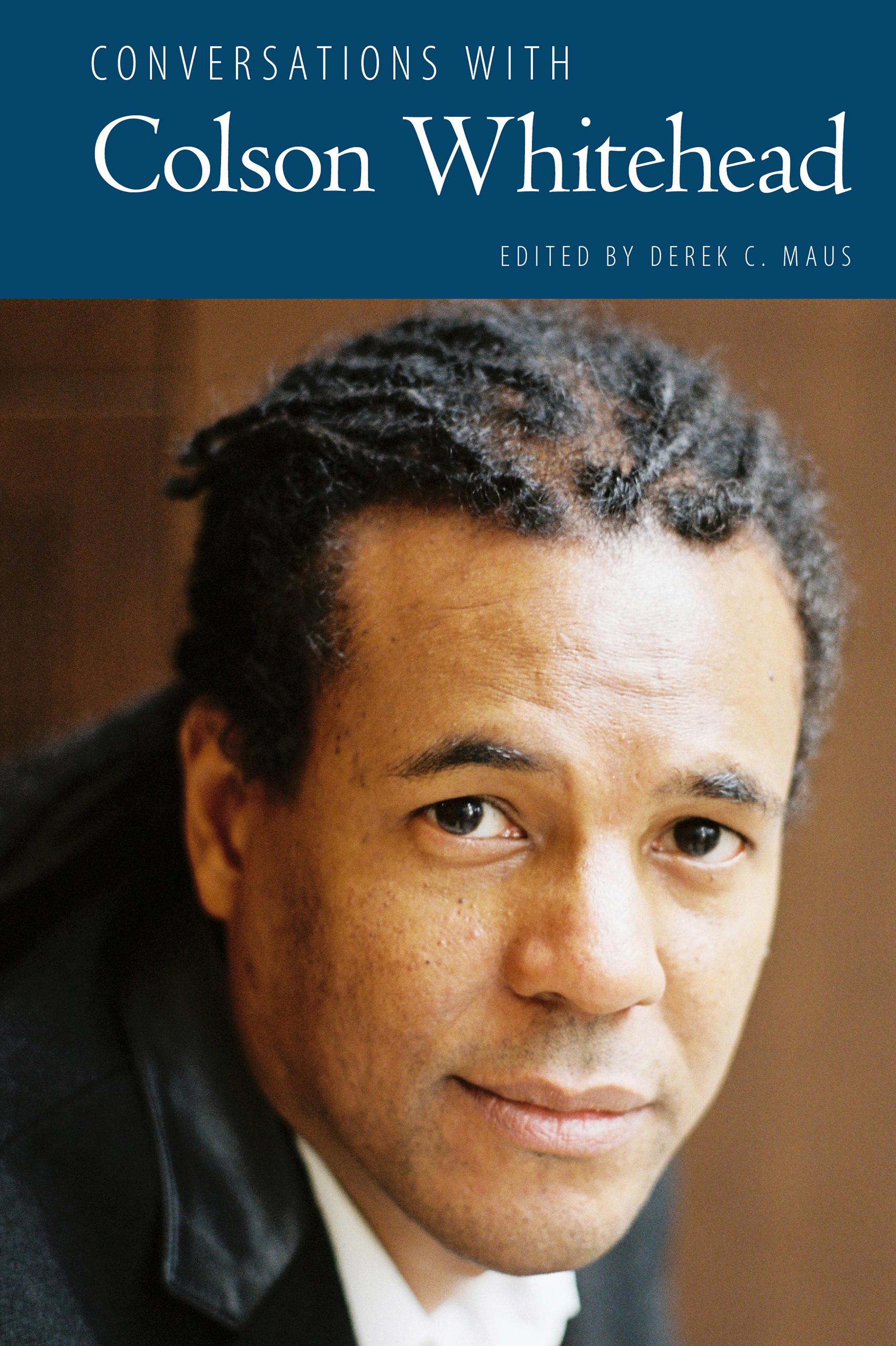
Since the publication of his first novel, The Intuitionist, in 1999, Colson Whitehead (b. 1969) has been considered an important new voice in American literature. His seven subsequent books have done little to contradict that initial assessment, especially after 2016’s The Underground Railroad spent many weeks at the top of bestseller lists and won numerous major literary awards, including the Pulitzer Prize.
Ranging from 2001 to 2016, the twenty-three interviews collected in Conversations with Colson Whitehead reveal the workings of one of America’s most idiosyncratic and most successful literary minds. Through these interviews, it is clear that none of this well-earned praise has gone to his head. If anything, he still seems inclined to present himself as an awkward misfit who writes about such offbeat subject matter as rival groups of elevator inspectors, the insufficiency of off-brand “flesh-colored” bandages, or a literalized alternate version of the Underground Railroad.
Whitehead speaks at length about matters related to his craft, including his varied literary and nonliterary influences, the particular methods of researching and writing that have proved valuable to telling his stories, and the ways in which he has managed the rollercoaster life of a professional writer. He also opens up about popular culture, particularly the unconventional blend of music, genre fiction, B movies, and comic books that he gleefully identifies as a passion that has persisted for him since his childhood.
Ranging from 2001 to 2016, the twenty-three interviews collected in Conversations with Colson Whitehead reveal the workings of one of America’s most idiosyncratic and most successful literary minds. Through these interviews, it is clear that none of this well-earned praise has gone to his head. If anything, he still seems inclined to present himself as an awkward misfit who writes about such offbeat subject matter as rival groups of elevator inspectors, the insufficiency of off-brand “flesh-colored” bandages, or a literalized alternate version of the Underground Railroad.
Whitehead speaks at length about matters related to his craft, including his varied literary and nonliterary influences, the particular methods of researching and writing that have proved valuable to telling his stories, and the ways in which he has managed the rollercoaster life of a professional writer. He also opens up about popular culture, particularly the unconventional blend of music, genre fiction, B movies, and comic books that he gleefully identifies as a passion that has persisted for him since his childhood.
Płać wygodnie kartą, Klarną, Apple Pay lub Google Pay. Nie jesteś zadowolony? Zawsze masz 14-dniową gwarancję zwrotu pieniędzy. Więcej przeczytasz w naszych warunkach. Masz pytania? Napisz do nas na hello@memmo.org.
Memmo ułatwia naukę – gdziekolwiek jesteś na świecie. U nas znajdziesz podręczniki i sprytne narzędzia do nauki w jednym miejscu: streszczenia, quizy, podcasty i fiszki. A do tego Ted, Twój kumpel do nauki, który odpowie na wszystko, co Cię nurtuje. Ponad 50 000 studentów już tu się uczy – stworzone, byś uczył się szybciej i mniej stresował.
Może Ci się spodobać
Kup książkę0