
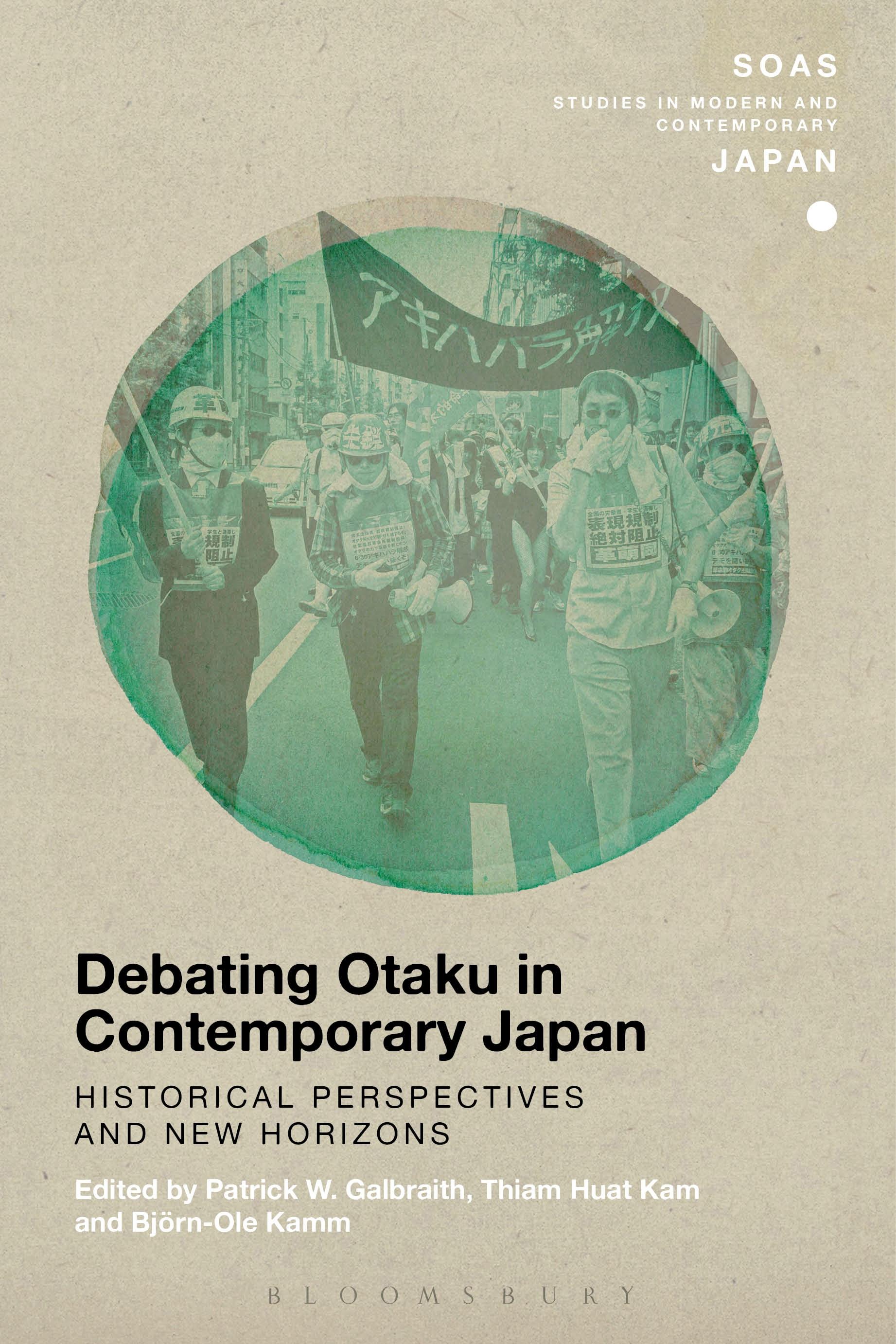
With the spread of manga (Japanese comics) and anime (Japanese cartoons) around the world, many have adopted the Japanese term 'otaku' to identify fans of such media. The connection to manga and anime may seem straightforward, but, when taken for granted, often serves to obscure the debates within and around media fandom in Japan since the term 'otaku' appeared in the niche publication Manga Burikko in 1983.
Debating Otaku in Contemporary Japan disrupts the naturalization and trivialization of 'otaku' by examining the historical contingency of the term as a way to identify and contain problematic youth, consumers and fan cultures in Japan. Its chapters, many translated from Japanese and available in English for the first time – and with a foreword by Otsuka Eiji, former editor of Manga Burikko – explore key moments in the evolving discourse of 'otaku' in Japan. Rather than presenting a smooth, triumphant narrative of the transition of a subculture to the mainstream, the edited volume repositions 'otaku' in specific historical, social and economic contexts, providing new insights into the significance of the 'otaku' phenomenon in Japan and the world.
By going back to original Japanese documents, translating key contributions by Japanese scholars and offering sustained analysis of these documents and scholars, Debating Otaku in Contemporary Japan provides alternative histories of and approaches to 'otaku'. For all students and scholars of contemporary Japan and the history of Japanese fan and consumer cultures, this volume will be a foundation for understanding how 'otaku', at different places and times and to different people, is meaningful.
Debating Otaku in Contemporary Japan disrupts the naturalization and trivialization of 'otaku' by examining the historical contingency of the term as a way to identify and contain problematic youth, consumers and fan cultures in Japan. Its chapters, many translated from Japanese and available in English for the first time – and with a foreword by Otsuka Eiji, former editor of Manga Burikko – explore key moments in the evolving discourse of 'otaku' in Japan. Rather than presenting a smooth, triumphant narrative of the transition of a subculture to the mainstream, the edited volume repositions 'otaku' in specific historical, social and economic contexts, providing new insights into the significance of the 'otaku' phenomenon in Japan and the world.
By going back to original Japanese documents, translating key contributions by Japanese scholars and offering sustained analysis of these documents and scholars, Debating Otaku in Contemporary Japan provides alternative histories of and approaches to 'otaku'. For all students and scholars of contemporary Japan and the history of Japanese fan and consumer cultures, this volume will be a foundation for understanding how 'otaku', at different places and times and to different people, is meaningful.
Płać wygodnie kartą, Klarną, Apple Pay lub Google Pay. Nie jesteś zadowolony? Zawsze masz 14-dniową gwarancję zwrotu pieniędzy. Więcej przeczytasz w naszych warunkach. Masz pytania? Napisz do nas na hello@memmo.org.
Memmo ułatwia naukę – gdziekolwiek jesteś na świecie. U nas znajdziesz podręczniki i sprytne narzędzia do nauki w jednym miejscu: streszczenia, quizy, podcasty i fiszki. A do tego Ted, Twój kumpel do nauki, który odpowie na wszystko, co Cię nurtuje. Ponad 50 000 studentów już tu się uczy – stworzone, byś uczył się szybciej i mniej stresował.