
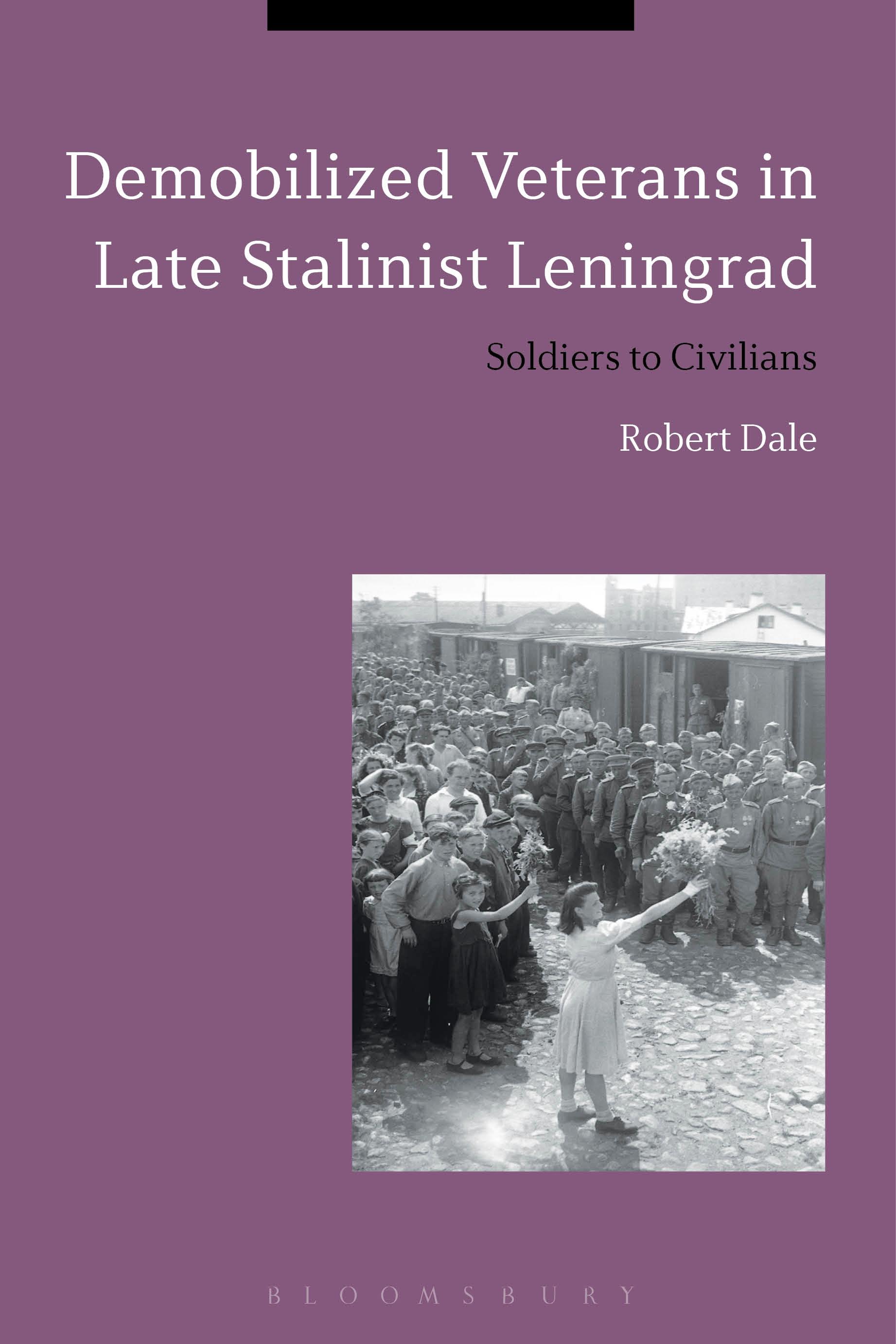
This book investigates the demobilization and post-war readjustment of Red Army veterans in Leningrad and its environs after the Great Patriotic War. Over 300,000 soldiers were stood down in this war-ravaged region between July 1945 and 1948. They found the transition to civilian life more challenging than many could ever have imagined. For civilian Leningraders, reintegrating the rapid influx of former soldiers represented an enormous political, economic, social and cultural challenge. In this book, Robert Dale reveals how these former soldiers became civilians in a society devastated and traumatized by total warfare.
Dale discusses how, and how successfully, veterans became ordinary citizens. Based on extensive original research in local and national archives, oral history interviews and the examination of various newspaper collections, Demobilized Veterans in Late Stalinist Leningrad peels back the myths woven around demobilization, to reveal a darker history repressed by society and concealed from historiography. While propaganda celebrated this disarmament as a smooth process which reunited veterans with their families, reintegrated them into the workforce and facilitated upward social mobility, the reality was rarely straightforward. Many veterans were caught up in the scramble for work, housing, healthcare and state hand-outs. Others drifted to the social margins, criminality or became the victims of post-war political repression.
Demobilized Veterans in Late Stalinist Leningrad tells the story of both the failure of local representatives to support returning Soviet soldiers, and the remarkable resilience and creativity of veterans in solving the problems created by their return to society. It is a vital study for all scholars and students of post-war Soviet history and the impact of war in the modern era.
Dale discusses how, and how successfully, veterans became ordinary citizens. Based on extensive original research in local and national archives, oral history interviews and the examination of various newspaper collections, Demobilized Veterans in Late Stalinist Leningrad peels back the myths woven around demobilization, to reveal a darker history repressed by society and concealed from historiography. While propaganda celebrated this disarmament as a smooth process which reunited veterans with their families, reintegrated them into the workforce and facilitated upward social mobility, the reality was rarely straightforward. Many veterans were caught up in the scramble for work, housing, healthcare and state hand-outs. Others drifted to the social margins, criminality or became the victims of post-war political repression.
Demobilized Veterans in Late Stalinist Leningrad tells the story of both the failure of local representatives to support returning Soviet soldiers, and the remarkable resilience and creativity of veterans in solving the problems created by their return to society. It is a vital study for all scholars and students of post-war Soviet history and the impact of war in the modern era.
Płać wygodnie kartą, Klarną, Apple Pay lub Google Pay. Nie jesteś zadowolony? Zawsze masz 14-dniową gwarancję zwrotu pieniędzy. Więcej przeczytasz w naszych warunkach. Masz pytania? Napisz do nas na hello@memmo.org.
Memmo ułatwia naukę – gdziekolwiek jesteś na świecie. U nas znajdziesz podręczniki i sprytne narzędzia do nauki w jednym miejscu: streszczenia, quizy, podcasty i fiszki. A do tego Ted, Twój kumpel do nauki, który odpowie na wszystko, co Cię nurtuje. Ponad 50 000 studentów już tu się uczy – stworzone, byś uczył się szybciej i mniej stresował.