
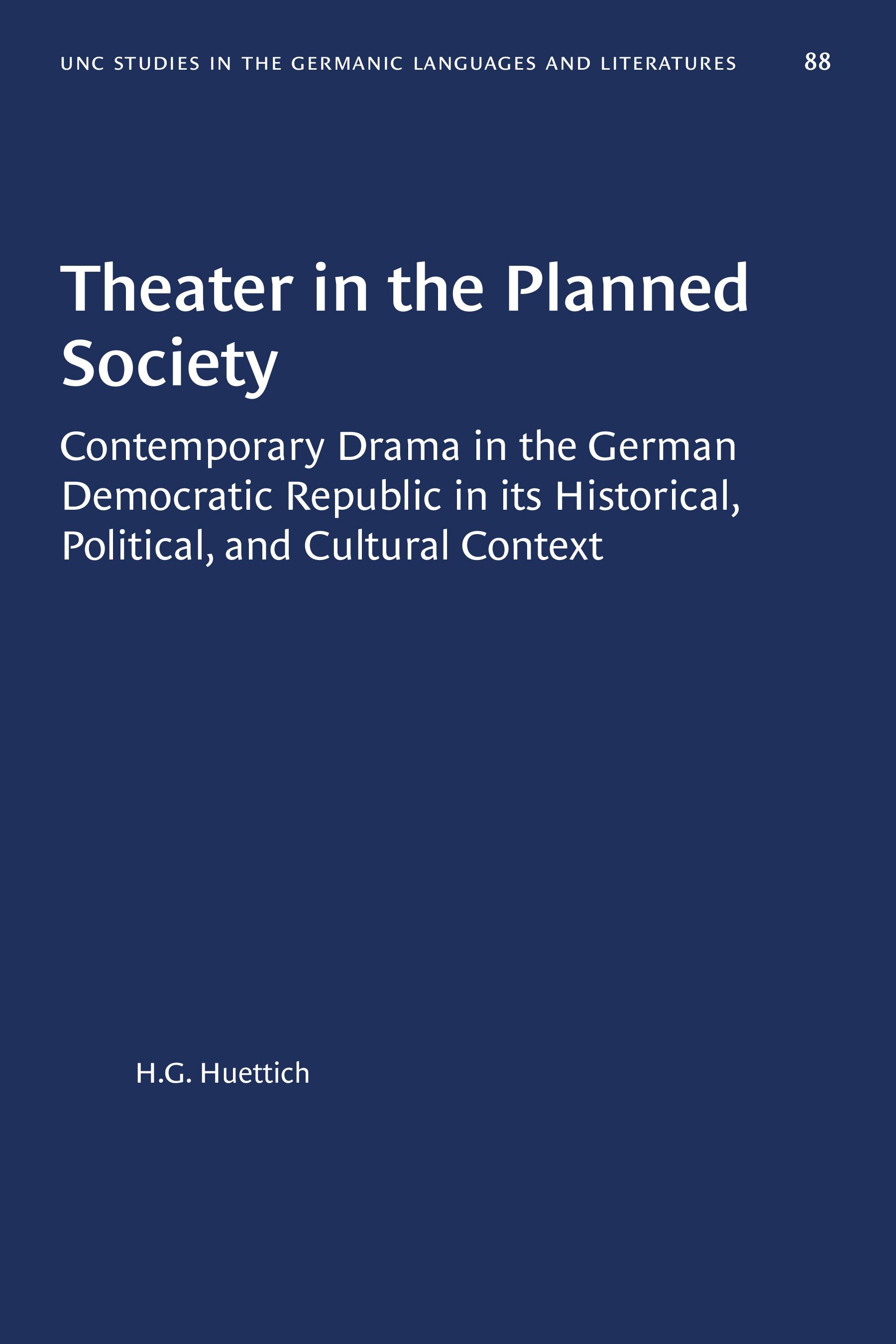
This study presents the historical development of topical drama in the German Democratic Republic from 1945 to 1975. The author investigates the sociopolitical function of both dramas and dramatists such as Karl Grünberg, Friedrich Wolf, and Erwin Strittmatter during the various transitional stages of the GDR’s growth toward a socialist society.
The substantive, critical study of plays, authors, productions, and dramatic theory is supplemented by a critical analysis of the Socialist Unity Party’s cultural and literary policies during the GDR’s turbulent history. While Western critics tend to isolate individual GDR dramas and interpret them out of context, Huettich explores in depth how the cultural policy of the GDR significantly helped shape the course of post-World War II drama in the 'planned society.'
The substantive, critical study of plays, authors, productions, and dramatic theory is supplemented by a critical analysis of the Socialist Unity Party’s cultural and literary policies during the GDR’s turbulent history. While Western critics tend to isolate individual GDR dramas and interpret them out of context, Huettich explores in depth how the cultural policy of the GDR significantly helped shape the course of post-World War II drama in the 'planned society.'
Płać wygodnie kartą, Klarną, Apple Pay lub Google Pay. Nie jesteś zadowolony? Zawsze masz 14-dniową gwarancję zwrotu pieniędzy. Więcej przeczytasz w naszych warunkach. Masz pytania? Napisz do nas na hello@memmo.org.
Memmo ułatwia naukę – gdziekolwiek jesteś na świecie. U nas znajdziesz podręczniki i sprytne narzędzia do nauki w jednym miejscu: streszczenia, quizy, podcasty i fiszki. A do tego Ted, Twój kumpel do nauki, który odpowie na wszystko, co Cię nurtuje. Ponad 50 000 studentów już tu się uczy – stworzone, byś uczył się szybciej i mniej stresował.
Może Ci się spodobać
Kup książkę0