
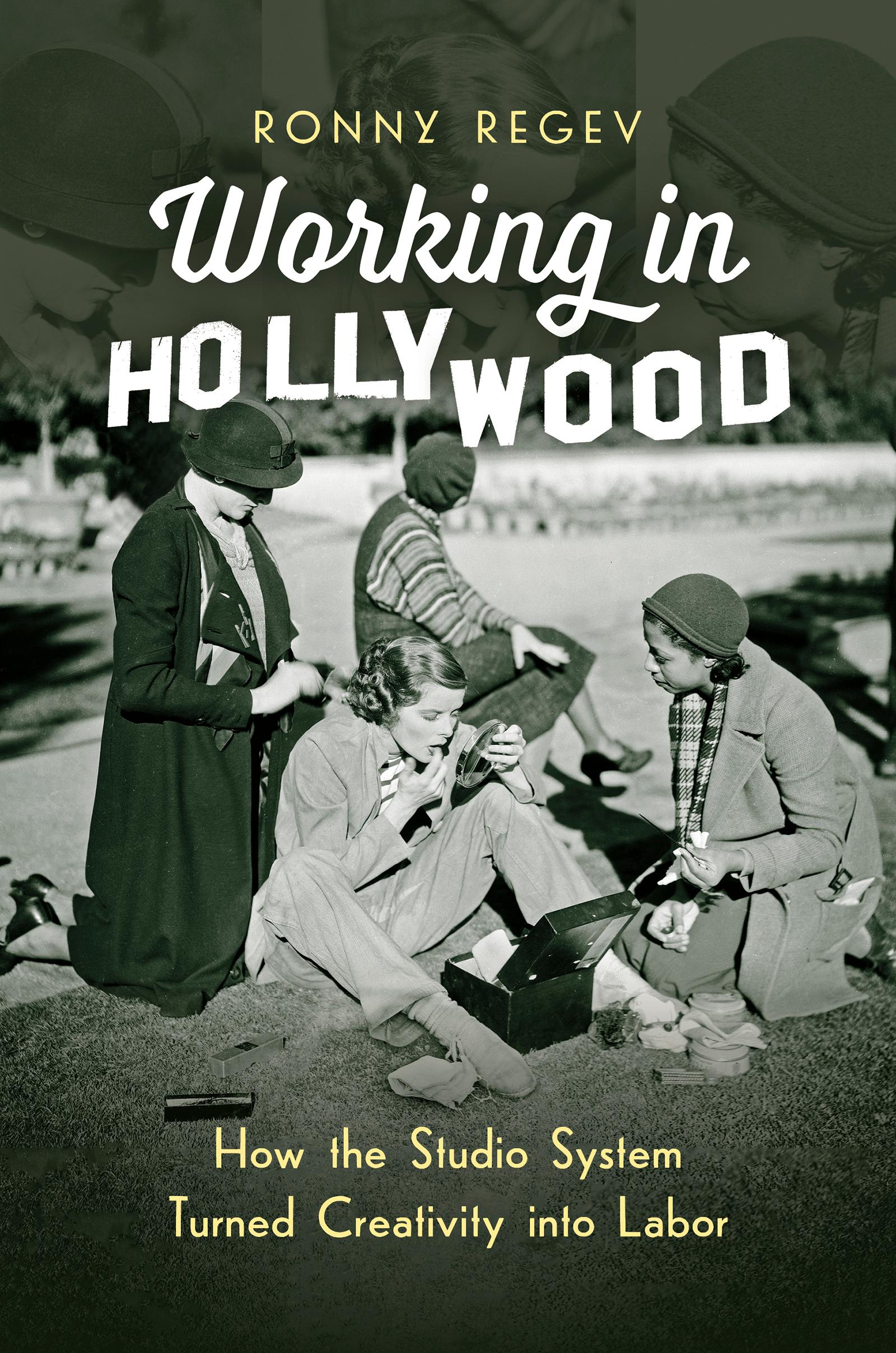
A history of the Hollywood film industry as a modern system of labor, this book reveals an important untold story of an influential twentieth-century workplace. Ronny Regev argues that the Hollywood studio system institutionalized creative labor by systemizing and standardizing the work of actors, directors, writers, and cinematographers, meshing artistic sensibilities with the efficiency-minded rationale of industrial capitalism. The employees of the studios emerged as a new class: they were wage laborers with enormous salaries, artists subjected to budgets and supervision, stars bound by contracts. As such, these workers — people like Clark Gable, Katharine Hepburn, and Anita Loos — were the outliers in the American workforce, an extraordinary working class.
Through extensive use of oral histories, personal correspondence, studio archives, and the papers of leading Hollywood luminaries as well as their less-known contemporaries, Regev demonstrates that, as part of their contribution to popular culture, Hollywood studios such as Paramount, Warner Bros., and MGM cultivated a new form of labor, one that made work seem like fantasy.
Through extensive use of oral histories, personal correspondence, studio archives, and the papers of leading Hollywood luminaries as well as their less-known contemporaries, Regev demonstrates that, as part of their contribution to popular culture, Hollywood studios such as Paramount, Warner Bros., and MGM cultivated a new form of labor, one that made work seem like fantasy.
Płać wygodnie kartą, Klarną, Apple Pay lub Google Pay. Nie jesteś zadowolony? Zawsze masz 14-dniową gwarancję zwrotu pieniędzy. Więcej przeczytasz w naszych warunkach. Masz pytania? Napisz do nas na hello@memmo.org.
Memmo ułatwia naukę – gdziekolwiek jesteś na świecie. U nas znajdziesz podręczniki i sprytne narzędzia do nauki w jednym miejscu: streszczenia, quizy, podcasty i fiszki. A do tego Ted, Twój kumpel do nauki, który odpowie na wszystko, co Cię nurtuje. Ponad 50 000 studentów już tu się uczy – stworzone, byś uczył się szybciej i mniej stresował.
Może Ci się spodobać
Kup książkę0