
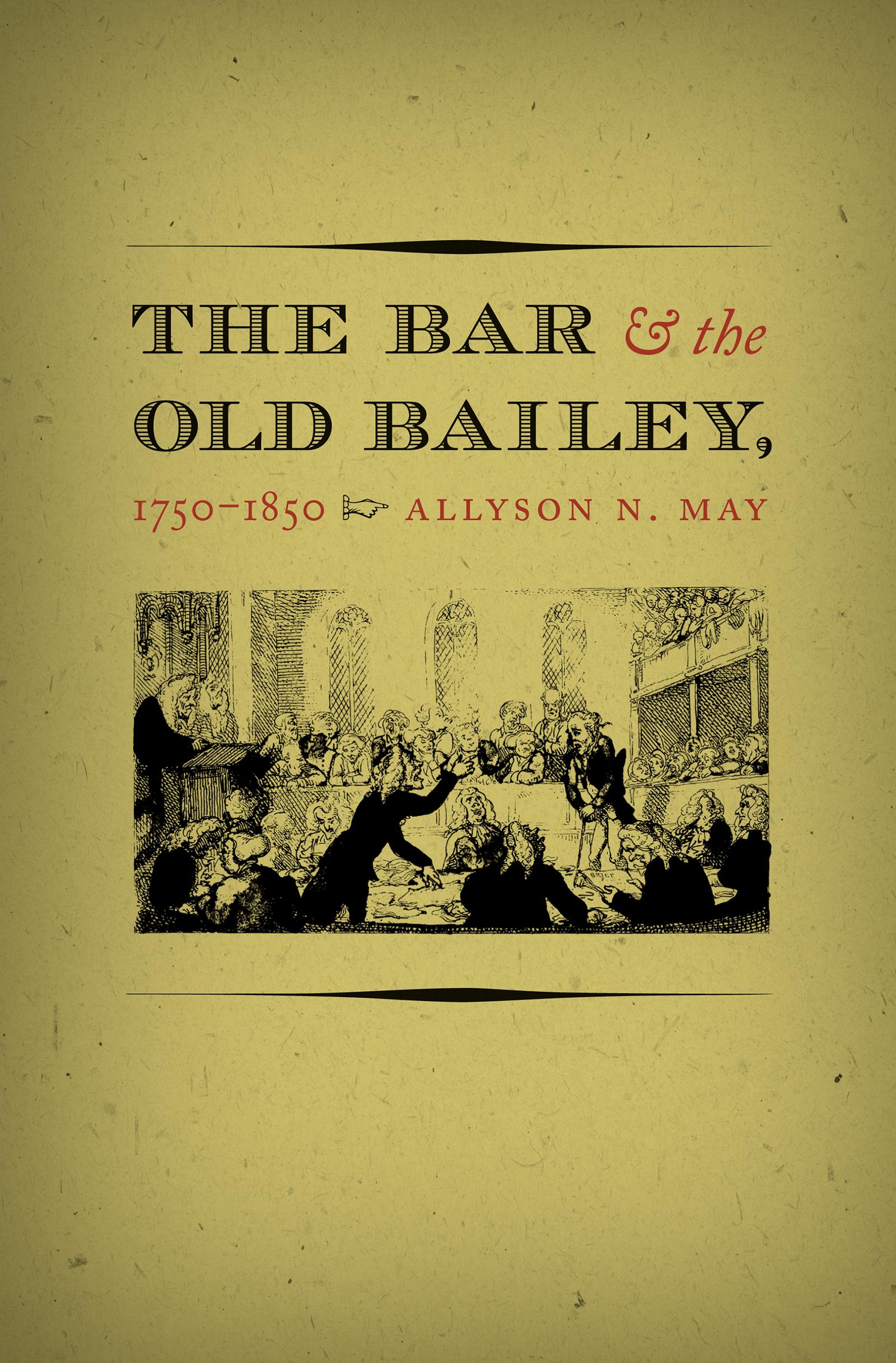
Allyson May chronicles the history of the English criminal trial and the development of a criminal bar in London between 1750 and 1850. She charts the transformation of the legal process and the evolution of professional standards of conduct for the criminal bar through an examination of the working lives of the Old Bailey barristers of the period. In describing the rise of adversarialism, May uncovers the motivations and interests of prosecutors, defendants, the bench, and the state, as well as the often-maligned “Old Bailey hacks” themselves.
Traditionally, the English criminal trial consisted of a relatively unstructured altercation between the victim-prosecutor and the accused, who generally appeared without a lawyer. A criminal bar had emerged in London by the 1780s, and in 1836 the Prisoners' Counsel Act recognized the defendant’s right to legal counsel in felony trials and lifted many restrictions on the activities of defense lawyers. May explores the role of barristers before and after the Prisoners' Counsel Act. She also details the careers of individual members of the bar — describing their civil practice in local, customary courts as well as their criminal practice — and the promotion of Old Bailey counsel to the bench of that court. A comprehensive biographical appendix augments this discussion.
Traditionally, the English criminal trial consisted of a relatively unstructured altercation between the victim-prosecutor and the accused, who generally appeared without a lawyer. A criminal bar had emerged in London by the 1780s, and in 1836 the Prisoners' Counsel Act recognized the defendant’s right to legal counsel in felony trials and lifted many restrictions on the activities of defense lawyers. May explores the role of barristers before and after the Prisoners' Counsel Act. She also details the careers of individual members of the bar — describing their civil practice in local, customary courts as well as their criminal practice — and the promotion of Old Bailey counsel to the bench of that court. A comprehensive biographical appendix augments this discussion.
Płać wygodnie kartą, Klarną, Apple Pay lub Google Pay. Nie jesteś zadowolony? Zawsze masz 14-dniową gwarancję zwrotu pieniędzy. Więcej przeczytasz w naszych warunkach. Masz pytania? Napisz do nas na hello@memmo.org.
Memmo ułatwia naukę – gdziekolwiek jesteś na świecie. U nas znajdziesz podręczniki i sprytne narzędzia do nauki w jednym miejscu: streszczenia, quizy, podcasty i fiszki. A do tego Ted, Twój kumpel do nauki, który odpowie na wszystko, co Cię nurtuje. Ponad 50 000 studentów już tu się uczy – stworzone, byś uczył się szybciej i mniej stresował.
Może Ci się spodobać
Kup książkę0