
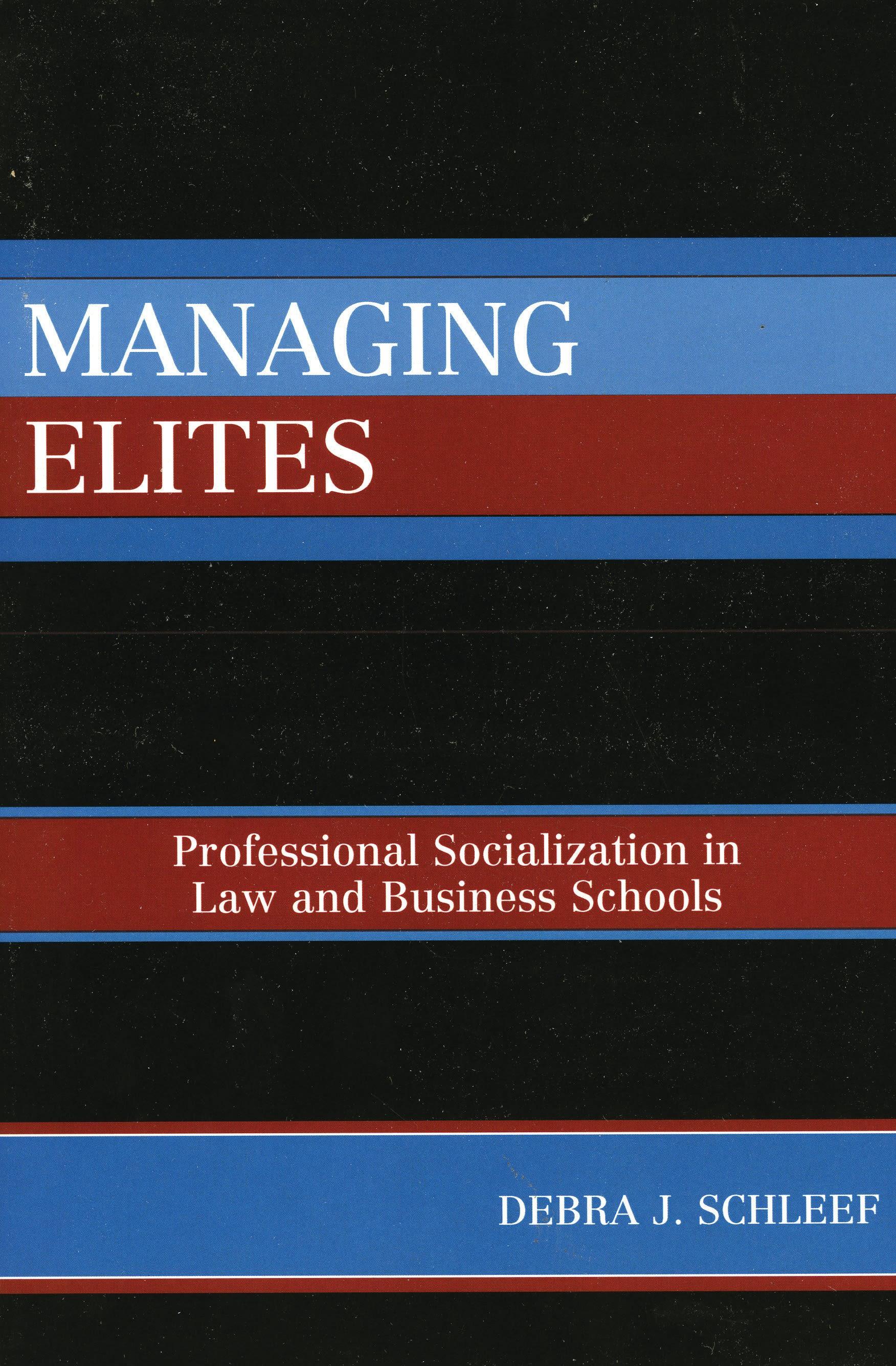
How does one become a member of an elite profession? Managing Elites examines how elites-in-training contest, rationalize and ultimately enthusiastically embrace their dominant positions in society. Using interviews with 79 law and MBA students, the author argues that elite socialization requires both accommodation and resistance to professional ideologies. Students develop a collective cynicism about elements of their education, learning that their discipline imparts esoteric knowledge - but also claiming that they didn't learn anything. They struggle with the idea that fellow students are all equally intelligent and therefore deserving of elite status, and the continuing emphasis on activities that sort students. Students resist that paths to success promoted by school cultures-investment banking, consulting, or becoming partner in a large law firm. Such cynicism is indeed ultimately revealed to be temporary, as most students end up in full support of these "jobs of least resistance". Their critiques do, however, create tensions: between competition and cooperation, between the individual and the collective, and between egalitarianism and elitism. Part of elite socialization is learning to deal with these tensions, or more specifically, to hold contradictory ideals at the same time.
Płać wygodnie kartą, Klarną, Apple Pay lub Google Pay. Nie jesteś zadowolony? Zawsze masz 14-dniową gwarancję zwrotu pieniędzy. Więcej przeczytasz w naszych warunkach. Masz pytania? Napisz do nas na hello@memmo.org.
Memmo ułatwia naukę – gdziekolwiek jesteś na świecie. U nas znajdziesz podręczniki i sprytne narzędzia do nauki w jednym miejscu: streszczenia, quizy, podcasty i fiszki. A do tego Ted, Twój kumpel do nauki, który odpowie na wszystko, co Cię nurtuje. Ponad 50 000 studentów już tu się uczy – stworzone, byś uczył się szybciej i mniej stresował.