
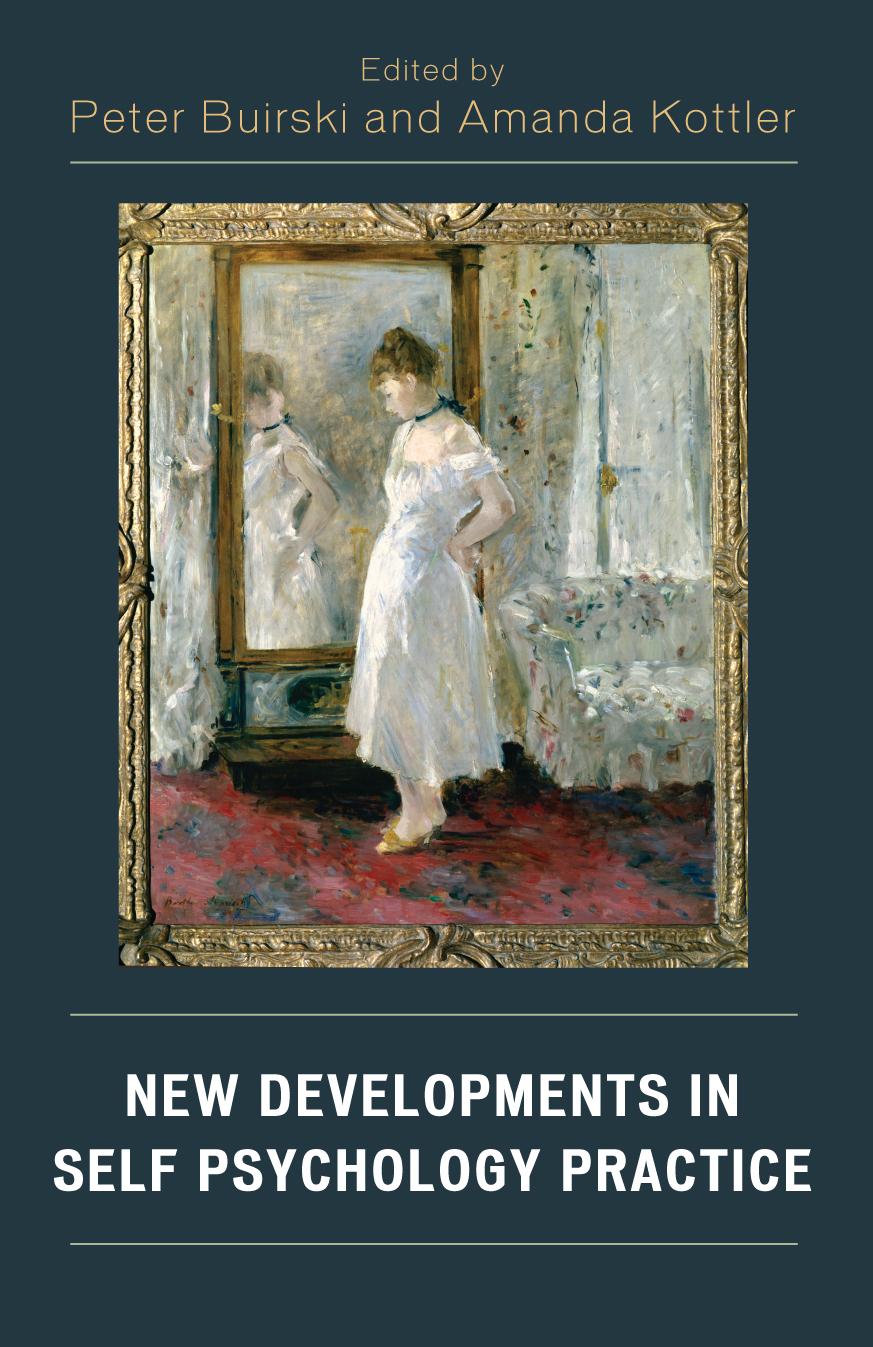
It has been 35 years since the publication of Heinz Kohut's monumental book, The Analysis of the Self, in 1971, and in this period self psychology has undergone a vibrant and exciting evolution that has significantly influenced and expanded the range of psychoanalytic thinking. While undergoing this change, self psychology has kept the developmental importance of self-object relatedness and the primacy of subjective experience as central tenets of the theory. But where other theories of mind can tend to stagnate and resist innovations that transcend their founding figure, Kohut's self psychology continues to grow in depth, complexity and richness. Indeed one of the great strengths of the self psychology movement has been the openness of the succeeding generations to push the theoretical envelope-to entertain, examine and integrate new understandings and perspectives. New Developments in Self Psychology Practice gives voice to many of these developments, reflected in its four sections. The first section examines complexity theory, attachment theory and the work of the Boston Change Study Group. The second section is concerned with the treatment of children, while the third section examines various treatment modalities such as family therapy, group therapy, and supervisory process. The final section looks at diversity, difference, and otherness within both the therapeutic dyad and therapeutic community and considers how shame, enactments and traumatic experiences influence the therapeutic process.
Płać wygodnie kartą, Klarną, Apple Pay lub Google Pay. Nie jesteś zadowolony? Zawsze masz 14-dniową gwarancję zwrotu pieniędzy. Więcej przeczytasz w naszych warunkach. Masz pytania? Napisz do nas na hello@memmo.org.
Memmo ułatwia naukę – gdziekolwiek jesteś na świecie. U nas znajdziesz podręczniki i sprytne narzędzia do nauki w jednym miejscu: streszczenia, quizy, podcasty i fiszki. A do tego Ted, Twój kumpel do nauki, który odpowie na wszystko, co Cię nurtuje. Ponad 50 000 studentów już tu się uczy – stworzone, byś uczył się szybciej i mniej stresował.