
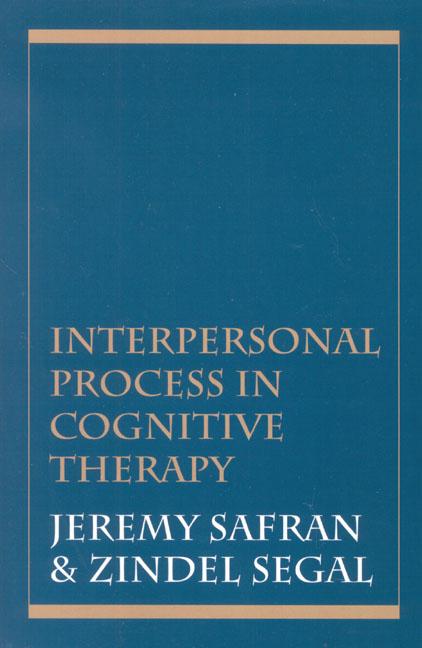
Cognitive therapy, with its clear-cut measurable techniques, has been a welcome innovation in recent years. However, the very specificity that lends itself so well to research and training has minimized the role of the therapeutic relationship, making it difficult for therapists to respond flexibly to different clinical situations. What is needed is an approach that focuses on the underlying mechanisms of therapeutic change, not just on interventions.
In this practical and original book, two highly respected clinician-researchers integrate findings from cognitive psychology, infant developmental research, emotion theory, and relational therapy to show how change takes place in the interpersonal context of the therapeutic relationship and involves experiencing the self in new ways, not just altering behavior or cognitions. Making use of extensive clinical transcripts accompanied by moment-to-moment analyses of the change process, the authors illustrate the subtle interaction of cognitive and interpersonal factors. They show how therapy unfolds at three different levels-in fluctuations in the patient's world, in the therapeutic relationship, and in the therapist's inner experience-and provide clear guidelines for when to focus on a particular level. The result is a superb integration of cognitive and interpersonal approaches that will have a major impact on theory and practice.
A Jason Aronson Book
In this practical and original book, two highly respected clinician-researchers integrate findings from cognitive psychology, infant developmental research, emotion theory, and relational therapy to show how change takes place in the interpersonal context of the therapeutic relationship and involves experiencing the self in new ways, not just altering behavior or cognitions. Making use of extensive clinical transcripts accompanied by moment-to-moment analyses of the change process, the authors illustrate the subtle interaction of cognitive and interpersonal factors. They show how therapy unfolds at three different levels-in fluctuations in the patient's world, in the therapeutic relationship, and in the therapist's inner experience-and provide clear guidelines for when to focus on a particular level. The result is a superb integration of cognitive and interpersonal approaches that will have a major impact on theory and practice.
A Jason Aronson Book
Płać wygodnie kartą, Klarną, Apple Pay lub Google Pay. Nie jesteś zadowolony? Zawsze masz 14-dniową gwarancję zwrotu pieniędzy. Więcej przeczytasz w naszych warunkach. Masz pytania? Napisz do nas na hello@memmo.org.
Memmo ułatwia naukę – gdziekolwiek jesteś na świecie. U nas znajdziesz podręczniki i sprytne narzędzia do nauki w jednym miejscu: streszczenia, quizy, podcasty i fiszki. A do tego Ted, Twój kumpel do nauki, który odpowie na wszystko, co Cię nurtuje. Ponad 50 000 studentów już tu się uczy – stworzone, byś uczył się szybciej i mniej stresował.