
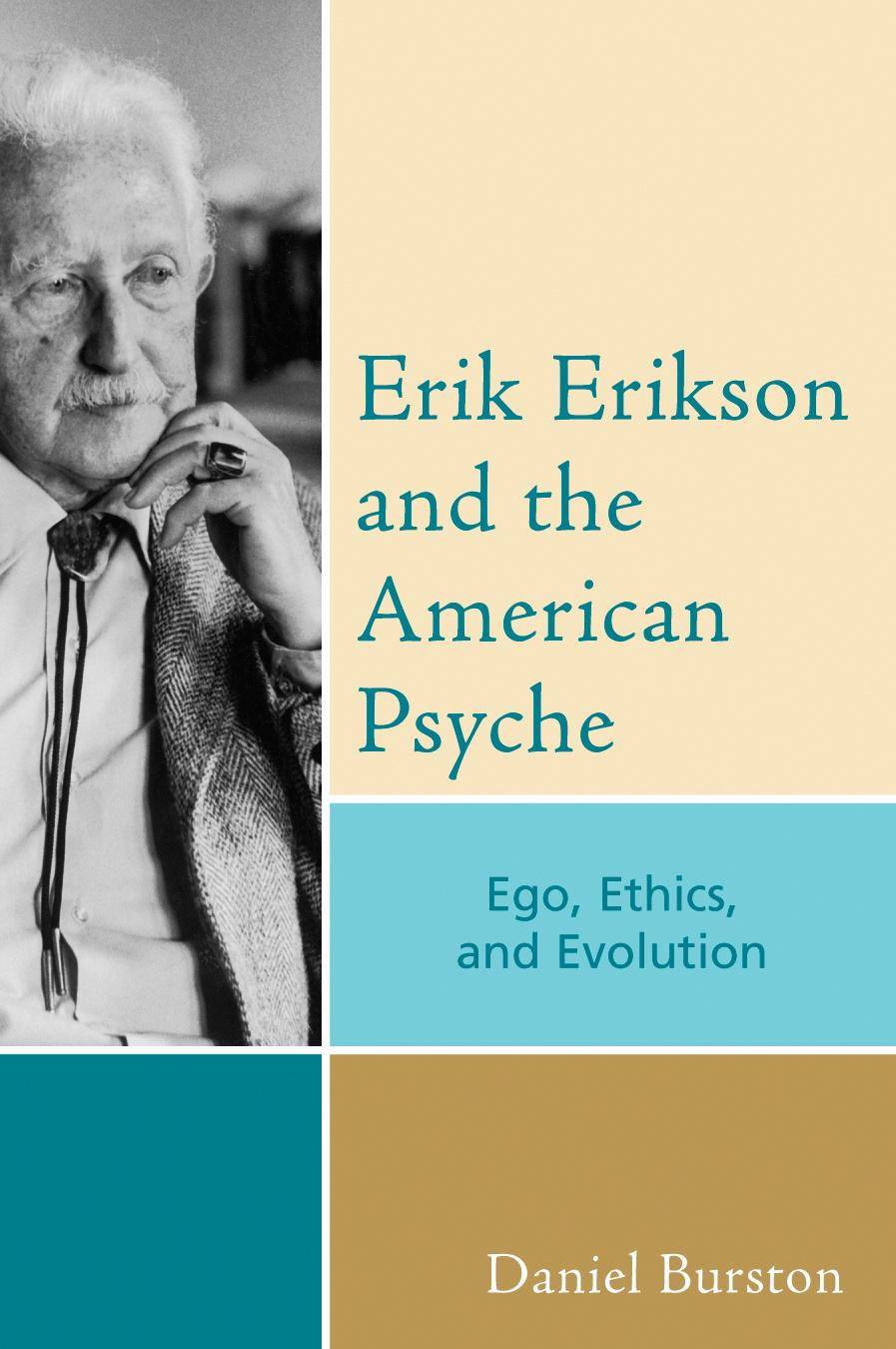
Erik Erikson and the American Psyche is an intellectual biography which explores Erikson's contributions to the study of infancy, childhood and ethical development in light of ego psychology, object-relations theory, Lacanian theory and other major trends in psychoanalysis. It analyses Erikson's famous portraits of Luther, Gandhi and Jesus, and his own ambiguous religious identity, in the context of his anguished childhood and adolescence, and his repeated emphasis on the need for strong intergenerational bonds to insure mental health throughout the life cycle. Given Erikson's persistent efforts to harmonize psychoanalysis with history and the human sciences, it interprets his invention of psychohistory as a "pseudo-schism" which enabled Erikson to throw off the stifling constraints of Freudian orthodoxy, disclosing the personal and intellectual tensions that prevailed between him and many leaders of the International Psychoanalytic Association. Finally, it demonstrates the enduring relevance of Erikson's unique perspective on human development to our increasingly screen-saturated, drug addled postmodern - or "posthuman" - culture, and the ways in which his posthumous neglect foreshadows the possible death of psychoanalysis in North America.
Płać wygodnie kartą, Klarną, Apple Pay lub Google Pay. Nie jesteś zadowolony? Zawsze masz 14-dniową gwarancję zwrotu pieniędzy. Więcej przeczytasz w naszych warunkach. Masz pytania? Napisz do nas na hello@memmo.org.
Memmo ułatwia naukę – gdziekolwiek jesteś na świecie. U nas znajdziesz podręczniki i sprytne narzędzia do nauki w jednym miejscu: streszczenia, quizy, podcasty i fiszki. A do tego Ted, Twój kumpel do nauki, który odpowie na wszystko, co Cię nurtuje. Ponad 50 000 studentów już tu się uczy – stworzone, byś uczył się szybciej i mniej stresował.