
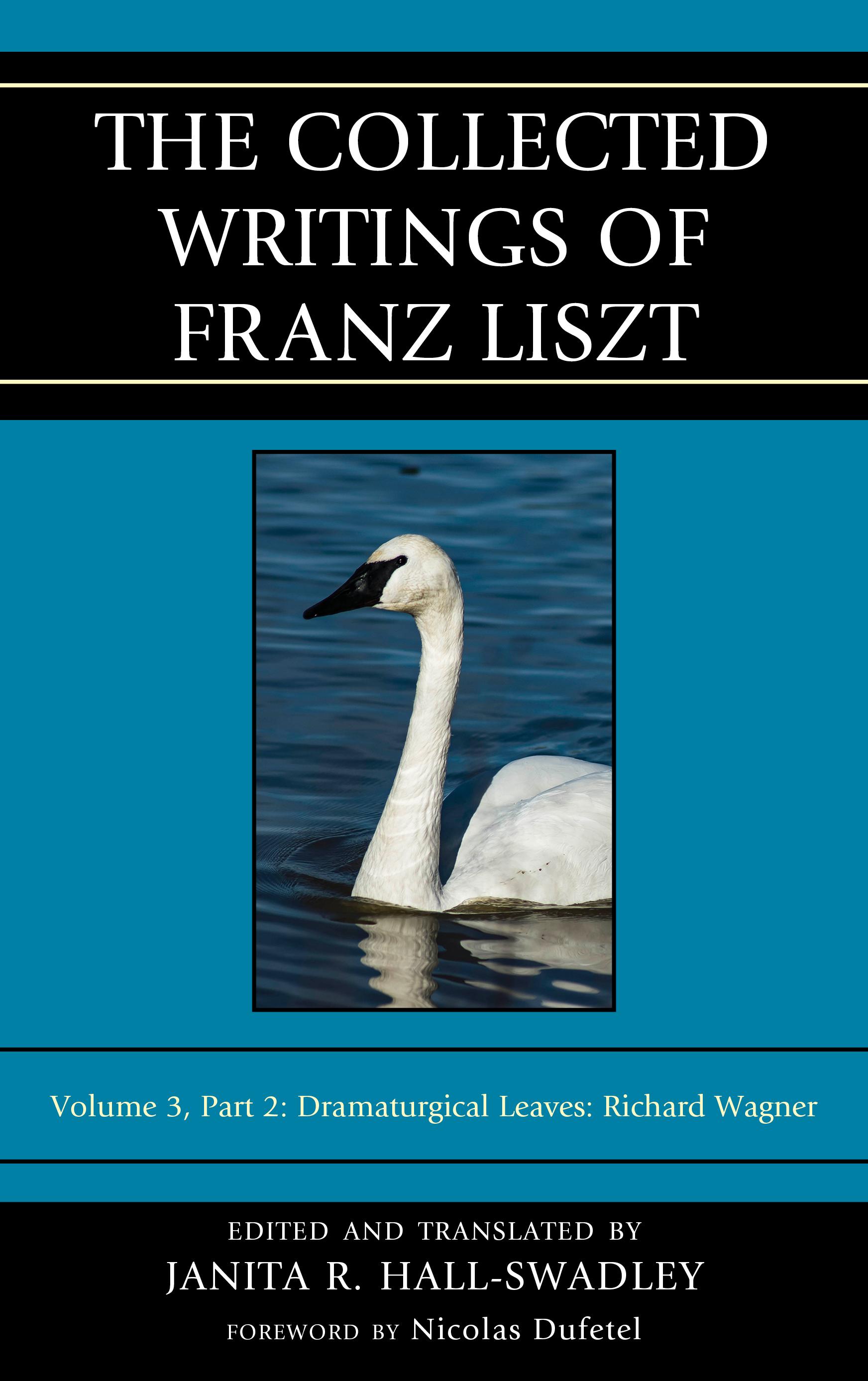
The Collected Writings of Franz Liszt: Dramaturgical Leaves: Richard Wagner completes the second half of Liszt’s writings about stage works, its composers, and music drama. In this volume, Liszt focuses on the works of his most controversial devotee and son-in-law, Richard Wagner, whose music dramas Liszt championed as conductor during his tenure in Weimar. Here, we see Liszt prove his skill and expertise as a music critic, as well. He offers a critical analysis of the aesthetic and musical principles that underlie Wagner’s operas, Tannhäuser, Lohengrin, and The Flying Dutchman, including a thorough discussion of Wagner’s Leitmotif system of composition. Additionally, his findings are substantiated with a plethora of music examples, which will satisfy those who wanted greater musical substance from his writings. He also foretells the magnitude of Wagner’s influence on prosperity in his pamphlet-length essay, The Rhine’s Gold. Finally, the editor and translator of this volume, Janita Hall-Swadley, provides a unique perspective on these same principles, which is based on Wagner’s own mysterious diagram of “The Philosopher’s Stone,” which was supposed to be included in the original 1863 edition of the composer’s important writing, Opera and Drama, but never made it to publication.
Płać wygodnie kartą, Klarną, Apple Pay lub Google Pay. Nie jesteś zadowolony? Zawsze masz 14-dniową gwarancję zwrotu pieniędzy. Więcej przeczytasz w naszych warunkach. Masz pytania? Napisz do nas na hello@memmo.org.
Memmo ułatwia naukę – gdziekolwiek jesteś na świecie. U nas znajdziesz podręczniki i sprytne narzędzia do nauki w jednym miejscu: streszczenia, quizy, podcasty i fiszki. A do tego Ted, Twój kumpel do nauki, który odpowie na wszystko, co Cię nurtuje. Ponad 50 000 studentów już tu się uczy – stworzone, byś uczył się szybciej i mniej stresował.