
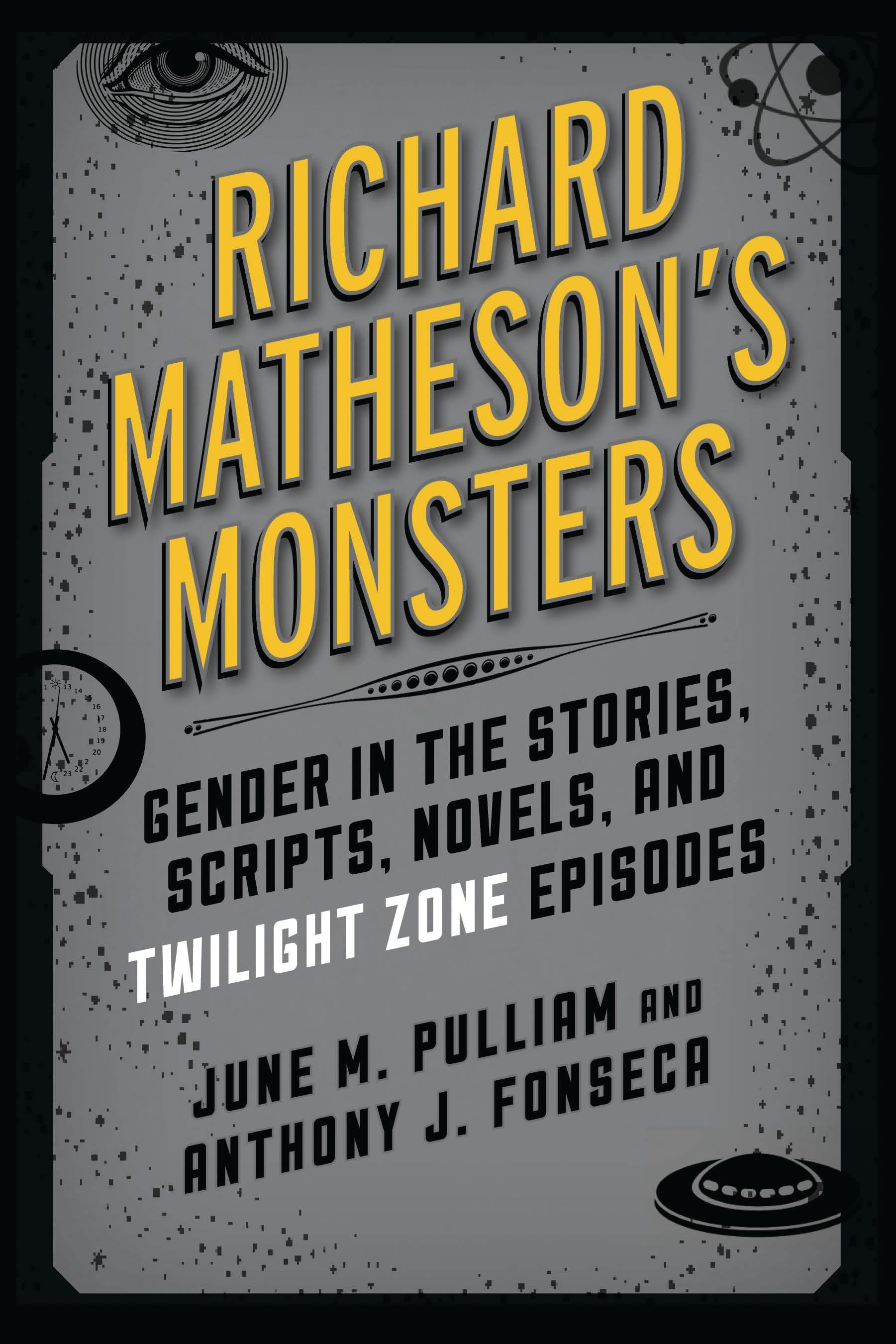
Richard Matheson was one of the leading writers of science fiction, fantasy, and horror in the twentieth century. Matheson’s most famous early works, the novels I Am Legend (1954) and The Shrinking Man (1956), both depict traditionally masculine figures thrust into extraordinary situations. Other thought-provoking novels, including Hell House (1971), Bid Time Return (1975), and What Dreams May Come (1978)—as well as short stories and screenplays—convey the ambiguous status of masculinity: how men should behave vis-à-vis women and what role they should occupy in the family dynamic and in society at large.
In Richard Matheson’s Monsters: Gender in the Stories, Scripts, Novels and Twilight Zone Episodes, June M. Pulliam and Anthony J. Fonseca examine how this groundbreaking author’s writings shed light on society’s ever-shifting attitudes on masculinity and domesticity. In this first full-length critical study of Matheson’s entire literary output, the authors discuss how I Am Legend, The Shrinking Man, and other works question traditional male roles. The authors examine how Matheson’s scripts for The Twilight Zone represented changing expectations in male behavior with the onset of the sexual and feminist revolutions, industrialization and globalization, and other issues.
In a society where gender roles are questioned every day, Matheson’s work is more relevant than ever. Richard Matheson’s Monsters will be of interest to scholars of literature, film, and television, as well those interested in gender and masculinity studies.
In Richard Matheson’s Monsters: Gender in the Stories, Scripts, Novels and Twilight Zone Episodes, June M. Pulliam and Anthony J. Fonseca examine how this groundbreaking author’s writings shed light on society’s ever-shifting attitudes on masculinity and domesticity. In this first full-length critical study of Matheson’s entire literary output, the authors discuss how I Am Legend, The Shrinking Man, and other works question traditional male roles. The authors examine how Matheson’s scripts for The Twilight Zone represented changing expectations in male behavior with the onset of the sexual and feminist revolutions, industrialization and globalization, and other issues.
In a society where gender roles are questioned every day, Matheson’s work is more relevant than ever. Richard Matheson’s Monsters will be of interest to scholars of literature, film, and television, as well those interested in gender and masculinity studies.
Płać wygodnie kartą, Klarną, Apple Pay lub Google Pay. Nie jesteś zadowolony? Zawsze masz 14-dniową gwarancję zwrotu pieniędzy. Więcej przeczytasz w naszych warunkach. Masz pytania? Napisz do nas na hello@memmo.org.
Memmo ułatwia naukę – gdziekolwiek jesteś na świecie. U nas znajdziesz podręczniki i sprytne narzędzia do nauki w jednym miejscu: streszczenia, quizy, podcasty i fiszki. A do tego Ted, Twój kumpel do nauki, który odpowie na wszystko, co Cię nurtuje. Ponad 50 000 studentów już tu się uczy – stworzone, byś uczył się szybciej i mniej stresował.