
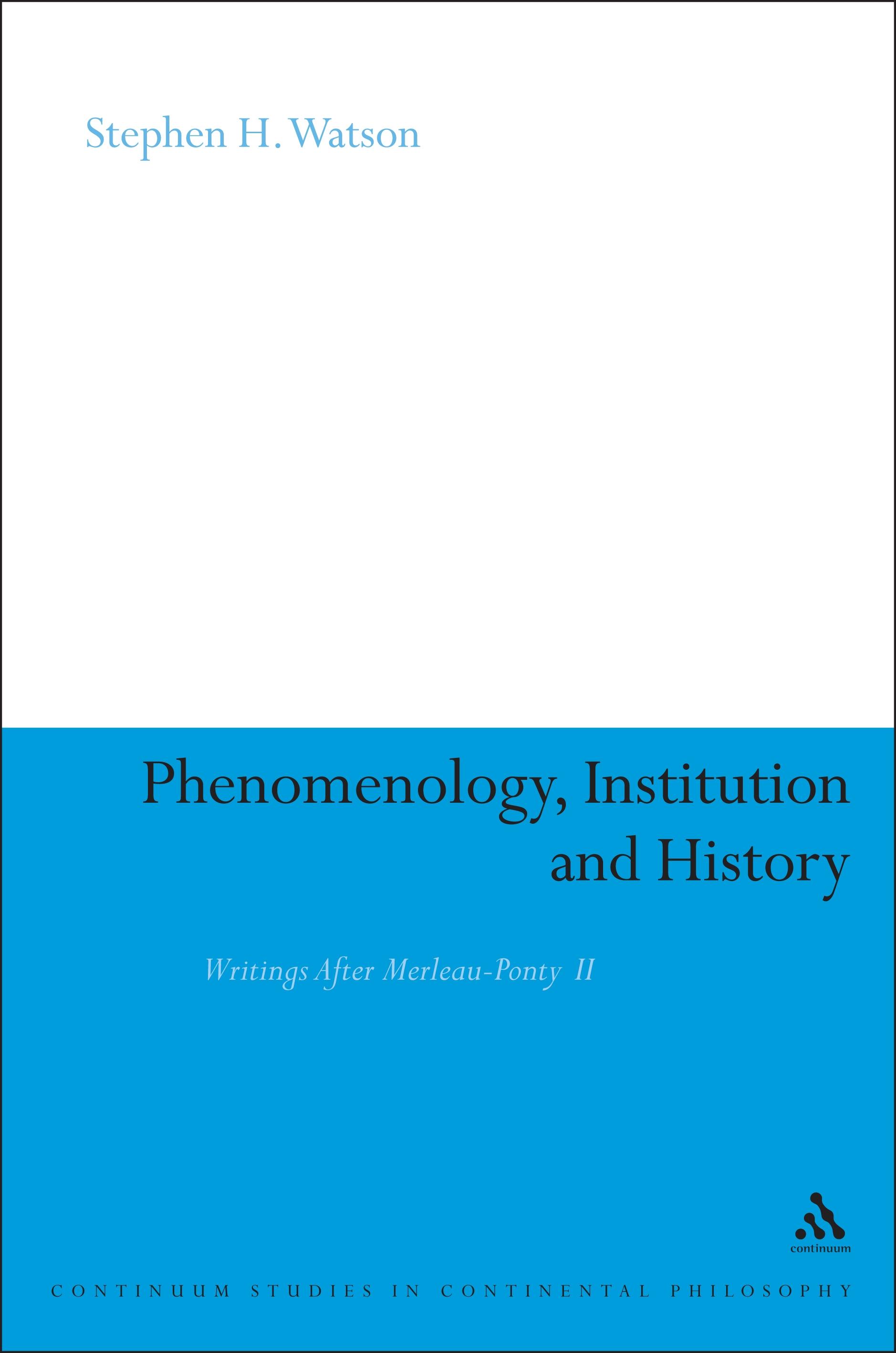
Maurice Merleau-Ponty is widely known for his emphasis on embodied perceptual experience. This emphasis initially relied heavily on the positive results of Gestalt psychology in addressing issues in philosophical psychology and philosophy of mind from a phenomenological standpoint. However, far less work has been done in addressing his evolving conception of how such an account influenced more general philosophical issues in epistemology, accounts of rationality, or its status of theoretical discourse.
Developing the work he has already done in In the Shadow of Phenomenology to address this gap in the literature, Stephen H. Watson further examines the responses to Merleau-Ponty's contributions to these issues. This book emphasises the historical and intersubjective underpinnings of Merleau-Ponty's late accounts, in relation to rationality, institution and community, and examines its implications.
Developing the work he has already done in In the Shadow of Phenomenology to address this gap in the literature, Stephen H. Watson further examines the responses to Merleau-Ponty's contributions to these issues. This book emphasises the historical and intersubjective underpinnings of Merleau-Ponty's late accounts, in relation to rationality, institution and community, and examines its implications.
Płać wygodnie kartą, Klarną, Apple Pay lub Google Pay. Nie jesteś zadowolony? Zawsze masz 14-dniową gwarancję zwrotu pieniędzy. Więcej przeczytasz w naszych warunkach. Masz pytania? Napisz do nas na hello@memmo.org.
Memmo ułatwia naukę – gdziekolwiek jesteś na świecie. U nas znajdziesz podręczniki i sprytne narzędzia do nauki w jednym miejscu: streszczenia, quizy, podcasty i fiszki. A do tego Ted, Twój kumpel do nauki, który odpowie na wszystko, co Cię nurtuje. Ponad 50 000 studentów już tu się uczy – stworzone, byś uczył się szybciej i mniej stresował.