
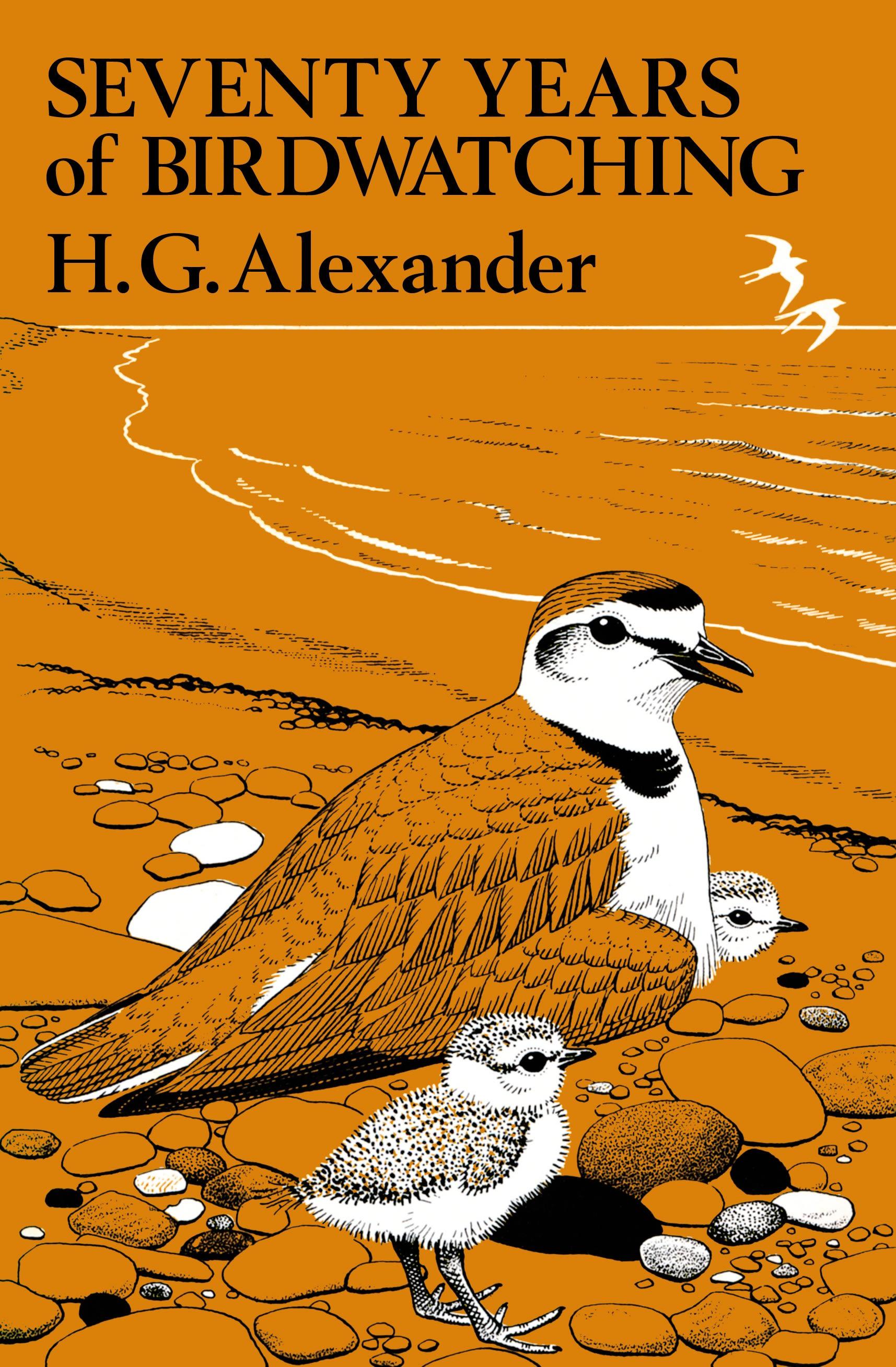
This is a book about birdwatching, birdwatchers and, above all, birds. It is, in some measure, also a history of the development of modern ornithology in Britain - although the author's birdwatching extended over parts of three continents, Europe, India and North America.
Seventy Years of Birdwatching is not truly an autobiography, there is too little about the author in it, though the personality of this exceptional, shy and gentle man comes through. H. G. Alexander began birdwatching in earnest in 1898 and has never stopped. He has met or corresponded with most of the leading ornithologists of this century; his first article in British Birds appeared in 1909, and it may surprise many to discover how much of practical ornithology that is deliberated today was debated and practised so many years ago.
During more than seventy years the author has witnessed important changes in resident and migrant bird populations in Britain. Dungeness, for example, was almost as uninhabited as the moon when he first knew it and Kentish Plovers bred there by the score, but Carrion Crows were a rarity. Over the years he saw the gradual decline of the Red-backed Shrike, Corncrake and Wryneckbut he was instrumental in bringing one bird to Britain, the hitherto 'undiscovered' Willow Tit which he, with others, helped to identify.
Fifty years ago H. G. Alexander had already covered scores of six-inch Ordnance Survey maps with his mapping records and these, together with his notebooks and correspondence with contemporaries, supply an absorbing glimpse of a birdwatching era that was fascinatingly like and yet unlike our own. Perhaps this is why today's birdwatcher has only to turn the pages to be enthralled.
Seventy Years of Birdwatching is not truly an autobiography, there is too little about the author in it, though the personality of this exceptional, shy and gentle man comes through. H. G. Alexander began birdwatching in earnest in 1898 and has never stopped. He has met or corresponded with most of the leading ornithologists of this century; his first article in British Birds appeared in 1909, and it may surprise many to discover how much of practical ornithology that is deliberated today was debated and practised so many years ago.
During more than seventy years the author has witnessed important changes in resident and migrant bird populations in Britain. Dungeness, for example, was almost as uninhabited as the moon when he first knew it and Kentish Plovers bred there by the score, but Carrion Crows were a rarity. Over the years he saw the gradual decline of the Red-backed Shrike, Corncrake and Wryneckbut he was instrumental in bringing one bird to Britain, the hitherto 'undiscovered' Willow Tit which he, with others, helped to identify.
Fifty years ago H. G. Alexander had already covered scores of six-inch Ordnance Survey maps with his mapping records and these, together with his notebooks and correspondence with contemporaries, supply an absorbing glimpse of a birdwatching era that was fascinatingly like and yet unlike our own. Perhaps this is why today's birdwatcher has only to turn the pages to be enthralled.
Płać wygodnie kartą, Klarną, Apple Pay lub Google Pay. Nie jesteś zadowolony? Zawsze masz 14-dniową gwarancję zwrotu pieniędzy. Więcej przeczytasz w naszych warunkach. Masz pytania? Napisz do nas na hello@memmo.org.
Memmo ułatwia naukę – gdziekolwiek jesteś na świecie. U nas znajdziesz podręczniki i sprytne narzędzia do nauki w jednym miejscu: streszczenia, quizy, podcasty i fiszki. A do tego Ted, Twój kumpel do nauki, który odpowie na wszystko, co Cię nurtuje. Ponad 50 000 studentów już tu się uczy – stworzone, byś uczył się szybciej i mniej stresował.