
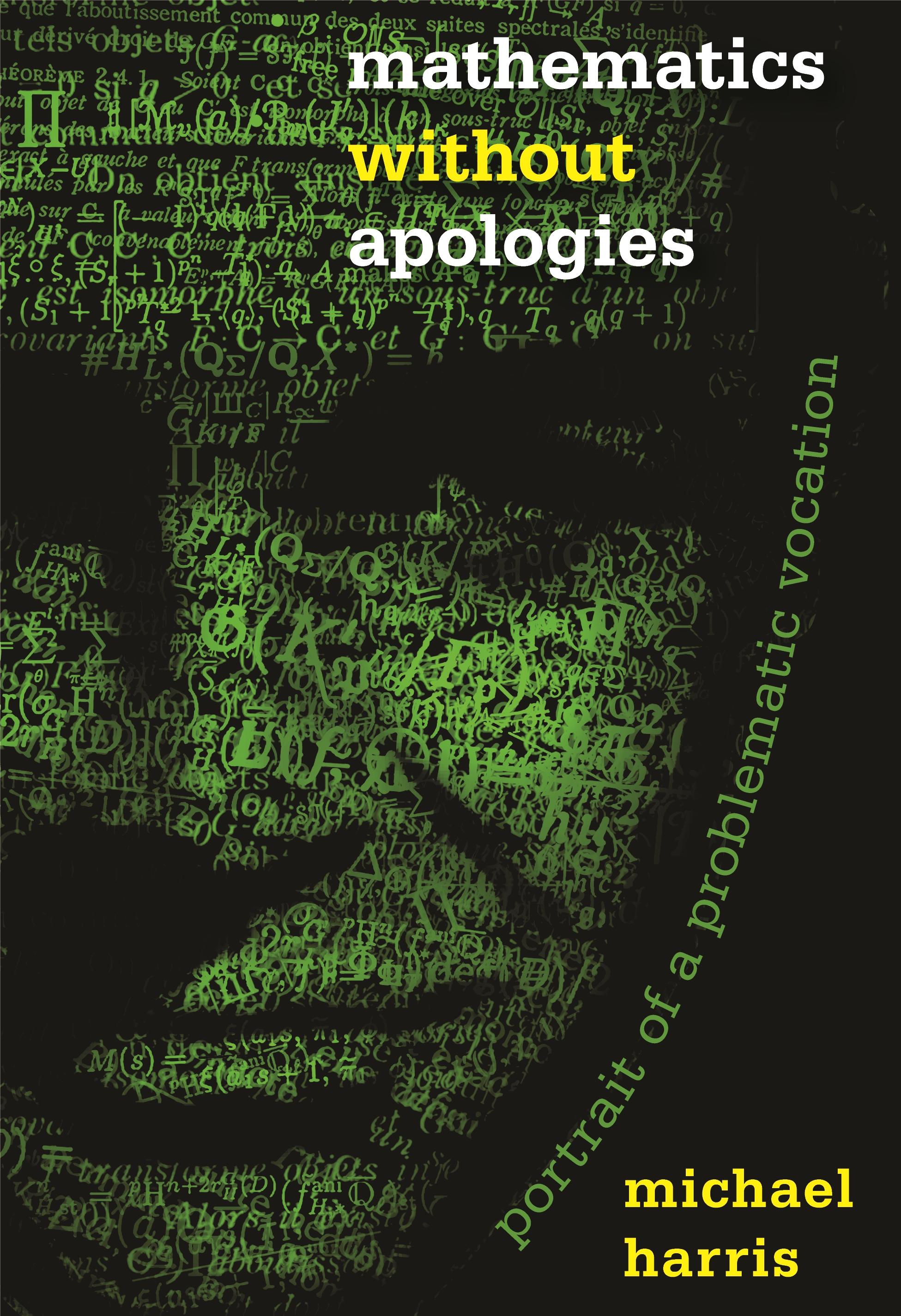
An insightful reflection on the mathematical soul
What do pure mathematicians do, and why do they do it? Looking beyond the conventional answers—for the sake of truth, beauty, and practical applications—this book offers an eclectic panorama of the lives and values and hopes and fears of mathematicians in the twenty-first century, assembling material from a startlingly diverse assortment of scholarly, journalistic, and pop culture sources.
Drawing on his personal experiences and obsessions as well as the thoughts and opinions of mathematicians from Archimedes and Omar Khayyám to such contemporary giants as Alexander Grothendieck and Robert Langlands, Michael Harris reveals the charisma and romance of mathematics as well as its darker side. In this portrait of mathematics as a community united around a set of common intellectual, ethical, and existential challenges, he touches on a wide variety of questions, such as: Are mathematicians to blame for the 2008 financial crisis? How can we talk about the ideas we were born too soon to understand? And how should you react if you are asked to explain number theory at a dinner party?
Disarmingly candid, relentlessly intelligent, and richly entertaining, Mathematics without Apologies takes readers on an unapologetic guided tour of the mathematical life, from the philosophy and sociology of mathematics to its reflections in film and popular music, with detours through the mathematical and mystical traditions of Russia, India, medieval Islam, the Bronx, and beyond.
Płać wygodnie kartą, Klarną, Apple Pay lub Google Pay. Nie jesteś zadowolony? Zawsze masz 14-dniową gwarancję zwrotu pieniędzy. Więcej przeczytasz w naszych warunkach. Masz pytania? Napisz do nas na hello@memmo.org.
Memmo ułatwia naukę – gdziekolwiek jesteś na świecie. U nas znajdziesz podręczniki i sprytne narzędzia do nauki w jednym miejscu: streszczenia, quizy, podcasty i fiszki. A do tego Ted, Twój kumpel do nauki, który odpowie na wszystko, co Cię nurtuje. Ponad 50 000 studentów już tu się uczy – stworzone, byś uczył się szybciej i mniej stresował.