
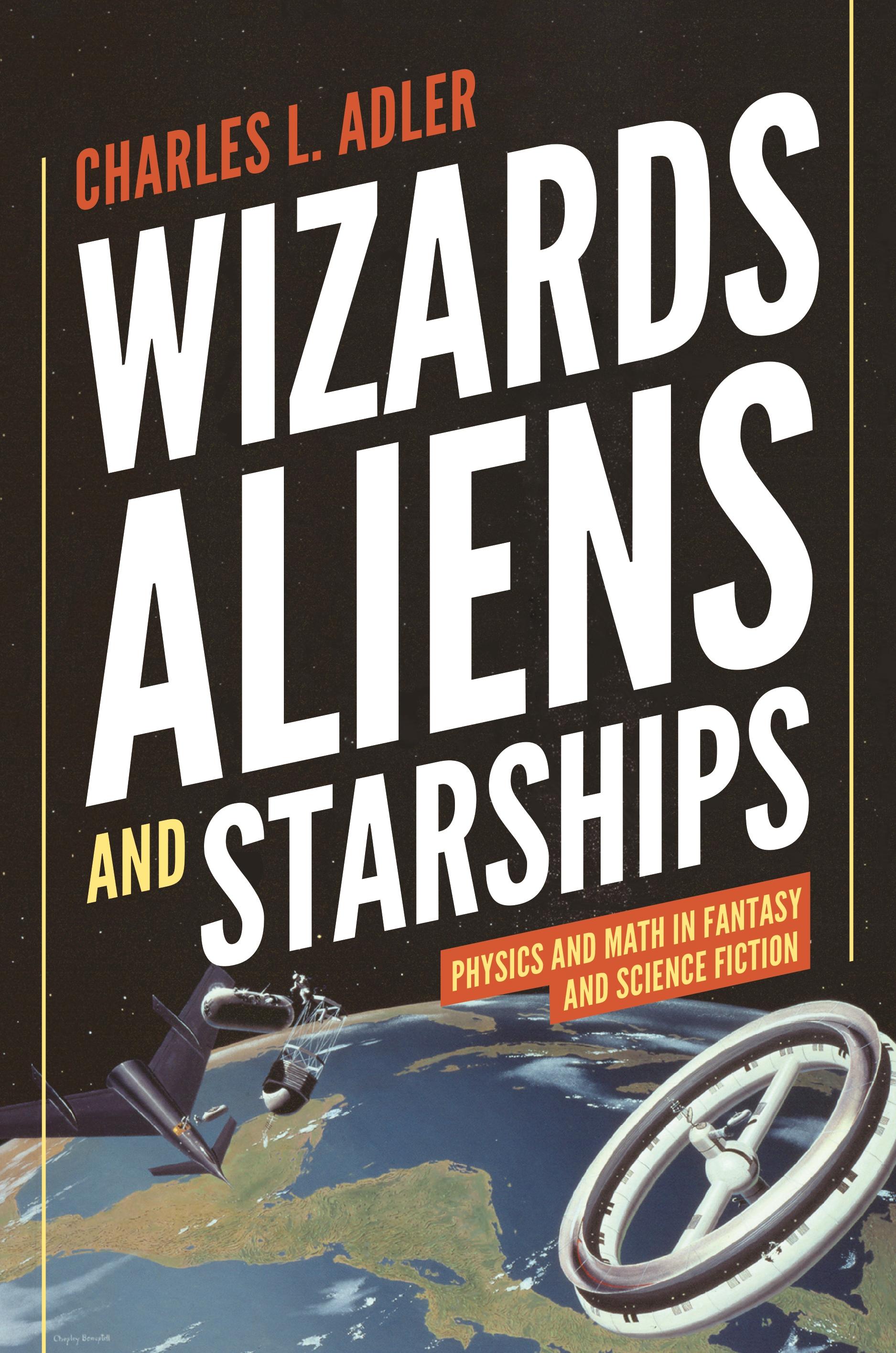
Explaining the science behind science fiction and fantasy—from the probable to the impossible
From teleportation and space elevators to alien contact and interstellar travel, science fiction and fantasy writers have come up with some brilliant and innovative ideas. Yet how plausible are these ideas--for instance, could Mr. Weasley's flying car in the Harry Potter books really exist? Which concepts might actually happen, and which ones wouldn’t work at all? Wizards, Aliens, and Starships delves into the most extraordinary details in science fiction and fantasy--such as time warps, shape changing, rocket launches, and illumination by floating candle--and shows readers the physics and math behind the phenomena.
With simple mathematical models, and in most cases using no more than high school algebra, Charles Adler ranges across a plethora of remarkable imaginings, from the works of Ursula K. Le Guin to Star Trek and Avatar, to explore what might become reality. Adler explains why fantasy in the Harry Potter and Dresden Files novels cannot adhere strictly to scientific laws, and when magic might make scientific sense in the muggle world. He examines space travel and wonders why it isn’t cheaper and more common today. Adler also discusses exoplanets and how the search for alien life has shifted from radio communications to space-based telescopes. He concludes by investigating the future survival of humanity and other intelligent races. Throughout, he cites an abundance of science fiction and fantasy authors, and includes concise descriptions of stories as well as an appendix on Newton's laws of motion.
Wizards, Aliens, and Starships will speak to anyone wanting to know about the correct--and incorrect--science of science fiction and fantasy.
Płać wygodnie kartą, Klarną, Apple Pay lub Google Pay. Nie jesteś zadowolony? Zawsze masz 14-dniową gwarancję zwrotu pieniędzy. Więcej przeczytasz w naszych warunkach. Masz pytania? Napisz do nas na hello@memmo.org.
Memmo ułatwia naukę – gdziekolwiek jesteś na świecie. U nas znajdziesz podręczniki i sprytne narzędzia do nauki w jednym miejscu: streszczenia, quizy, podcasty i fiszki. A do tego Ted, Twój kumpel do nauki, który odpowie na wszystko, co Cię nurtuje. Ponad 50 000 studentów już tu się uczy – stworzone, byś uczył się szybciej i mniej stresował.